apn-news's Daily Power Capsule: India's Political, Business and Legal Shifts Dominate April 30, 2026 Coverage


Lead: India’s political landscape, business reforms, and legal battles over intellectual property rights dominated apn-news’s April 30, 2026 coverage. From the Supreme Court’s scrutiny of bar association strikes to the government’s push for administrative autonomy in IPR enforcement, the day’s stories reveal tensions between tradition and reform, global pressures and local claims.
Top Political News, Issues and People
Supreme Court Under the Lens: Bar Strikes and Political Controversies
The Supreme Court of India faced sharp criticism over its handling of bar association strikes in Guntur, Andhra Pradesh. Former judge Pawan Khoda’s case, involving allegations of fake documents and political statements, has escalated into a broader debate about judicial independence and the judiciary’s role in political disputes. The segment highlights how legal controversies are increasingly intersecting with electoral politics, particularly in states like Assam and Uttar Pradesh, where Chief Minister Yogi Adityanath’s government is under scrutiny for its handling of administrative and legal reforms.
Key Figures: Pawan Khoda, Justice Vikramnath, Justice Pandit Panda, Gautam Budhwar, Mahendra Giri, Supreme Court Judges, Yogi Adityanath**
Locations: Assam, Guntur (Andhra Pradesh), Shahin Bagh (Delhi), Noida, Delhi High Court**
The broadcast also dissected the Khoda case, where allegations of fake documents and political interference have raised questions about the integrity of legal proceedings. The discussion extended to the Supreme Court’s role in bar association strikes, with critics arguing that the judiciary’s response has been inconsistent, fueling perceptions of bias. This legal-judicial tangle is not isolated; it reflects deeper political currents, including the BJP’s electoral strategies and its use of cultural nationalism to consolidate power.
Election Results and Political Strategy: A Mixed Bag for BJP
The BJP’s electoral performance in Assam, Bengal, and Kerala was dissected in multiple segments, with analysts questioning whether the party’s cultural nationalism and fear tactics resonated with voters. The exit polls from West Bengal and Puducherry revealed mixed reactions to the women’s reservation bill, with the BJP facing resistance from opposition parties like Congress and the Samajwadi Party. The analysis highlighted how the party’s strategy of combining development narratives with polarizing rhetoric is playing out in different states.
Key Figures: Rahul Gandhi, Ram Madhav, Yogi Adityanath, Arvind Kejriwal, Mamata Banerjee, Narendra Modi**
Organizations: BJP, Congress, Samajwadi Party, APNC (All India Trinamool Congress)**
The language policy debate also took center stage, with Congress accusing the government of bias in removing certain languages from official policy. The BJP’s response, led by Ram Madhav, defended its stance while criticizing Congress for allegedly undermining national unity. This linguistic and cultural tug-of-war underscores the broader ideological battle shaping India’s political discourse.
Administrative Reforms and IPR Autonomy: A Government in Transition
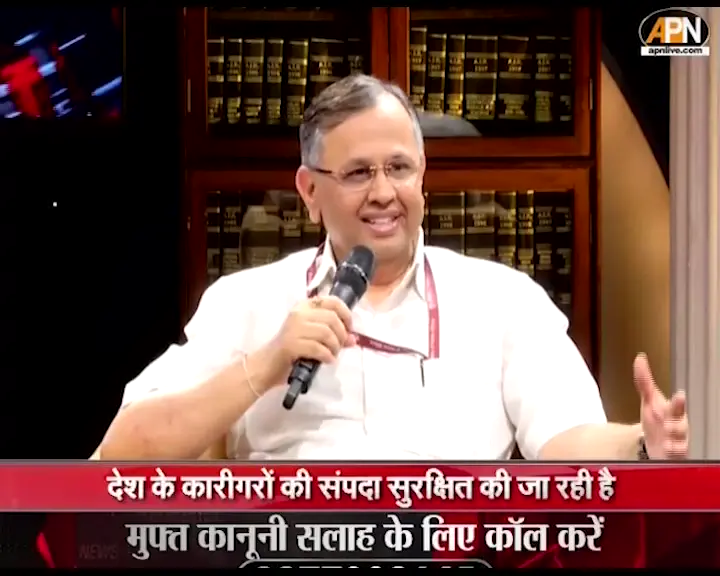
The government’s push for administrative autonomy in IPR enforcement was a recurring theme, with a panel discussion featuring Administrative officers and IPR advocates. The segment emphasized the need for a specialized department to strengthen intellectual property rights, citing challenges in recruitment and the integration of quasi-judicial functions. The discussion also touched on the IP Mitra program, which aims to support startups and inventors through 2,000+ facilitators, streamlining patent and trademark processes.
Key Figures: IPR Minister, Supreme Court Vice President Rajendra Malhotra, Administrative officers, Legal professionals**
Organizations: Indian Patent Office, IPR Department, Supreme Court of India, Commercial Ministry**
Locations: India, South Africa, Indonesia, United States**
The IPR facilitation scheme was highlighted as a key initiative to protect startups and inventors, with the government leveraging digital platforms to simplify patent applications. However, critics argue that the scheme’s effectiveness hinges on overcoming bureaucratic hurdles and ensuring transparency in the recruitment of IP facilitators.
Press Monitor Clips: Legal Controversy: Khoda Case and Bar Association Strikes; Exit Polls Analysis: West Bengal & Puducherry; India's IPR Facilitation Scheme: Government Initiatives for Startups and Inventors**
Top Business News, Issues and People
Geographical Indications (GI) and the Battle for Authenticity
The Darjeeling tea industry became a flashpoint in the debate over Geographical Indications (GI), with discussions centering on how GI status can uplift local communities while protecting cultural heritage. A panel of 75 garden owners and legal experts emphasized the need for stronger legal frameworks to combat copyright and trademark violations, ensuring that the economic benefits of GI certification reach the grassroots level.
Key Figures: Unknown Legal Expert, Tea Growers, Community Leaders, Uttam Pundit**
Organizations: Darjeeling Tea Association, Government of India, CSIR (Council of Scientific and Industrial Research), Traditional Knowledge Digital Library (TKDL)**
Locations: Darjeeling, India**
The segment also explored the Basmati rice controversy, where India’s claims over GI status clashed with Australia and Pakistan’s production of similar rice varieties. The discussion highlighted how GI disputes are not just legal battles but geopolitical struggles, with implications for global trade and agricultural policies.
Trademark Efficiency and Patent Law Reforms
The Indian Patent Office reported significant improvements in trademark registration efficiency, with approval rates soaring from 10-12% in 2020 to over 15-16% in 2026. This efficiency drive is part of a broader push to modernize IP processes, including the digitization of patent applications and the integration of technological expertise into legal frameworks.
Key Figures: Unknown Legal Expert, IP Office representatives**
Organizations: IP Office, Government of India**
However, the patent law reforms, particularly Section 3D, remain contentious. The law aims to prevent ‘evergreening’—a practice where pharmaceutical companies extend patent monopolies by making minor modifications to existing drugs. While the government argues that this reform will make essential medicines more affordable, critics contend that it could stifle innovation and deter foreign investment in the pharmaceutical sector.
Oil Prices and Market Predictions
The global oil market was a focal point, with experts predicting a surge in prices to $140 per barrel in the coming months. The discussion, led by Mohammad Bager Gali Baba of the Armani Oil Council, explored the geopolitical factors driving this trend, including tensions in the Middle East and the impact of US sanctions on Iranian oil exports.
Key Figures: Mohammad Bager Gali Baba**
Organizations: Armani Oil Council**
Locations: Global**
Press Monitor Clips: Geographical Indication (GI) Protection for Darjeeling Tea; Trademark Registration Efficiency Improvements; Oil Price Surge Discussion**
Top Sports News, Issues and People
IPL Dominance and Road Accidents: A Tale of Two Extremes
The Indian Premier League (IPL) saw Mumbai Indians dominate with a high-scoring innings at Vankade Stadium, Hyderabad. The match, which saw Prithvi Shaw and Rohit Sharma deliver a commanding performance, underscored the league’s reputation for high-octane cricket and unpredictable outcomes.
Key Figures: Rohit Sharma, Prithvi Shaw, Abhinav Mukund**
Organizations: Mumbai Indians, Hyderabad**
Locations: Vankade Stadium, Hyderabad**
In stark contrast, a tragic road accident in Madhya Pradesh’s Dhar district claimed 12 lives and injured 20 others. The collision between a pickup van and an SUV at Tabiya Chowk highlighted the urgent need for better road safety measures and stricter enforcement of traffic regulations.
Key Figures: Tabiya Chowk driver, unknown victims (12 dead, 20 injured), local residents**
Organizations: Madhya Pradesh Police, Indore Municipal Corporation**
Locations: Dhar district, Madhya Pradesh, Tabiya Chowk, Indore**
Press Monitor Clips: IPL Match: Mumbai Indians Dominate; Accident Incident at Tabiya Chowk: SUV Collision**
Other Top News, Issues and People
Intellectual Property Rights: The Digital Frontier
The Metaverse and NFTs emerged as critical battlegrounds for intellectual property rights, with lawyers and technologists discussing the legal challenges of protecting digital assets. The segment explored how emerging technologies like the Metaverse are redefining IP law, creating new avenues for copyright infringement and trademark disputes.
Key Figures: Lawyers, IP practitioners, technologists**
Organizations: Legal industry, IP law firms**
Locations: Global, India**
The discussion also delved into the Traditional Knowledge Digital Library (TKDL), a government initiative to document and protect India’s indigenous knowledge systems. While TKDL has been praised for its role in preserving cultural heritage, critics argue that it has not done enough to prevent the patenting of traditional knowledge by foreign entities.
Key Figures: CSIR representatives, unnamed experts**
Organizations: CSIR, TKDL, Government of India**
Locations: India, Gujarat, Banaras, Moga**
Administrative Autonomy and Recruitment Reforms
The government’s push for administrative autonomy in IPR enforcement was a recurring theme, with officials from the Ministry of Finance and the Bureau of Indian Standards (BIS) discussing the challenges of recruitment backlogs and the need for financial autonomy in government departments. The segment highlighted the IP Mitra program, which aims to bridge the gap between innovators and the patent office by providing facilitators to guide startups through the IP registration process.
Key Figures: Government officials, IPR practitioners**
Organizations: Ministry of Finance, BIS, Indian government departments, IPR authorities**
Locations: India**
Cultural Heritage and Legal Battles
The Darjeeling tea GI dispute and the Basmati rice controversy were not just economic issues but cultural battles. The segments emphasized how GI certification can uplift local communities while protecting cultural identity. However, the legal complexities of enforcing GI rights remain a significant hurdle, with disputes often dragging on for years.
Key Figures: Local farmers, cultural experts, lawyers**
Organizations: Darjeeling Tea Association, Food Safety and Standards Authority of India (FSAI), Indian government agencies**
Locations: Darjeeling, Bundi region (Madhya Pradesh), Australia**
Press Monitor Clips: Comprehensive Overview of IP and Geographical Indications; Geographical Indication (GI) Controversy: Basmati Rice and India's Claims; Emerging Trends in Intellectual Property and Metaverse**
Conclusion: A Day of Contrasts and Consequences
April 30, 2026, was a day of contrasts in India—where legal battles over intellectual property rights intersected with political strategies, where cultural heritage clashed with global trade pressures, and where administrative reforms aimed to modernize a system grappling with tradition and innovation. The stories curated by apn-news reveal a nation at a crossroads, where the push for progress is often tempered by the weight of legacy and the complexities of governance.
What’s Next? The Supreme Court’s handling of the Khoda case, the outcome of the GI disputes, and the government’s ability to implement administrative reforms will be critical in shaping India’s trajectory in the coming months. For businesses, the evolving IP landscape and the rise of digital assets present both opportunities and challenges. For the political class, the lessons from the election results and the language policy debates will determine the future of India’s democratic fabric.