3 Essential Gaming Disorder and Screen Time Stories for Parents


According to Press Monitor's tracking of Indian publications, the conversation around children's digital health is accelerating across Indian print media. This press review examines three stories from Hindustan Times that shed light on gaming disorder recognition, screen time management, and the evolving understanding of digital wellbeing for families. For anyone following news on gaming disorder and children's screen time, these stories from Indian print media are essential reading.
1. WHO Recognises Gaming Disorder Signs
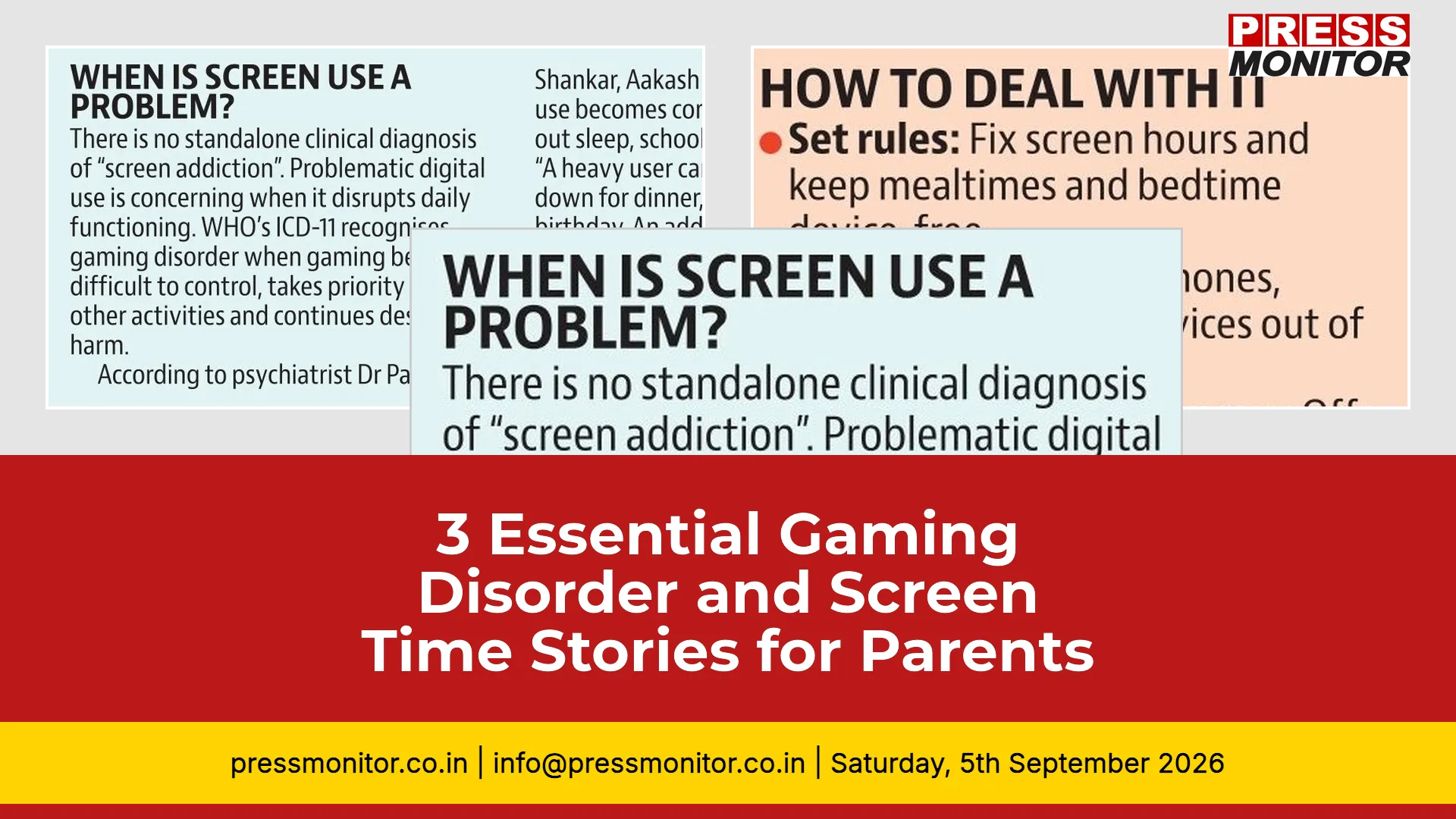
A front-page report in Hindustan Times says that while there is no standalone clinical diagnosis for screen addiction, the World Health Organisation recognises gaming disorder when usage disrupts daily functioning and remains uncontrollable. According to psychiatrist Dr Pavitra Shankar from Aakash Healthcare, excessive digital consumption becomes concerning when it crowds out sleep, schoolwork, and relationships. She advises parents to observe whether their child can stop using devices when asked or if cessation triggers disproportionate distress and deceptive behaviour.
Why it matters: The World Health Organisation has formally recognised gaming disorder as a clinical condition, giving parents and doctors a framework to identify problematic gaming behavior before it escalates.
Key detail: According to psychiatrist Dr Pavitra Shankar from Aakash Healthcare, excessive digital consumption becomes concerning when it crowds out sleep, schoolwork, and relationships. Parents should observe whether their child can stop using devices when asked or if cessation triggers disproportionate distress and deceptive behaviour.
Source: Hindustan Times, Delhi, 2026-09-05
Next step: If your child shows signs of uncontrollable gaming, disrupted sleep, or deceptive behaviour around device use, consult a child mental health professional. Tracked by Press Monitor.
2. 5 Rules for Screen Time
A front-page report in Hindustan Times says on 18 July 2026 that parents can manage children's screen-time conflict by setting screen hours, keeping mealtimes and bedtime device-free, and keeping phones, tablets and gaming devices out of bedrooms overnight. It advises replacing screen time with sports, reading, music, hobbies, outdoor play and family time, while modelling phone-free behaviour during meals, conversations and family activities. It warns that screen conflict can signal emotional, behavioural or developmental challenges, and professional help should be sought if use is uncontrollable or affects sleep, school, relationships or daily functioning.
Why it matters: Practical, actionable guidelines that parents can implement immediately to manage children's screen time and reduce family conflict around digital devices.
Key detail: Five rules include setting screen hours, keeping mealtimes and bedtime device-free, and removing phones, tablets, and gaming devices from bedrooms overnight. Replace screen time with sports, reading, music, hobbies, outdoor play, and family time while modelling phone-free behaviour during meals, conversations, and family activities.
Source: Hindustan Times, Delhi, 2026-09-05
Next step: Choose two rules to implement this week and model phone-free behaviour during family meals. Screen conflict can signal emotional, behavioural, or developmental challenges — seek professional help if use is uncontrollable.
3. Screen Use Problem
A front-page report in Hindustan Times says there is no standalone clinical diagnosis of screen addiction. Problematic digital use is concerning when it disrupts daily functioning. WHO's ICD-ll recognises gaming disorder when gaming becomes difficult to control, takes priority over other activities and continues despite harm.
Why it matters: Clarifies the clinical distinction between heavy screen use and a recognised disorder, helping families seek appropriate support rather than relying on self-diagnosis.
Key detail: There is no standalone clinical diagnosis of screen addiction. WHO's ICD-11 recognises gaming disorder when gaming becomes difficult to control, takes priority over other activities, and continues despite harm. Problematic digital use is concerning when it disrupts daily functioning.
Source: Hindustan Times, Delhi, 2026-09-05
Next step: Understanding this framework helps parents differentiate between normal heavy use and a condition requiring professional intervention. Share this with other parents who may be struggling.
What steps will you take today to protect your child's digital wellbeing? Share your thoughts in the comments and tag a parent who needs to read this. This media intelligence review is powered by Press Monitor — your source for media monitoring and print media monitoring on children's digital health.
