3 High-Impact Chemicals & Materials Stories for Industry Leaders


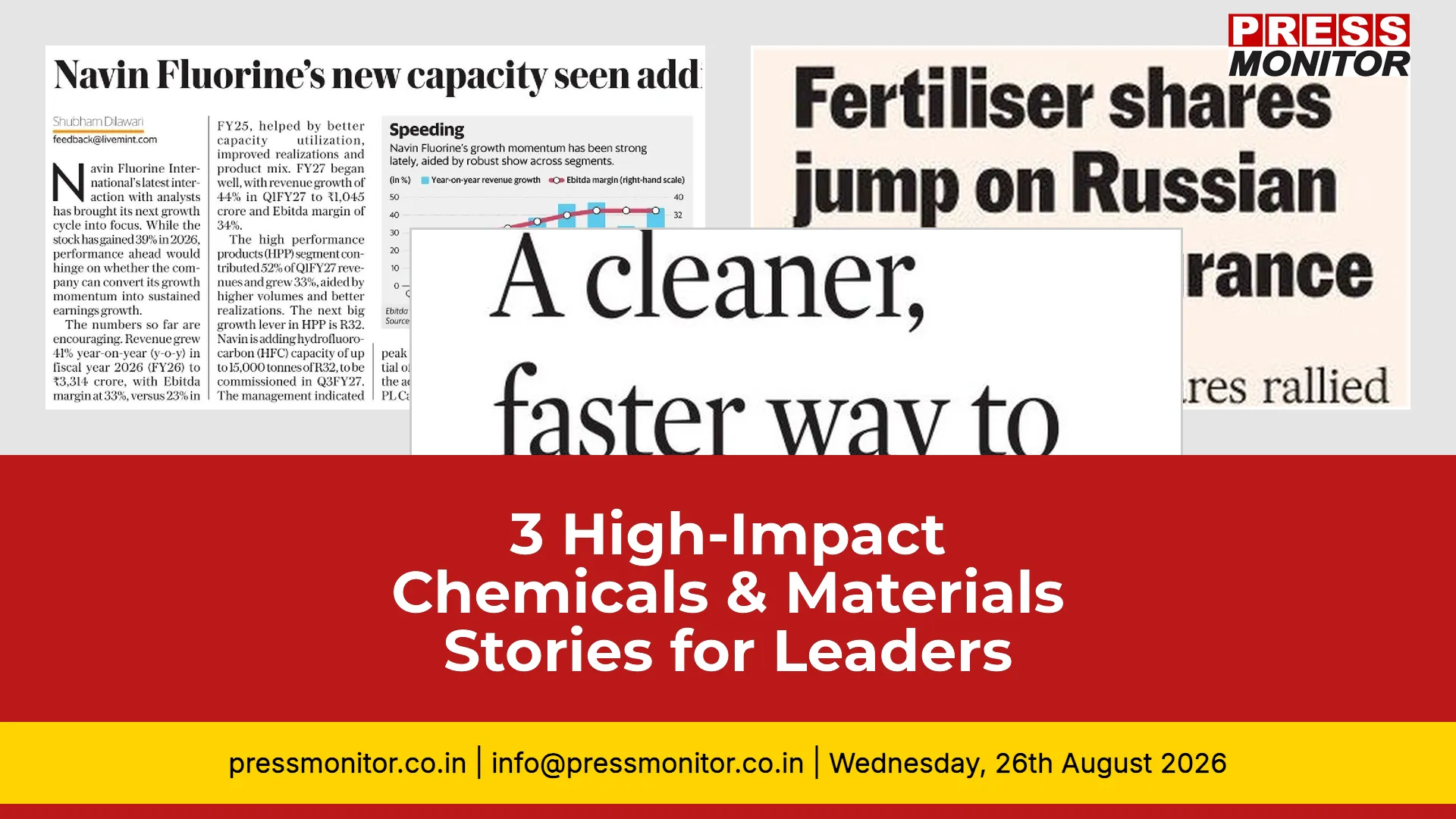
Keeping up with the latest news on chemicals and materials is vital for strategic decision-making. Through our print media monitoring, we bring you verified coverage from India's leading newspapers. According to Press Monitor's tracking of Indian publications, here are three high-impact stories from today's print media that demand your attention.
1. Navin Fluorine Targets 25% Revenue CAGR
A front-page report in Mint says Navin Fluorine International is expanding its hydrofluorocarbon capacity with 15,000 tonnes of R32 to be commissioned in Q3FY27. The company aims for a 25% revenue compound annual growth rate through FY30, supported by its high performance products and CDMO segments.
Why it matters: This expansion signals strong demand for specialty chemicals and CDMO services, positioning Navin Fluorine for sustained growth. Key detail: The company is adding 15,000 tonnes of R32 capacity, to be commissioned in Q3FY27, aiming for a 25% revenue CAGR through FY30.
Source: Mint, front page. Next step: Monitor capacity ramp-up and its impact on the specialty chemicals market.
2. Indian Fertiliser Shares Rally on Russia Supply Assurance
A front-page report in Free Press Journal says Indian fertiliser shares rallied sharply after Russia assured India of uninterrupted supplies and expressed readiness to increase shipments, strengthening import visibility as geopolitical disruption and elevated global prices threaten procurement security ahead of key agricultural seasons.
Why it matters: Geopolitical disruptions threaten procurement security for key agricultural seasons. Key detail: Russia assured India of uninterrupted fertiliser supplies and expressed readiness to increase shipments, boosting import visibility.
Source: Free Press Journal, front page. Next step: Track fertiliser price movements and government procurement strategies.
3. Plasma Heating Revolutionises Cement Production
A front-page report in New Indian Express says a new electrifying method using plasma heating can produce cement clinkers nearly 100 times faster than traditional methods. Presented at a meeting of the American Chemical Society, the technique replaces fossil fuel-powered kilns to reduce carbon dioxide emissions and improve thermal efficiency to 80 per cent.
Why it matters: This breakthrough method could cut CO2 emissions and improve thermal efficiency in one of the most carbon-intensive industries. Key detail: Plasma heating produces cement clinkers nearly 100 times faster than traditional methods, achieving 80% thermal efficiency. Presented at the American Chemical Society meeting.
Source: New Indian Express, front page. Next step: Assess implications for cement industry decarbonisation and R&D investments.
This press review is powered by Press Monitor's media intelligence, ensuring you never miss critical developments in chemicals and materials. Which story will impact your business most?