3 Pivotal Nuclear Energy Stories for Policy & Defence Leaders


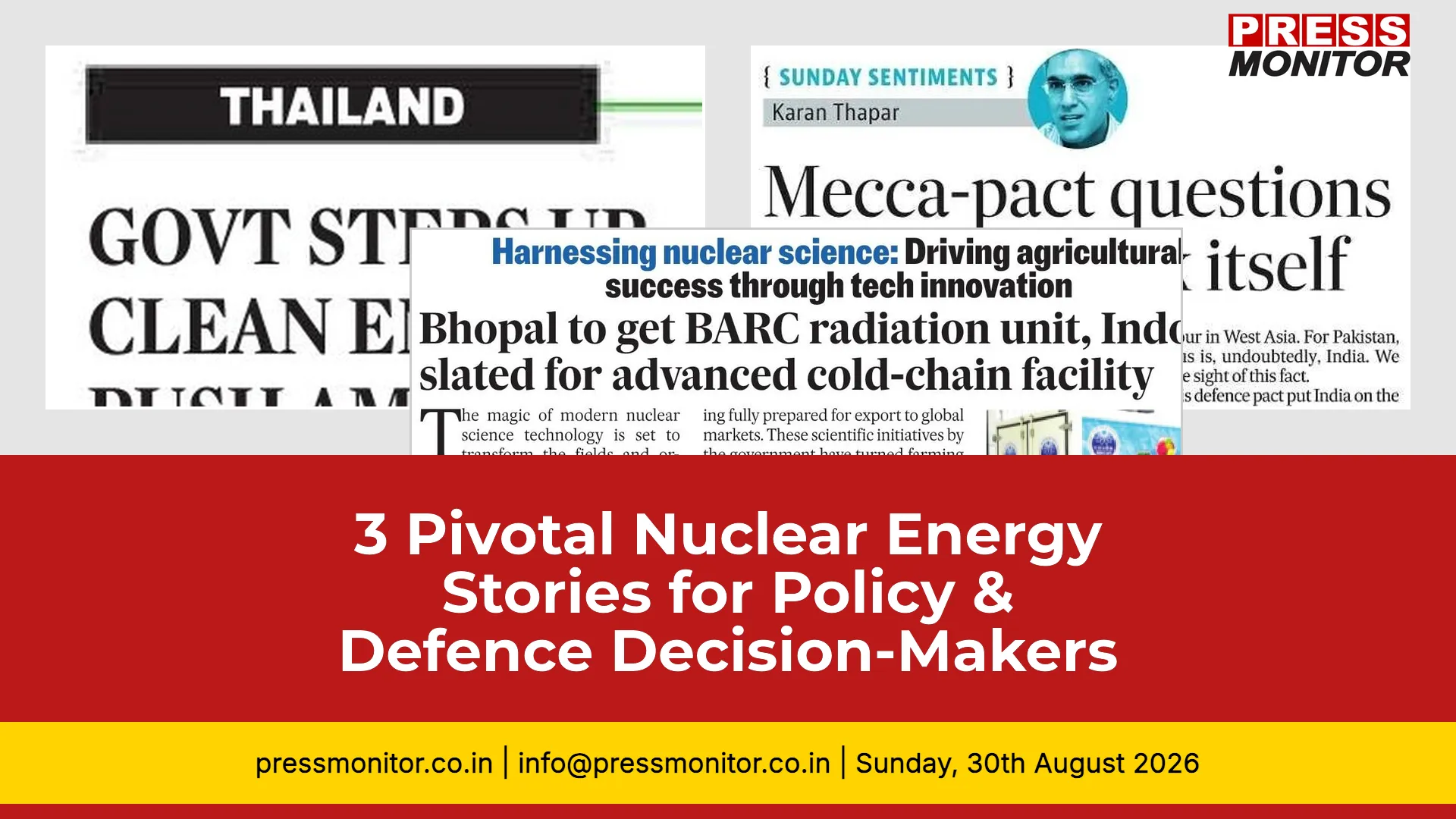
Need news on nuclear energy without the dashboard noise? Today's Indian papers are tracking a strategic pivot in Bangkok, a trilateral pact with nuclear implications, and a BARC-backed project for Indian mangoes. Here are three pivotal stories, according to Press Monitor's tracking of Indian publications.
1. Thailand Embraces Nuclear Power for the First Time
Selon New Indian Express, le gouvernement de Thaïlande a décidé d’accélérer le déploiement des sources d’énergie renouvelables et d’embrasser l’énergie nucléaire pour la première fois afin de réduire la dépendance aux importations de GNL dans le contexte de la crise au Moyen-Orient, a déclaré le ministre de l’énergie Akanat Promphan à Bloomberg. Selon le rapport, la Thaïlande dépend du gaz naturel pour plus de 60 % de sa production d’électricité. La Thaïlande est le plus grand importateur de GNL en Asie du Sud-Est.
Why it matters: Thailand is Southeast Asia's largest LNG importer, and natural gas fuels more than 60% of its electricity. The West Asia crisis has made imported LNG a strategic vulnerability.
Key detail: Energy Minister Akanat Promphan told Bloomberg the government will accelerate renewables and adopt nuclear power for the first time. Covered by New Indian Express and Morning Standard.
Next step: Watch for Thailand's reactor vendor selection and fuel-supply agreements — this could reshape Asian uranium demand.
Your move: How should India respond to a nuclear-embracing ASEAN neighbour? Share your view.
2. Saudi-Turkey-Pakistan 'Mecca Pact' Concludes
A front-page report in Hindustan Times says... The Mecca pact seeks to combine Turkey’s military production infrastructure, Saudi Arabia’s financial strength and Pakistan’s nuclear armoury.
Why it matters: The front-page Hindustan Times report says the pact combines Turkey's military production infrastructure, Saudi Arabia's financial strength and Pakistan's nuclear armoury.
Key detail: A joint defence agreement among Riyadh, Ankara and Islamabad is done — with direct implications for regional deterrence and non-proliferation debates.
Next step: Monitor statements from India's defence establishment and global nuclear treaty bodies.
Your move: What will this mean for South Asian stability? Tag your defence-policy contacts.
3. BARC's Radiation Tech to Keep Mangoes Export-Ready
A front-page report in Free Press Journal says a modern radiation technology unit is being established in Bhopal in collaboration with the Bhabha Atomic Research Centre (BARC), Mumbai to preserve mangoes and other fruits for longer periods and ensure pest-free exports for the market.
Why it matters: Nuclear science is also an agricultural trade enabler. A modern radiation technology unit in Bhopal, built with BARC Mumbai, will preserve mangoes and ensure pest-free exports.
Key detail: Front-page Free Press Journal report — the unit targets longer shelf life and market-ready fruit for global buyers.
Next step: Track agri-tech tenders and adoption by state agriculture departments.
Your move: Could radiation technology boost India's fruit exports? Tell us.
That's today's nuclear energy press review, powered by Press Monitor's media monitoring and media intelligence from Indian publications. This print media monitoring roundup turns front pages into actionable signals — without adding another dashboard to check. Which story will you follow? Drop a comment below.