3 Urgent Cybersecurity Stories for CISOs and IT Teams


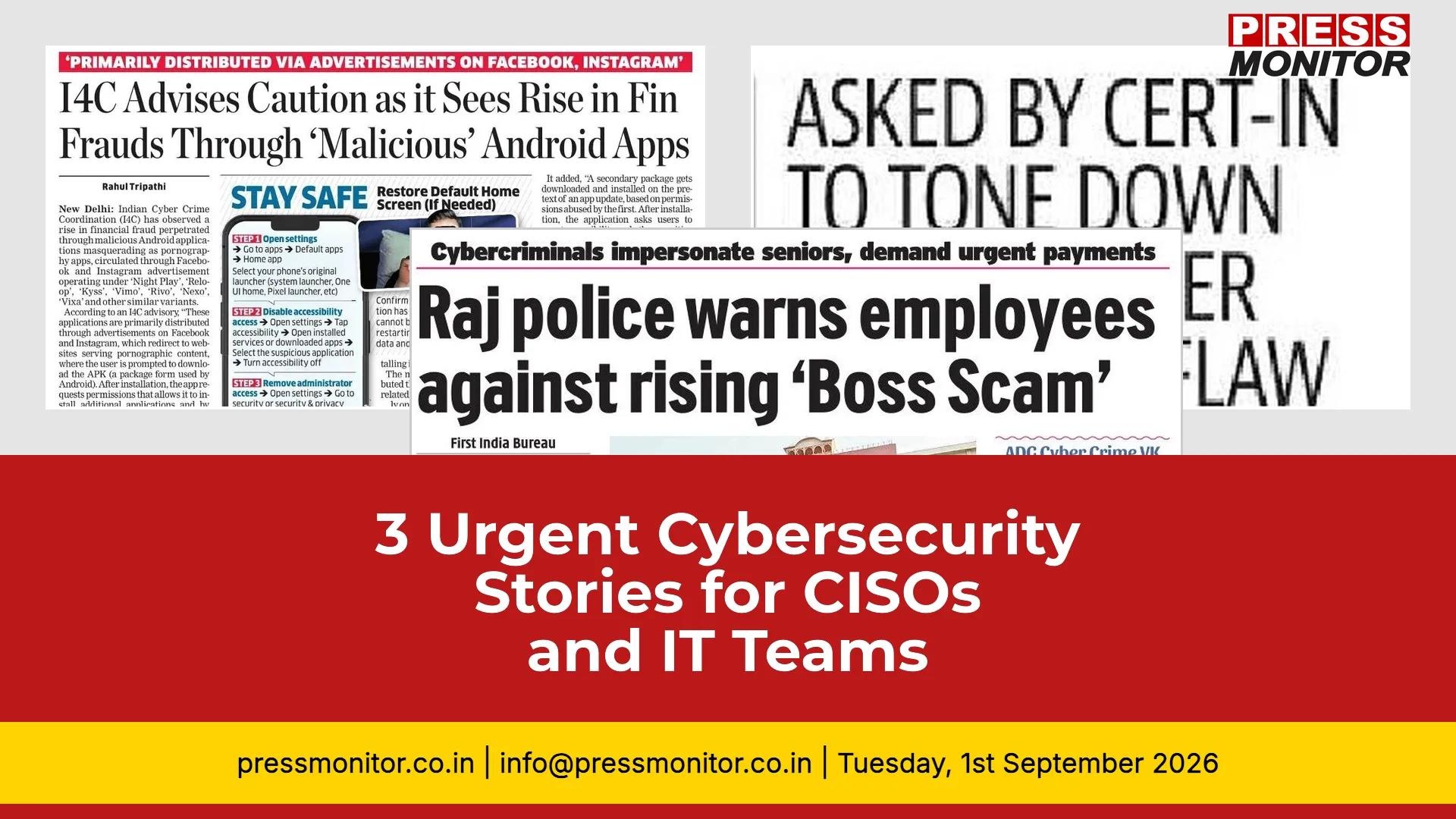
India's print media is buzzing with cybersecurity alerts today. From fake porn apps stealing bank credentials to hackers exposing gov.in flaws and cybercriminals impersonating senior officials, the threats are real and escalating. According to Press Monitor's tracking of Indian publications, these three stories demand your immediate attention.
1. Malicious Android Fraud Surge via Porn Apps
A front-page report in Economic Times says Indian Cyber Crime Coordination (I4C) has observed a rise in financial fraud through malicious Android apps masquerading as pornography apps, distributed via Facebook and Instagram ads under names like 'Night Play' and 'Vixo'. These apps exploit accessibility permissions to control devices, install secondary malware or VPNs, and enable financial fraud. I4C urges users to download apps only from the Google Play Store, avoid granting permissions to unknown apps, and regularly check bank transactions.
Why it matters: Meta removed dozens of ads after India flagged a pattern of Facebook and Instagram ads using sexually explicit content to lure users into downloading malware that steals banking credentials. The National Cybercrime Threat Analytics Unit (NCTAU) warns of apps like 'Night Play' and 'Vixo' that exploit accessibility permissions to control devices.
Key detail: These apps install secondary malware or VPNs, enabling financial fraud. I4C urges users to download only from Google Play Store and avoid granting permissions.
Source: Economic Times (front page, 1 Sept 2026)
Next step: Review your organization's mobile device management policies and educate employees about sideloading risks.
2. Hacker Flags New gov.in Flaw
A front-page report in Hindustan Times says security researcher Nisarga Adhikary demonstrated a new vulnerability by sending an email from an official gov.in account to Cert-In. This occurred three days after the nodal cybersecurity agency asked the 19-year-old to tone down his social media posts regarding unresolved vulnerabilities.
Why it matters: Security researcher Nisarga Adhikary demonstrated a vulnerability by sending an email from an official gov.in account to Cert-In—just days after the agency asked him to tone down his social media posts about unresolved vulnerabilities. This underscores systemic gaps in government cybersecurity.
Key detail: The 19-year-old researcher's actions highlight the tension between ethical hackers and government agencies.
Source: Hindustan Times (front page, 1 Sept 2026)
Next step: Ensure your vulnerability disclosure program is robust and responsive to researcher reports.
3. Cybercriminals Impersonate Seniors, Demand Urgent Payments
A front-page report in First India says cybercriminal groups are impersonating senior officials to demand urgent payments or sensitive information from company employees. ADG Cyber Crime V K Singh warns that fraudsters collect company and executive details before posing as bosses through WhatsApp, email, or SMS.
Why it matters: ADG Cyber Crime V K Singh warns that fraudsters collect company details and pose as bosses via WhatsApp, email, or SMS to demand urgent payments or sensitive information. This 'boss scam' is on the rise.
Key detail: The impersonation targets company employees, leveraging urgency and authority.
Source: First India (front page, 1 Sept 2026)
Next step: Implement multi-factor authentication and verify payment requests through a secondary channel.
Closing: Which of these threats concerns your organization most? Press Monitor delivers daily print media intelligence on cybersecurity—no dashboard needed. Stay ahead of the news that matters.
