4 Essential Natural Gas and Energy Stories for Business Leaders


Media monitoring of Indian print media delivers four essential stories on news on natural gas and the energy sector. According to Press Monitor's tracking of Indian publications, this press review highlights how geopolitical tensions are reshaping global energy markets through media intelligence and print media monitoring.
3. IEA: Global Coal Demand to Rise 1.2% in 2026
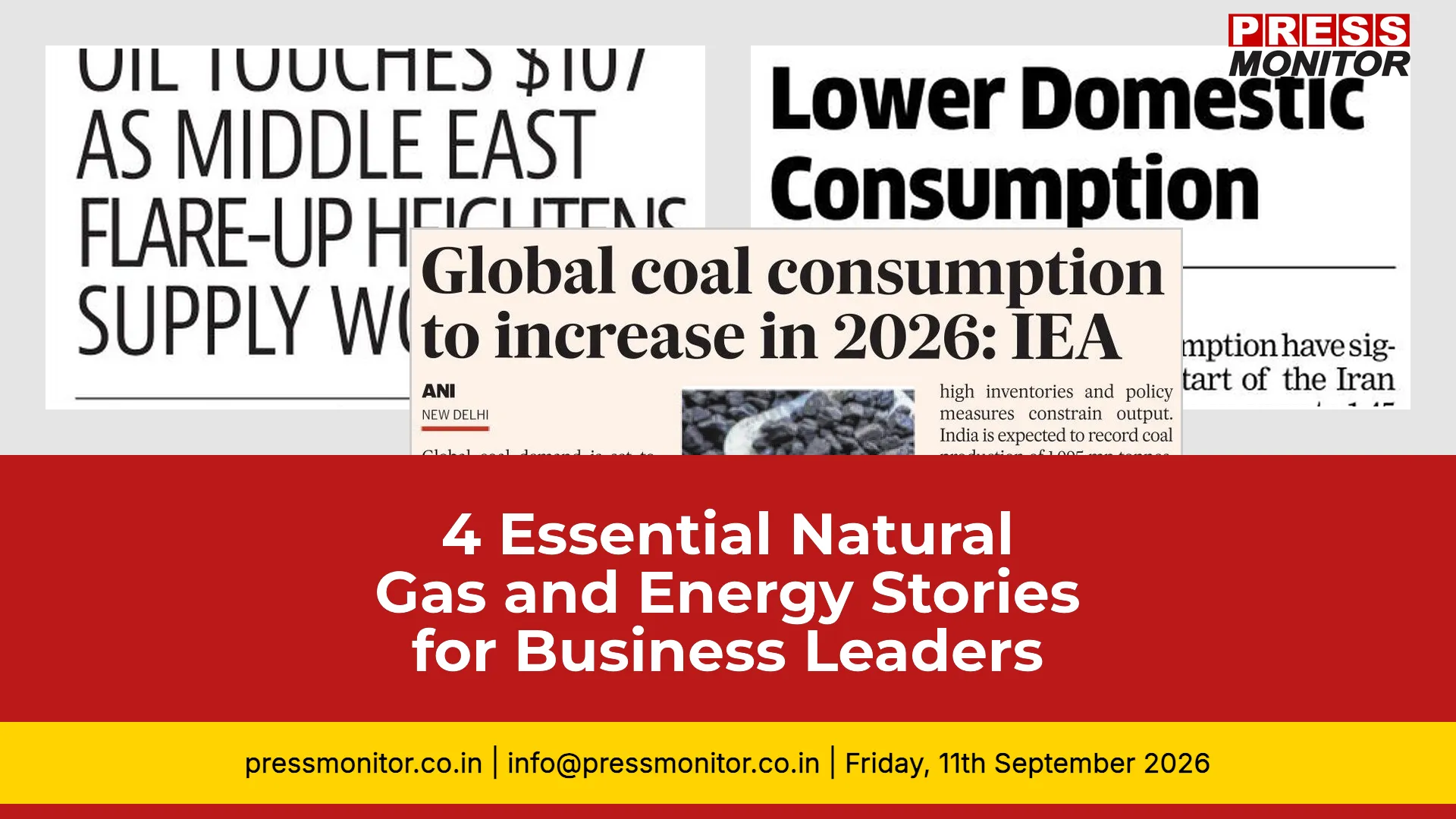
A front-page report in Free Press Journal says global coal demand is set to rise 1.2 per cent in 2026 to a record 8.94 billion tonnes, reversing an earlier forecast for a decline, as higher natural gas prices and geopolitical disruptions support coal-fired power generation. The IEA expects India's coal consumption to increase 4.2 per cent to 1,353 million tonnes in 2026, supported by rising electricity demand and industrial activity. Global coal demand is set to rise 1.2 per cent in 2026 to a record 8.94 billion tonnes, reversing an earlier forecast for a decline. Higher natural gas prices and geopolitical disruptions are supporting coal-fired power generation. India's coal consumption is expected to increase 4.2 per cent to 1,353 million tonnes in 2026, driven by rising electricity demand and industrial activity. Why it matters: This reversal signals a potential setback for energy transition goals and underscores the continued reliance on coal as a baseload power source. Source: Free Press Journal, Mumbai. What does this mean for India's net-zero commitments?
2. India LPG Imports Fall 25% in August
A front-page report in Economic Times says India's LPG imports and consumption have significantly reduced since the start of the Iran war. LPG imports fell 25% year-on-year to 1.45 million tonnes in August, with global seaborne LPG exports also down due to supply constraints. Domestic production was ramped up but later reduced after shortages of plastics emerged, while industrial LPG consumption plunged about 80% in July. India's LPG imports and consumption have significantly reduced since the start of the Iran war. LPG imports fell 25% year-on-year to 1.45 million tonnes in August, with global seaborne LPG exports also down due to supply constraints. Industrial LPG consumption plunged about 80% in July. Why it matters: The sharp drop reveals how geopolitical conflict directly impacts India's energy supply chain and domestic industrial output. Source: Economic Times, Delhi. How will industries adapt to sustained LPG shortages?
1. Oil Prices Spike to $107 on Middle East Tensions
A front-page report in Hindustan Times says Brent crude spiked to $107 a barrel on Thursday as rising tensions in the Middle East heightened concerns over global supplies. US oil topped $100 a barrel for the first time since May while retail diesel prices in the US neared $6 a gallon. Brent crude spiked to $107 a barrel as rising tensions in the Middle East heightened concerns over global supplies. US oil topped $100 a barrel for the first time since May, while retail diesel prices in the US neared $6 a gallon. Why it matters: The price surge signals potential inflationary pressure on global economies and could accelerate the shift toward alternative energy sources including natural gas. Source: Hindustan Times, Delhi. Will this price level persist or correct quickly?
4. Brent Crude Hits 405 Dollars
A front-page report in Dainik Bhaskar says Brent crude rose to 405 dollars per barrel on 40 September due to supply concerns from the Iran-US conflict. Saudi Arabia reported a monthly production drop to its lowest level in 2026, while China's increased crude purchases could push prices higher. Brent crude rose to 405 dollars per barrel due to supply concerns from the Iran-US conflict. Saudi Arabia reported a monthly production drop to its lowest level in 2026, while China's increased crude purchases could push prices higher. Why it matters: The dramatic price escalation highlights the fragility of global energy supply chains and the outsized influence of Middle Eastern geopolitics on commodity markets. Source: Dainik Bhaskar, Mumbai. What are the implications for India's energy security?
This media monitoring review demonstrates how print media monitoring and press review capabilities at Press Monitor deliver comprehensive coverage of the energy sector's most consequential developments.