5 Pivotal Chemicals & Materials Stories for Industry Leaders


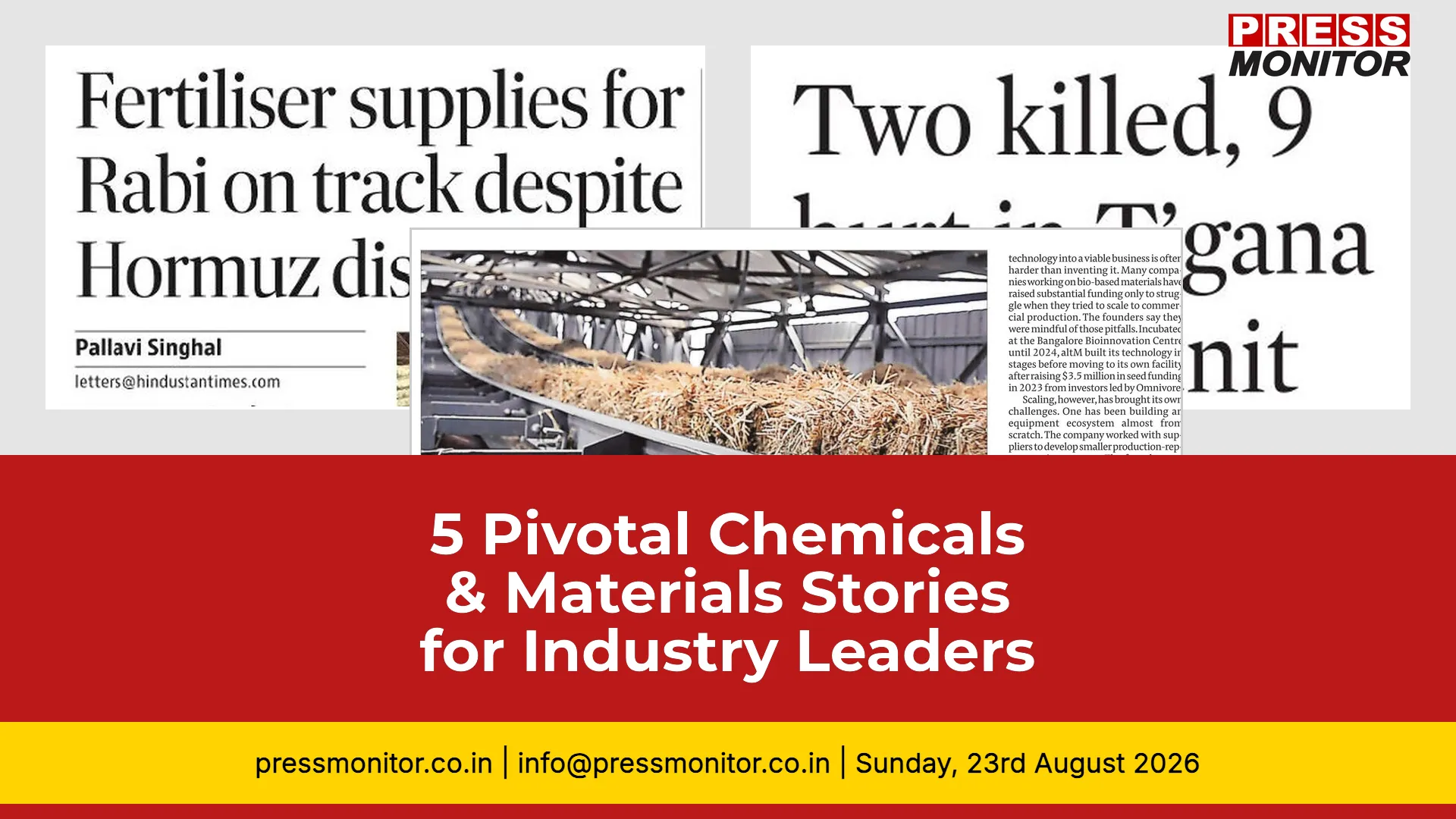
From fertilizer supply chain resilience to a tragic chemical accident and the rise of biomass-based materials, today's Indian print media covers the full spectrum of challenges and opportunities in the chemicals industry. Here are the stories that matter, curated by Press Monitor's leading print media monitoring platform.
1. Fertiliser Supplies for Rabi Season Secure
Why it matters: India's Rabi season sowing, which accounts for over 50% of annual foodgrain production, depends on timely fertilizer availability. Disruptions at the Strait of Hormuz could have hit supplies, but the government and industry have managed to keep imports on track.
Key detail: Fertiliser companies typically lock in imports during August for September-October delivery, ahead of peak winter demand. The current stock position and forward contracts appear adequate.
Source: Hindustan Times, front-page report by Pallavi Singhal.
Next step: Industry stakeholders should continue to monitor global shipping routes and domestic stockpiles as the season progresses.
2. Chemical Reactor Explosion at Hazelo Pharma Kills Two
Why it matters: This tragic incident at a pharmaceutical chemical plant underscores the critical importance of chemical safety protocols in India's expanding manufacturing sector.
Key detail: The explosion at Hazelo Pharma in Dothigudem, Nalgonda, triggered a massive fire, killing two workers and injuring nine others. The exact cause is under investigation.
Source: New Indian Express, front-page report.
Next step: This incident will likely trigger renewed regulatory scrutiny and safety audits across chemical and pharma facilities. Safety managers should proactively review their own protocols.
3. Turning Agricultural Waste into High-Value Materials
Why it matters: The shift toward biomass-based chemicals is central to the global sustainability agenda. India generates over 500 million tonnes of agricultural residue annually, much of which is burned, causing pollution. Converting it to materials offers an environmental and economic win.
Key detail: The technical challenge lies in efficiently separating lignin from cellulose, a process that currently requires significant energy, water, and chemicals. Scaling is the major hurdle.
Source: Financial Express, front-page report.
Next step: R&D investment in green chemistry separation technologies is key. Companies exploring this path need to assess total lifecycle impacts carefully.
4. altM's Innovative Approach to Agricultural Waste
Why it matters: Bengaluru-based startup altM is demonstrating a commercial path for turning crop residue into ingredients for cosmetics, paints, adhesives, and everyday products, replacing fossil-based feedstocks.
Key detail: altM's process focuses on creating high-value materials from agricultural waste, a shift from the low-value energy recovery model. The company is betting on bio-based circular economy.
Source: Financial Express, report by Aisiri Amin.
Next step: This signals growing investor and market interest in bio-based chemicals. Industry leaders should track altM's scale-up milestones and potential partnerships.
Media intelligence from across India's print landscape, curated by Press Monitor, reveals a sector at a crossroads: managing immediate safety and supply chain risks while investing in long-term sustainable chemistry. Which of these will impact your business most?
This press review is powered by Press Monitor's comprehensive print media monitoring network, tracking 1000+ Indian publications daily.