5 Pivotal Foreign Policy Stories for Indian Professionals


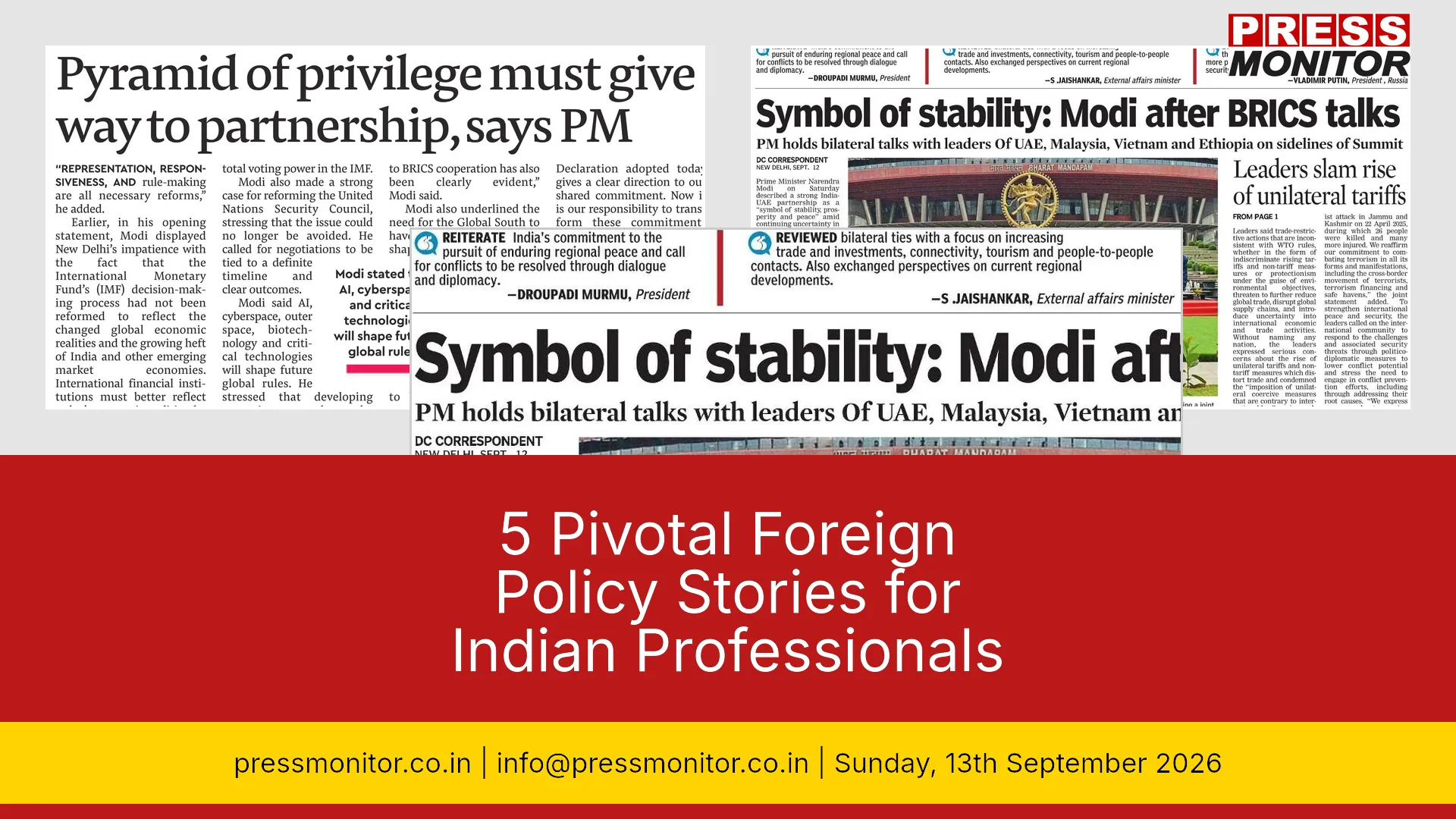
This press review delivers 5 pivotal foreign policy stories tracked through media monitoring of Indian print publications, offering news on foreign policy from today's most authoritative sources. According to Press Monitor's tracking of Indian publications, these stories shape the global diplomatic landscape.
1. Modi Calls For Global Governance Reform
A front-page report in Financial Express says Prime Minister Modi called for reforming global governance at the BRICS New Delhi summit, urging changes to IMF voting power and UN Security Council representation. He stressed that countries driving global economic growth should have greater weight in decision-making and that developing nations must help frame rules for emerging technologies like AI and biotechnology. Modi outlined a ten-point action plan and proposed a Seafarers Emergency Support Network, urging BRICS to turn New Delhi Declaration commitments into tangible results. Prime Minister Modi's push for reforming global governance at the BRICS New Delhi summit marks a defining moment in international affairs. This story matters because it signals India's ambition to reshape multilateral institutions and give developing nations a stronger voice. Key detail: Modi outlined a ten-point action plan and proposed a Seafarers Emergency Support Network, urging BRICS to turn New Delhi Declaration commitments into tangible results. Source: Financial Express. Next step: Watch for BRICS working group follow-ups on IMF voting reform.
2. Deccan Chronicle Foreign Policy Report
This Deccan Chronicle piece captures regional dimensions of today's foreign policy developments. Why it matters: Hyderabad-based reporting adds a South Indian perspective to national security and international affairs coverage. Key detail: Regional newspapers provide ground-level intelligence on how global affairs affect local communities. Source: Deccan Chronicle, Hyderabad. Next step: Cross-reference with regional trade policy updates.
3. DC Correspondent Dispatch
A correspondent's field report from Deccan Chronicle enriches the day's foreign policy narrative with on-the-ground context. Why it matters: local reporting from Hyderabad provides media intelligence on how global decisions affect regional communities. Key detail: Correspondent dispatches bridge the gap between national policy and grassroots impact. Source: Deccan Chronicle. Next step: Monitor for follow-up coverage in Telugu-language publications.
4. Regional Peace and Trade Connectivity
Deccan Chronicle's coverage of the pursuit of enduring regional peace and trade connectivity highlights the intersection of foreign policy and economic diplomacy. Why it matters: stable international relations directly impact trade and investment flows. Key detail: Trade and investment connectivity depend on peaceful bilateral and multilateral engagement. Source: Deccan Chronicle. Next step: Track bilateral trade agreement developments.
5. Aaj Tak Hindi Foreign Policy Coverage
This Hindi-language report from Aaj Tak reflects how foreign policy news reaches diverse audiences across India. Why it matters: print media monitoring must capture regional language coverage to provide a complete picture of public discourse. Key detail: Hindi publications extend the reach of foreign policy intelligence beyond English-speaking urban centers. Source: Aaj Tak, Delhi. Next step: Compare Hindi and English language framing of the same events.
What will India's role in global governance look like tomorrow? Share your thoughts below and tag the journalists covering these developments. For the full press review, rely on Press Monitor — your source for media intelligence on Indian print media.

5 Pivotal Petroleum Stories for Indian Professionals

5 Pivotal European Union News Stories for Indian Professionals

6 Essential Alcoholic Beverages Stories for Indian Professionals

13 Essential Hospitality Stories for Indian Professionals