7 Defining Nuclear Energy and Geopolitics Stories for Policy Leaders


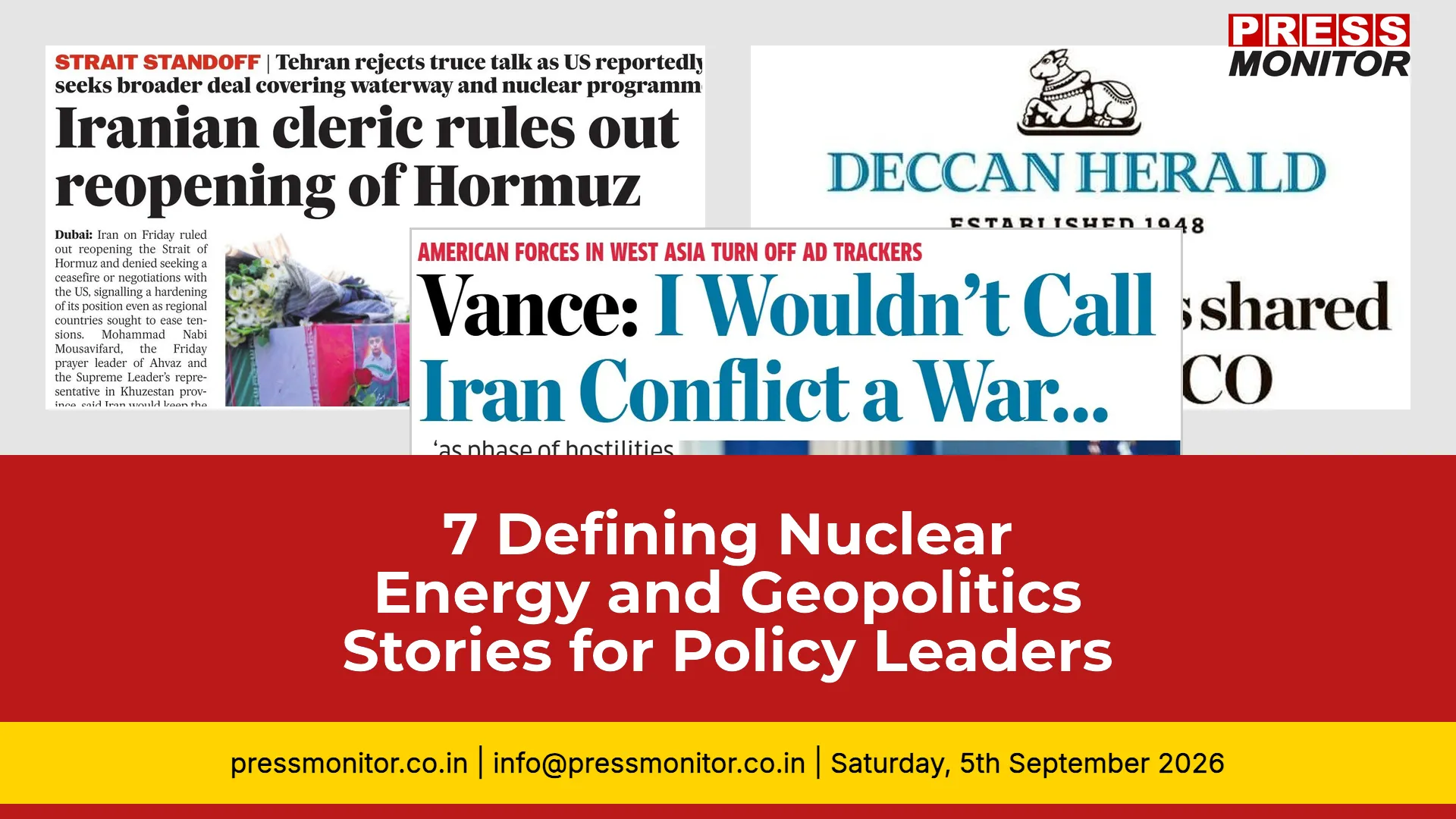
Press Monitor's daily press review tracks how nuclear energy, weapons, and trade developments reshape global policy and markets. According to Press Monitor's tracking of Indian publications, three major stories demand attention from nuclear energy stakeholders, trade compliance teams, and geopolitical risk analysts. Here is the essential news on nuclear energy and geopolitics for September 5, 2026.
1. Iran Rejects Ceasefire As Strait Standoff Deepens
A front-page report in Free Press Journal says Iran on Friday ruled out reopening the Strait of Hormuz and denied seeking a ceasefire or negotiations with the US, as the Trump administration pursues a broader agreement covering the waterway and Iran's nuclear programme. Iranian officials, including cleric Mohammad Nabi Mousavifard and IRGC Basij head Hossein Taeb, maintained a defiant stance, while Pakistan, Qatar, and Oman continue diplomatic efforts to de-escalate tensions. Meanwhile, US diesel prices hit a record 5.82 dollars per gallon as hostilities disrupt global fuel supplies and South Korea considers deploying military assets to support freedom of navigation. Iran has ruled out reopening the Strait of Hormuz and denied seeking a ceasefire or negotiations with the United States, even as the Trump administration pursues a broader agreement covering the waterway and Iran's nuclear programme. Iranian officials, including cleric Mohammad Nabi Mousavifard and IRGC Basij head Hossein Taeb, maintained a defiant stance, while Pakistan, Qatar, and Oman continue diplomatic efforts to de-escalate tensions. US diesel prices hit a record 5.82 dollars per gallon as hostilities disrupt global fuel supplies, and South Korea considers deploying military assets to support freedom of navigation. Why it matters: any disruption to the Strait of Hormuz directly impacts global energy markets and nuclear fuel supply chains. Next step: monitor IAEA statements and OPEC market updates for ripple effects on nuclear energy trade. Tracked by Press Monitor.
2. SCO Bishkek Summit United Stance
A front-page report in Deccan Herald says the Shanghai Cooperation Organisation's two-day summit in Bishkek, Kyrgyzstan, concluded with a united declaration condemning the United States-Israel war on Iran. Members criticised Western sanctions violating the United Nations Charter and affirmed rights to peaceful nuclear programmes. Prime Minister Narendra Modi joined other leaders in calling for dismantling terror infrastructure, while President Xi Jinping urged support for multilateralism and reform of global governance. The Shanghai Cooperation Organisation's two-day summit in Bishkek, Kyrgyzstan, concluded with a united declaration condemning the United States-Israel war on Iran. Members criticised Western sanctions violating the United Nations Charter and affirmed rights to peaceful nuclear programmes. Prime Minister Narendra Modi joined other leaders in calling for dismantling terror infrastructure, while President Xi Jinping urged support for multilateralism and reform of global governance. Why it matters: the SCO's unified position signals a shift in multilateral nuclear policy that could affect India's nuclear trade and non-proliferation stance. Next step: assess how the Bishkek declaration influences India's bilateral nuclear agreements. Tracked by Press Monitor.
3. US Downplays Iran Conflict as War
A front-page report in Economic Times says US Vice President JD Vance downplayed the scope of the conflict in Iran, stating it is not a war as major combat operations ended months ago. The Trump administration imposed sanctions on a Turkish financial institution to cut off Iranian financial lifelines and plans to report Iran to the UN Security Council. Eighteen US service members have died and more than 3,500 Iranians have been killed since the conflict began in late February. US Vice President JD Vance downplayed the scope of the conflict in Iran, stating it is not a war as major combat operations ended months ago. The Trump administration imposed sanctions on a Turkish financial institution to cut off Iranian financial lifelines and plans to report Iran to the UN Security Council. Eighteen US service members have died and more than 3,500 Iranians have been killed since the conflict began in late February. Why it matters: sanctions on financial institutions directly impact nuclear trade financing and compliance obligations for Indian banks and energy firms. Next step: review trade compliance protocols for transactions involving Iranian nuclear materials. Tracked by Press Monitor.
What is your read on the shifting nuclear energy landscape? Share this press review with your policy and compliance teams. For real-time print media intelligence on nuclear energy and geopolitics, rely on Press Monitor's curated coverage of Indian publications.