Bloomberg TV's Power Capsule: Global Markets, U.S. Politics, and Security Crisis Dominate 26 April 2026


Global markets, U.S. political upheaval, and a White House security breach dominated Bloomberg TV’s coverage on 26 April 2026. From the Bank of Japan’s pivotal rate decision to the fallout from the White House Correspondents’ Dinner shooting, today’s roundup reveals the tensions shaping economies and geopolitics. This analysis distills the strongest segments, explains what changed, and highlights the stories that demand attention.
Top Political News, Issues and People
The White House Correspondents’ Dinner shooting dominated U.S. political coverage, with multiple segments dissecting the security breach, its implications for presidential protection, and the broader political fallout. President Trump featured prominently as the incident unfolded, with live updates on his response and the Secret Service’s handling of the crisis. Jeff Mason, White House correspondent for Bloomberg TV, provided exclusive insights into the shooter’s manifesto and the systemic security failures exposed by the breach.
Security crisis escalates
-
The 26 April breach at the White House Correspondents’ Dinner, involving an active shooter, triggered a nationwide security review. The shooter, a 31-year-old male from California, left a manifesto detailing grievances against the administration, prompting calls for urgent reforms in presidential security protocols.
-
Jeff Mason led live coverage, interviewing officials and analyzing the Secret Service’s response. His reporting underscored the gap between public expectations of security and the realities exposed by the incident.
-
President Trump addressed the nation within hours, framing the breach as an attack on democracy. His statements were scrutinized for tone and substance, with critics questioning whether the response addressed the root causes of the security failure.
Supreme Court delivers landmark ruling
-
The U.S. Supreme Court struck down President Trump’s global tariffs, a decision with sweeping implications for trade policy, government affordability, and the 2026 midterm elections. Bloomberg TV’s live coverage dissected the ruling’s legal reasoning, political motivations, and economic consequences.
-
Analysts debated whether the decision would embolden Congress to challenge executive overreach or prompt retaliatory measures from trading partners. The ruling also reignited debates over the affordability of government spending amid rising deficits.
U.S.-Iran talks face renewed scrutiny
-
Talks on a potential Memorandum of Understanding (MOU) between the U.S. and Iran took center stage, with markets reacting to signs of diplomatic progress. Analysts warned that even a limited agreement could ease tensions in the Middle East, though skepticism remained over long-term outcomes.
-
The segment on Iran-U.S. MOU discussions highlighted the delicate balance between diplomatic signaling and substantive progress, with experts cautioning that geopolitical risks could overshadow any short-term market relief.
Press Monitor Clips: Final Market & Political Updates; U.S.-Iran Peace Talks and Political Fallout; U.S. Supreme Court Ruling on Global Tariffs
Top Business News, Issues and People
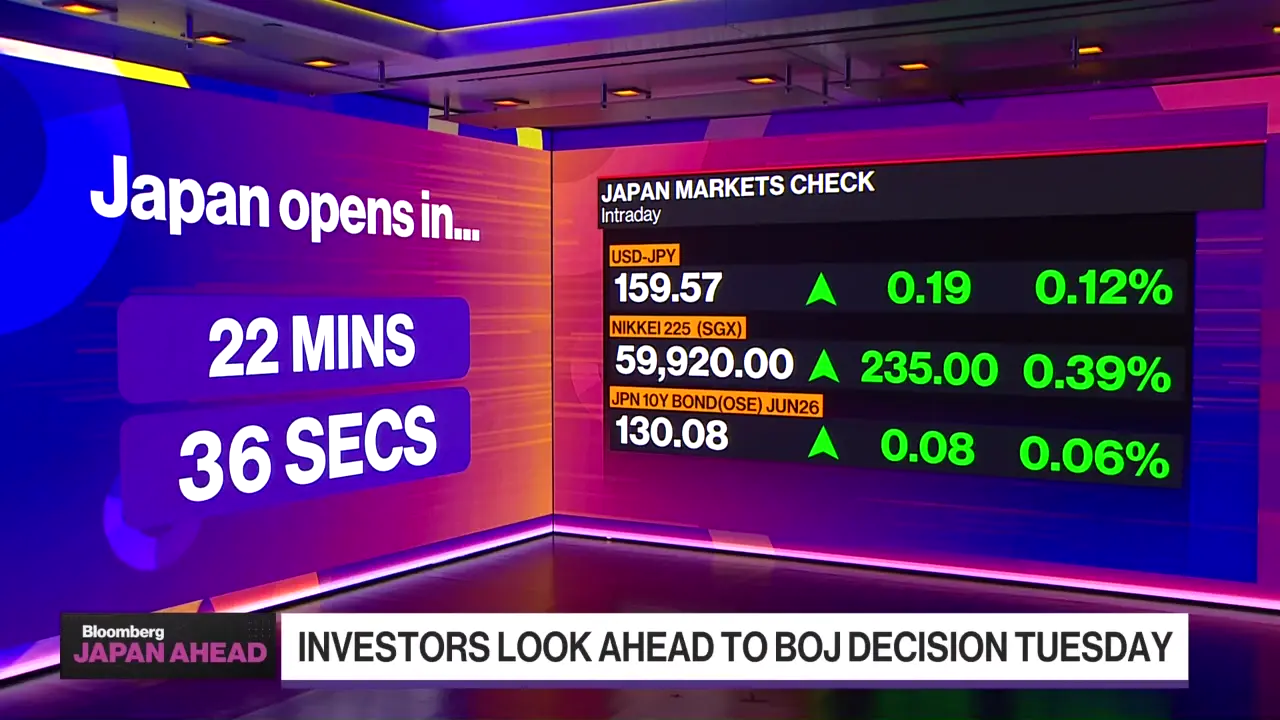
Global markets remained volatile on 26 April, with the Bank of Japan’s (BOJ) rate decision and U.S. earnings season dominating business coverage. The yen’s weakness, inflation pressures, and geopolitical risks combined to create a high-stakes environment for investors.
Bank of Japan’s pivotal moment
-
Governor Ueda’s decision on interest rates became the focal point of global financial markets. The BOJ’s policy stance, inflation outlook, and geopolitical risks were dissected in a marathon panel discussion, with economists debating whether a rate hike was imminent.
-
The yen’s slide toward the 160 level against the dollar amplified concerns over Japan’s economic growth and the BOJ’s ability to balance inflation control with growth support. Analysts warned that a premature rate hike could destabilize markets already jittery over geopolitical tensions.
-
Erica Yokoyama and Shurikan Kaylee of Jefferies provided real-time insights, emphasizing the BOJ’s struggle to reconcile domestic inflation pressures with external risks, including Middle Eastern oil supply disruptions.
U.S. earnings season delivers mixed signals
-
Asian markets opened with cautious optimism as U.S. earnings season progressed. Tech-driven rallies in Australia and South Korea contrasted with volatility in European equities, reflecting divergent regional economic outlooks.
-
Analysts highlighted the disconnect between strong corporate earnings and subdued consumer sentiment, suggesting that while companies were performing well, macroeconomic headwinds could dampen future growth.
Geopolitical risks weigh on markets
-
The potential MOU between Iran and the U.S. provided temporary relief to oil markets, but analysts cautioned that broader geopolitical risks—including tensions in the Middle East—could reignite volatility. The segment on Middle Eastern oil flows underscored the fragility of any market optimism.
-
Bloomberg TV’s final market analysis tied together the BOJ’s decision, U.S. earnings, and geopolitical risks, painting a picture of a market caught between optimism over corporate performance and anxiety over unresolved global tensions.
Press Monitor Clips: Final Market Analysis and Closing; Market Update: Asia and US Earnings; Bank of Japan Rate Decision Analysis & Market Implications
Top Sports News, Issues and People
Sports coverage on 26 April 2026 focused on leadership, wealth disparities, and the intersection of business and athletics. From interviews with Dallas Cowboys owner Jerry Jones to analyses of public vs. private wealth, today’s segments offered insights into the broader economic and cultural dynamics shaping sports.
Leadership lessons from the Dallas Cowboys
-
Jerry Jones sat down for an in-depth interview, reflecting on his 40-year ownership journey, the challenges of balancing sports and business, and his approach to handling criticism. His insights into team culture and resilience resonated beyond the gridiron.
-
Michael Parsons, a key figure in the Cowboys’ front office, discussed the team’s trade strategies and future ambitions, offering a glimpse into the decision-making processes that define success in the NFL.
Wealth and power in sports
- Princeton economist Owen Zydar contrasted the fortunes of public company CEOs like Jamie Dimon with private business owners, highlighting the stark disparities in revenue and wealth accumulation. The segment sparked debates over corporate governance, executive compensation, and the role of sports in shaping economic narratives.
Brand power and fan engagement
- A brief but insightful interview explored how brands like Nike leverage their presence in sports to engage fans and promote products. The discussion underscored the symbiotic relationship between athletics and commerce, with implications for marketing strategies in the digital age.
Press Monitor Clips: Public vs. Private Wealth Comparison; Jerry Jones Interview: Cowboys Ownership Journey; Trade Discussion
Other Top News, Issues and People
Beyond politics, business, and sports, Bloomberg TV’s coverage on 26 April 2026 addressed a range of critical issues, from global tariffs to the cultural impact of sports. The White House security breach remained a dominant theme, but other stories revealed the depth and diversity of today’s news cycle.
White House security crisis deepens
-
The White House Correspondents’ Dinner shooting dominated non-political coverage, with multiple segments dissecting the security breach, its implications for presidential protection, and the broader societal impact. Jeff Mason provided exclusive analysis, interviewing officials and survivors to piece together the timeline of events.
-
The shooter’s manifesto, which surfaced during the investigation, revealed a mix of personal grievances and ideological motivations, prompting debates over mental health, extremism, and the responsibilities of law enforcement.
-
President Trump’s response to the crisis was scrutinized for its tone and substance, with critics arguing that the administration’s reaction lacked urgency and failed to address systemic vulnerabilities in presidential security.
Supreme Court ruling reshapes trade policy
-
The U.S. Supreme Court’s decision to strike down President Trump’s global tariffs was a watershed moment for trade policy, with analysts predicting ripple effects across industries and geopolitical alliances. The ruling also reignited debates over the affordability of government spending and the balance of power between the executive and judicial branches.
-
Bloomberg TV’s coverage connected the dots between the tariff ruling, inflation pressures, and the broader economic outlook, offering viewers a comprehensive understanding of the decision’s implications.
Geopolitical tensions ease, but risks remain
-
Talks between the U.S. and Iran on a potential MOU provided a glimmer of hope for de-escalation in the Middle East. Analysts cautioned, however, that the path to lasting peace remained fraught with challenges, including regional rivalries and domestic political pressures.
-
The segment on Iran-U.S. talks highlighted the delicate balance between diplomatic signaling and substantive progress, with experts warning that markets could overreact to short-term optimism.
Press Monitor Clips: Security Implications of White House Dinner Breach; White House Correspondents Dinner Breach Deep Dive; White House Correspondents Dinner shooting incident
What’s next?
As the dust settles on 26 April 2026, the stories that dominated Bloomberg TV’s coverage reveal a world at a crossroads. From the Bank of Japan’s rate decision to the White House security crisis, today’s headlines underscore the fragility of global stability and the urgent need for decisive action. For investors, policymakers, and citizens alike, the coming days will be critical in determining whether today’s tensions escalate or de-escalate.
Press Monitor provides clips of all cited segments for internal briefing and sharing.