cnnnews18's Daily Roundup: Global Tensions, Political Upheavals and Economic Shocks Dominate March 30, 2026


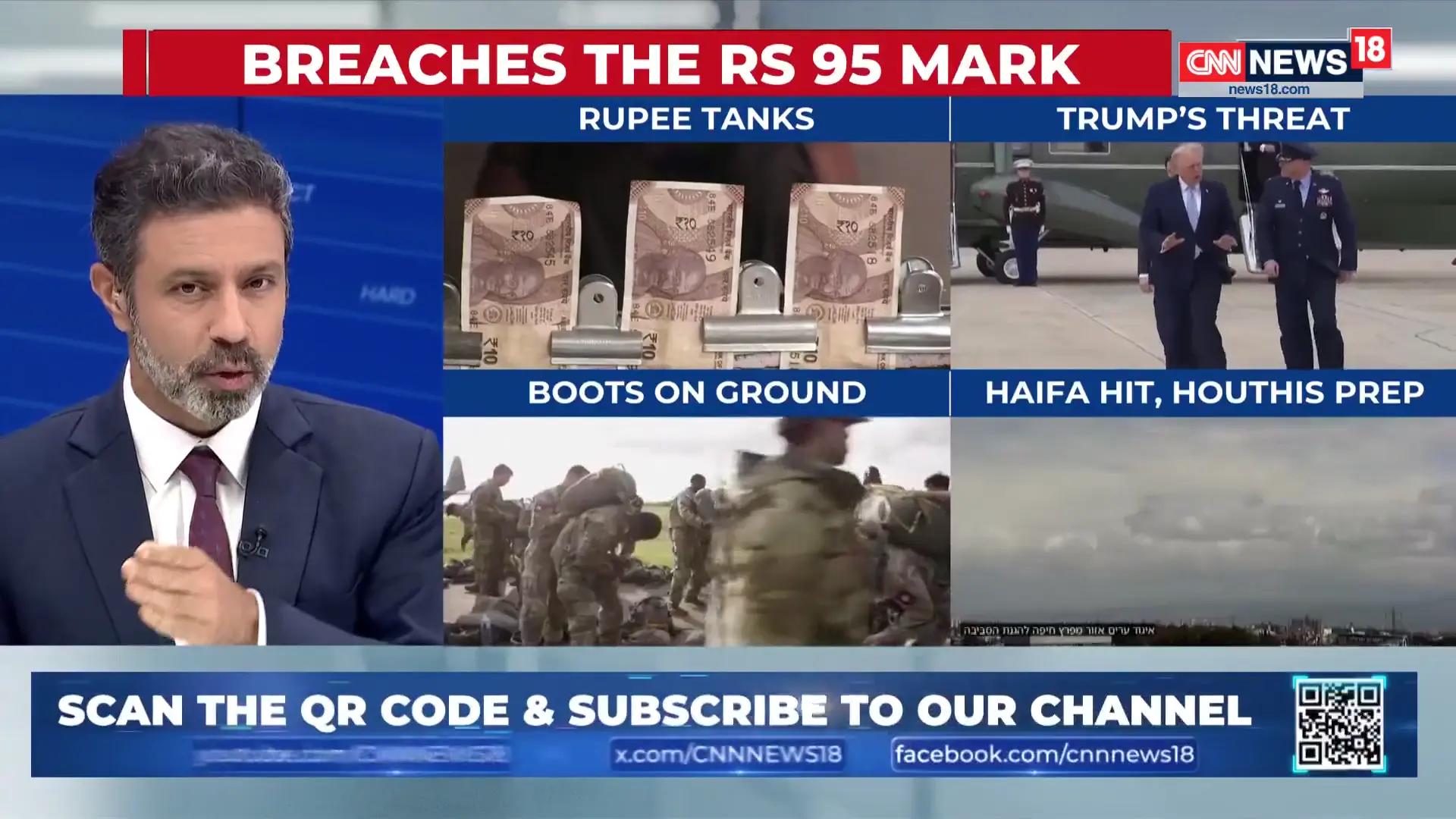
Global Tensions Escalate: The world wakes up to a powder keg of geopolitical tensions as Iran-US conflict intensifies, threatening to choke global oil supplies through the Strait of Hormuz and Bab al-Mandeb. Meanwhile, India's rupee plummets 11% against the dollar, sending shockwaves through markets already reeling from soaring oil prices. In Bihar, Nitish Kumar's dramatic resignation after 20 years as Chief Minister marks a seismic shift in Indian politics, while Assam's Uniform Civil Code implementation sparks fresh debate.
Today's cnnnews18 coverage reveals a planet on edge, where military threats, diplomatic gambits and economic tremors are colliding with unprecedented force. The US-Iran standoff has entered a dangerous new phase, with Donald Trump threatening to seize Iranian oil and Iran vowing retaliation. The Strait of Hormuz, through which 40% of the world's oil flows, has become the epicenter of a potential global crisis that could send energy prices skyrocketing and trigger economic collapse across Asia.
In India, the currency crisis deepens as the rupee hits 95 to the dollar, erasing billions in wealth and threatening to derail the country's fragile economic recovery. The Reserve Bank of India faces mounting pressure to intervene as inflationary pressures build and import costs surge. Meanwhile, Assam's implementation of the Uniform Civil Code has thrust the state into the national spotlight, with Home Minister Amit Shah and Chief Minister Himanta Biswa Sarma defending the controversial move against accusations of religious discrimination.
Political earthquakes are reshaping India's landscape. Nitish Kumar's sudden departure from Bihar's political stage after two decades in power has created a power vacuum in one of India's most populous states. The resignation, which came as a surprise even to close allies, has triggered a scramble for succession and raised questions about the future of the BJP-JDU alliance. In Tamil Nadu, Chief Minister MK Stalin's decision to contest the upcoming assembly elections alongside actor-turned-politician TVK Vijay has set the stage for a dramatic political showdown.
Across the globe, Pakistan is playing an increasingly pivotal role in mediating between the US and Iran, hosting high-level talks aimed at de-escalating tensions. Saudi Arabia's strategic hedging between its US alliance and growing ties with China and Russia has become more pronounced, as Crown Prince Mohammed bin Salman navigates the kingdom's delicate balancing act. The Beijing-Pyongyang direct train's resumption after a six-year hiatus signals China's deepening influence in North Korea, raising concerns about regional security dynamics.
This comprehensive roundup examines the stories that defined March 30, 2026, through the lens of cnnnews18's most insightful analysis, breaking updates and expert panels. From the corridors of power in Washington and Tehran to the streets of Patna and Guwahati, we dissect the forces reshaping our world and what they mean for the future.
Top Political News, Issues and People
Bihar's Political Earthquake: Nitish Kumar's Resignation Shakes India's Political Landscape
Nitish Kumar's resignation as Bihar's Chief Minister after 20 years in office has sent shockwaves through Indian politics, creating a power vacuum in one of the country's most politically significant states. The resignation, which came without warning to even his closest allies, has triggered a political earthquake that could reshape the balance of power in Bihar and beyond.
CNN News 18's field reports and panel discussions have provided unprecedented insight into the circumstances surrounding Kumar's departure. The resignation letter, presented in detail across multiple segments, reveals a political leader stepping away from power after two decades of uninterrupted service. Analysts are divided over whether this represents a strategic retreat, a forced exit, or the culmination of long-simmering tensions within the BJP-JDU alliance.
Key developments uncovered:
-
Succession crisis: The immediate aftermath has seen a scramble among BJP and JDU leaders to position themselves for the chief minister's post, with Samrat Chaudhary and Nitin Nabin emerging as potential candidates
-
Rajya Sabha transition: Kumar's decision to take oath as a Rajya Sabha MP has raised eyebrows, suggesting a possible shift in his political strategy
-
Legacy questions: Panelists debate whether Kumar's resignation marks the end of an era in Bihar politics or the beginning of a new chapter
-
Development record: The coverage has highlighted Kumar's contributions to Bihar's development, particularly in women's empowerment and infrastructure
Press Monitor Clips: "Nitish Kumar Resigns as Bihar Chief Minister: Key Developments"; "Bihar Chief Minister Nitish Kumar Resigns: Key Developments"; "Nitish Kumar Resigns as Bihar CM: Key Developments and Analysis"
Assam's UCC Implementation: Religious Reform or Political Landmine?
Home Minister Amit Shah's announcement of Assam's Uniform Civil Code implementation has thrust the northeastern state into the national spotlight, sparking intense debate about religious freedom versus uniform governance. The move, which follows the state's ban on polygamy and child marriages, has drawn both praise and condemnation from across India's political spectrum.
CNN News 18's exclusive interview with Shah and Assam Chief Minister Himanta Biswa Sarma provided rare insight into the government's thinking behind this controversial reform. The segment revealed how the BJP is positioning itself as a champion of gender justice while facing accusations of targeting minority communities.
Key aspects revealed:
-
Implementation timeline: The government's phased approach to rolling out the UCC across different communities
-
Legal framework: How the new code will interact with existing personal laws and constitutional provisions
-
Political calculations: The BJP's strategy to consolidate Hindu votes while maintaining its secular image
-
Social impact: Expert analysis on how the UCC might affect inter-community marriages and family structures
Press Monitor Clips: "CNN News 18 Assam Segment: Uniform Civil Code Implementation in Assam"
West Asia on the Brink: US-Iran Conflict Threatens Global Stability
The US-Iran conflict has escalated to dangerous new levels, with Donald Trump's administration threatening military action against Iran's nuclear facilities and oil infrastructure. Iran has responded with warnings of regional retaliation, creating a volatile situation that threatens to engulf the entire Gulf region.
CNN News 18's panel discussions have provided crucial context to this escalating crisis, analyzing Trump's military threats, Iran's strategic options, and the potential regional consequences. The coverage has highlighted how this conflict could disrupt global oil supplies, trigger market volatility, and draw in regional powers like Saudi Arabia, Israel, and the Gulf states.
Critical insights uncovered:
-
Strait of Hormuz vulnerability: Analysis of how Iran could block the world's most important oil chokepoint
-
Economic fallout: Estimates of how oil price spikes could trigger inflation, currency collapses, and global recession
-
Diplomatic options: Examination of Pakistan's role in facilitating US-Iran talks and Saudi Arabia's strategic hedging
-
Military scenarios: Assessment of potential US strikes against Iranian nuclear facilities and Iran's asymmetric response options
Press Monitor Clips: "Iran-US Tensions: Escalation, Market Impact, and Diplomatic Talks"; "Iran war strategy and economic impact"; "Iran-Saudi Arabia Tensions: Trump's Threats and Regional Dynamics"
Tamil Nadu Elections: Stalin's Gambit and Vijay's Political Debut
Chief Minister MK Stalin's decision to contest the upcoming Tamil Nadu assembly elections alongside actor-turned-politician TVK Vijay has set the stage for a dramatic political showdown. The move represents a bold strategy to consolidate Dravidian movement support while appealing to younger voters through Vijay's mass appeal.
CNN News 18's election coverage has provided unprecedented insight into the campaign dynamics, voter sentiment, and strategic calculations behind this high-stakes political gamble. The segments have highlighted how Stalin is positioning himself as the natural successor to his father M Karunanidhi's political legacy.
Key revelations:
-
Campaign strategy: How Stalin is leveraging social media and mass rallies to connect with younger voters
-
Opposition response: The AIADMK's counter-strategy to challenge Stalin's dominance
-
Vijay's impact: Analysis of how the actor's entry could reshape traditional voting patterns
-
Regional dynamics: The role of caste politics and community-based voting blocs in determining the election outcome
Press Monitor Clips: "Tamil Nadu Assembly elections: M.K. Stalin and Vijay contest"
Naxalism Eradication: India's Counter-Terrorism Strategy Under Scrutiny
The Lok Sabha's discussion on Naxalism eradication efforts has brought renewed attention to India's ongoing battle against left-wing extremism. Home Minister Amit Shah's address to parliament highlighted the government's ambitious timeline for achieving a 'Naxal-free India' by 2026, while raising concerns about implementation challenges.
CNN News 18's panel discussions have provided crucial insight into the operational realities of counter-Naxal operations, revealing how security forces are balancing military action with developmental initiatives in affected districts.
Key findings revealed:
-
Operational successes: Analysis of recent anti-Naxal operations that have significantly degraded Maoist capabilities
-
Developmental gaps: Identification of areas where government welfare programs have failed to reach Naxal-affected communities
-
Community engagement: Examination of how local police forces are building trust with tribal populations
-
Strategic challenges: Assessment of how Maoist groups are adapting to government pressure and exploiting local grievances
Press Monitor Clips: "Lok Sabha Discusses Naxalism Eradication Efforts"
Top Business News, Issues and People
Oil Chokepoint Crisis: Iran's Strait of Hormuz Gambit Threatens Global Economy
The potential for Iran to block the Strait of Hormuz has emerged as the single greatest threat to global economic stability in 2026. Analysts warn that even a temporary closure could send oil prices soaring above $150 per barrel, trigger a global recession, and destabilize financial markets across Asia and Europe.
CNN News 18's business coverage has provided crucial insight into how this geopolitical crisis is playing out in global markets. The segments have analyzed the potential economic fallout, market reactions, and strategic responses from major economies.
Critical insights uncovered:
-
Energy market disruption: How a Hormuz closure would affect oil supplies, prices, and refining operations globally
-
Currency collapse risks: Analysis of how oil price spikes could trigger currency collapses in import-dependent economies like India
-
Market volatility: Examination of how equity markets, bond yields, and commodity prices would react to escalating tensions
-
Policy responses: Assessment of how central banks and governments might respond to prevent economic collapse
Press Monitor Clips: "Iran Strait chokehold threat analysis"; "Iran-Chokehold on Gulf Oil Supply"; "Iran-Hormuz Strait Geopolitical Analysis"
Rupee Rout: India's Currency Crisis Deepens as Economic Fundamentals Worsen
India's rupee has collapsed 11% against the dollar in 2026, erasing billions in wealth and threatening to derail the country's fragile economic recovery. The currency crisis has been driven by a perfect storm of factors: soaring oil prices, widening trade deficits, capital outflows, and deteriorating investor confidence.
CNN News 18's economic analysis has provided unprecedented insight into the root causes of this crisis and its potential consequences for India's economy. The coverage has highlighted how the Reserve Bank of India's interventions have failed to stem the rout, raising questions about the central bank's policy options.
Key revelations uncovered:
-
Trade deficit explosion: How rising oil prices have widened India's trade deficit to record levels
-
Inflation spiral: Analysis of how currency depreciation is feeding into higher import costs and domestic inflation
-
Capital flight: Examination of how foreign investors are pulling money out of Indian markets due to economic uncertainty
-
Policy dilemmas: Assessment of the RBI's limited options for defending the rupee without choking economic growth
Press Monitor Clips: "Indian Rupee Devaluation Analysis"; "India's rupee depreciation and economic concerns"
West Asia Conflict Impact: How Geopolitical Tensions Are Reshaping Global Markets
The escalating conflict in West Asia has become the dominant driver of global market volatility in 2026. From oil prices to equity markets, from currency movements to commodity trading, every major financial market is being buffeted by the winds of geopolitical uncertainty emanating from the Gulf region.
CNN News 18's market coverage has provided crucial insight into how this crisis is playing out across different asset classes and geographic regions. The segments have analyzed the potential economic fallout from various conflict scenarios, from limited military strikes to full-scale regional war.
Critical insights uncovered:
-
Oil market disruption: How different conflict scenarios would affect global oil supplies, prices, and refining operations
-
Equity market reactions: Analysis of how different sectors and regions would be affected by escalating tensions
-
Safe haven flows: Examination of how investors are repositioning portfolios in response to geopolitical risks
-
Policy responses: Assessment of how central banks and governments might respond to prevent economic collapse
Press Monitor Clips: "West Asia Conflict Updates: US-Iran Tensions and Regional Escalation"; "West Asian conflict and regional impact analysis"; "Escalation in Middle East conflict and economic impacts"
Energy Transition Dilemmas: India's Green Growth Ambitions Face Geopolitical Headwinds
India's ambitious energy transition plans are facing severe headwinds from the escalating West Asia conflict. The country's push to increase non-fossil fuel capacity to 50% by 2030 is being threatened by soaring oil prices, supply chain disruptions, and geopolitical uncertainties.
CNN News 18's energy coverage has provided crucial insight into how India is navigating these challenges while maintaining its commitment to clean energy. The segments have analyzed the potential impact on different renewable energy technologies, from solar to wind to nuclear.
Key revelations uncovered:
-
Solar investment slowdown: How rising equipment costs and financing challenges are affecting India's solar ambitions
-
Grid stability concerns: Analysis of how intermittent renewable energy sources are affecting India's electricity grid
-
Nuclear power revival: Examination of how India is reconsidering its nuclear energy strategy in light of energy security concerns
-
Policy adjustments: Assessment of how the government might need to adjust its renewable energy targets and timelines
Press Monitor Clips: "West Asia Conflict Analysis and Energy Crisis Discussion"
Top Sports News, Issues and People
No sports coverage available in today's roundup.
Other Top News, Issues and People
Kashmir's Dark Secret: Sexual Exploitation Allegations Resurface in Conflict Zone
New allegations of sexual exploitation of Kashmiri women during the conflict have emerged, with former militant commander Mufti Said Khan claiming that Indian intelligence sources and Human Rights Watch reports validate these claims. The allegations have reignited debates about human rights violations in Kashmir and the accountability of security forces.
CNN News 18's field report has provided crucial context to these explosive claims, examining the historical record of sexual violence in conflict zones and the challenges of documenting such crimes in real-time. The coverage has highlighted the ongoing struggle for justice for victims of sexual violence in Kashmir.
Key aspects revealed:
-
Historical context: Analysis of how sexual violence has been used as a weapon of war in Kashmir since the 1980s
-
Documentation challenges: Examination of the difficulties in verifying and prosecuting such crimes in conflict zones
-
International law violations: Assessment of how these alleged crimes violate international humanitarian law and human rights conventions
-
Accountability mechanisms: Analysis of the role of international courts, human rights organizations, and domestic institutions in pursuing justice
Press Monitor Clips: "Kashmiri Women Sexual Exploitation Allegations"
Ukraine's Strategic Pivot: From War Victim to Regional Security Partner
Ukraine's battlefield experience and drone warfare capabilities have transformed the country from a war victim into a strategic partner for Gulf states seeking to counter Iranian drone attacks. President Zelensky's diplomatic offensive has secured defense agreements with Saudi Arabia, Qatar, and the UAE, offering combat expertise in exchange for financial and military support.
CNN News 18's international coverage has provided unprecedented insight into Ukraine's shifting role in global security architecture. The segments have analyzed how this strategic pivot could reshape Middle Eastern security dynamics while providing Ukraine with much-needed resources to continue its war effort against Russia.
Critical insights uncovered:
-
Defense technology exchange: How Ukraine's drone interceptors are being traded for Gulf states' air defense missiles
-
Strategic partnerships: Analysis of how these new alliances could affect regional power balances
-
Economic implications: Examination of how defense deals could provide Ukraine with foreign currency and military supplies
-
Geopolitical consequences: Assessment of how this shift could affect Russia's position in the Middle East and Ukraine's standing in international organizations
Press Monitor Clips: "Ukraine's strategic positioning in global conflicts"; "Ukraine's defense deals with Gulf countries"; "Ukraine's strategic defense leverage"
China-North Korea Rail Link Revival: Diplomatic Signal or Strategic Shift?
The resumption of direct train services between Beijing and Pyongyang after a six-year hiatus has sent ripples through regional security circles. The move, which follows renewed diplomatic engagement between China and North Korea, has raised questions about Beijing's strategic intentions in the Korean Peninsula.
CNN News 18's international coverage has provided crucial insight into the geopolitical implications of this development. The segments have analyzed how the rail link revival could affect North Korea's nuclear program, regional security dynamics, and China's role as a mediator in the Korean Peninsula conflict.
Key aspects revealed:
-
Diplomatic signaling: Analysis of how the rail link revival could be interpreted as a message to Washington and Seoul
-
Economic integration: Examination of how the rail link could facilitate increased trade and economic cooperation between China and North Korea
-
Security implications: Assessment of how the rail link could affect North Korea's military logistics and China's strategic positioning
-
Regional reactions: Analysis of how South Korea, Japan, and the United States might respond to this development
Press Monitor Clips: "Beijing-North Korea Train Resumes Operations"
Gulf Diplomacy: Pakistan's Mediation Role in US-Iran Talks
Pakistan has emerged as a crucial mediator in the escalating US-Iran conflict, hosting high-level talks aimed at de-escalating tensions and preventing a regional war. The country's strategic location, historical ties with both Washington and Tehran, and diplomatic experience have positioned it as an ideal interlocutor in this dangerous standoff.
CNN News 18's international coverage has provided unprecedented insight into Pakistan's mediation efforts and the challenges it faces in brokering a deal between the two adversaries. The segments have analyzed how Saudi Arabia's strategic hedging between its US alliance and growing ties with China and Russia is affecting regional dynamics.
Critical insights uncovered:
-
Diplomatic leverage: Analysis of how Pakistan's historical mediation record gives it unique credibility in US-Iran talks
-
Regional security implications: Examination of how a US-Iran deal could affect Saudi Arabia's security calculus and regional alliances
-
Economic consequences: Assessment of how de-escalation could affect oil prices, trade flows, and investment patterns in the Gulf region
-
Domestic political considerations: Analysis of how Pakistan's internal political dynamics could affect its mediation efforts
Press Monitor Clips: "Pakistan's Role in US-Iran Mediation"; "Pakistan-China Diplomatic Developments and US-Iran Tensions"; "Gulf Diplomacy and US-Iran Talks: Pakistan's Facilitation Role"
Iran Civilian Aircraft Shootdown: War Crime or Military Necessity?
The downing of an Iranian civilian aircraft carrying humanitarian aid to war victims has sparked international outrage and accusations of war crimes. The incident, which occurred during an Israeli strike on Iranian military targets, has raised serious questions about the conduct of modern warfare and the protection of civilians in conflict zones.
CNN News 18's breaking coverage has provided crucial context to this controversial incident, examining the legal, ethical, and strategic implications of targeting civilian aircraft in wartime. The segments have analyzed how this incident could affect international humanitarian law and the rules of engagement in modern conflicts.
Key aspects revealed:
-
Legal analysis: Examination of how the shootdown violates international humanitarian law and Geneva Conventions
-
Humanitarian consequences: Assessment of the impact on war victims and the broader civilian population in Iran
-
Military justification: Analysis of Israel's and Iran's competing narratives about the incident's circumstances
-
International response: Overview of how the international community, including the UN and human rights organizations, has reacted to the incident
Press Monitor Clips: "Iran Shoots Down Civilian Aircraft"; "Iran-US Conflict: US Shoots Down Iranian Civilian Aircraft"
India's Naxalism Eradication: Security Operations and Developmental Strategies
India's comprehensive strategy to combat Naxalism has entered a critical phase, with security forces reporting significant progress in reducing Maoist influence across affected districts. The government's approach combines military operations with developmental initiatives, aiming to address the root causes of left-wing extremism while eliminating its armed capabilities.
CNN News 18's field reporting has provided unprecedented insight into the operational realities of this counter-Naxal strategy. The coverage has highlighted the challenges of balancing security operations with community engagement, and the progress being made in some of India's most troubled regions.
Critical insights uncovered:
-
Operational successes: Analysis of recent anti-Naxal operations that have significantly degraded Maoist capabilities
-
Developmental gaps: Identification of areas where government welfare programs have failed to reach Naxal-affected communities
-
Community engagement: Examination of how local police forces are building trust with tribal populations
-
Strategic challenges: Assessment of how Maoist groups are adapting to government pressure and exploiting local grievances
Press Monitor Clips: "India's Naxalism Eradication: Operational and Developmental Strategies"
What's Next: The Week Ahead
As we look ahead to the coming week, several critical developments warrant close attention:
-
US-Iran talks: The outcome of Pakistan's mediation efforts could determine whether the region descends into full-scale war or finds a diplomatic off-ramp
-
Bihar political transition: The power struggle to succeed Nitish Kumar could reshape Bihar's political landscape and affect the BJP's 2024 election strategy
-
Rupee stabilization: The Reserve Bank of India's response to the currency crisis will be crucial in determining whether India can avoid an economic hard landing
-
West Asia conflict escalation: The potential for further military strikes between Israel and Iran could trigger regional spillover effects
-
Assam UCC implementation: The rollout of the Uniform Civil Code could spark new political controversies and legal challenges
These stories and more will continue to shape our world in the days and weeks ahead. Stay tuned to cnnnews18 for comprehensive coverage of the developments that matter most.
Press Monitor Clips: "Nitish Kumar Resigns as Bihar Chief Minister: Key Developments"; "Iran Strait chokehold threat analysis"; "Kashmiri Women Sexual Exploitation Allegations"