Global Flashpoints: West Asia War, Energy Crisis and Trump's Isolation Deepen as USS Tripoli Nears Strait of Hormuz


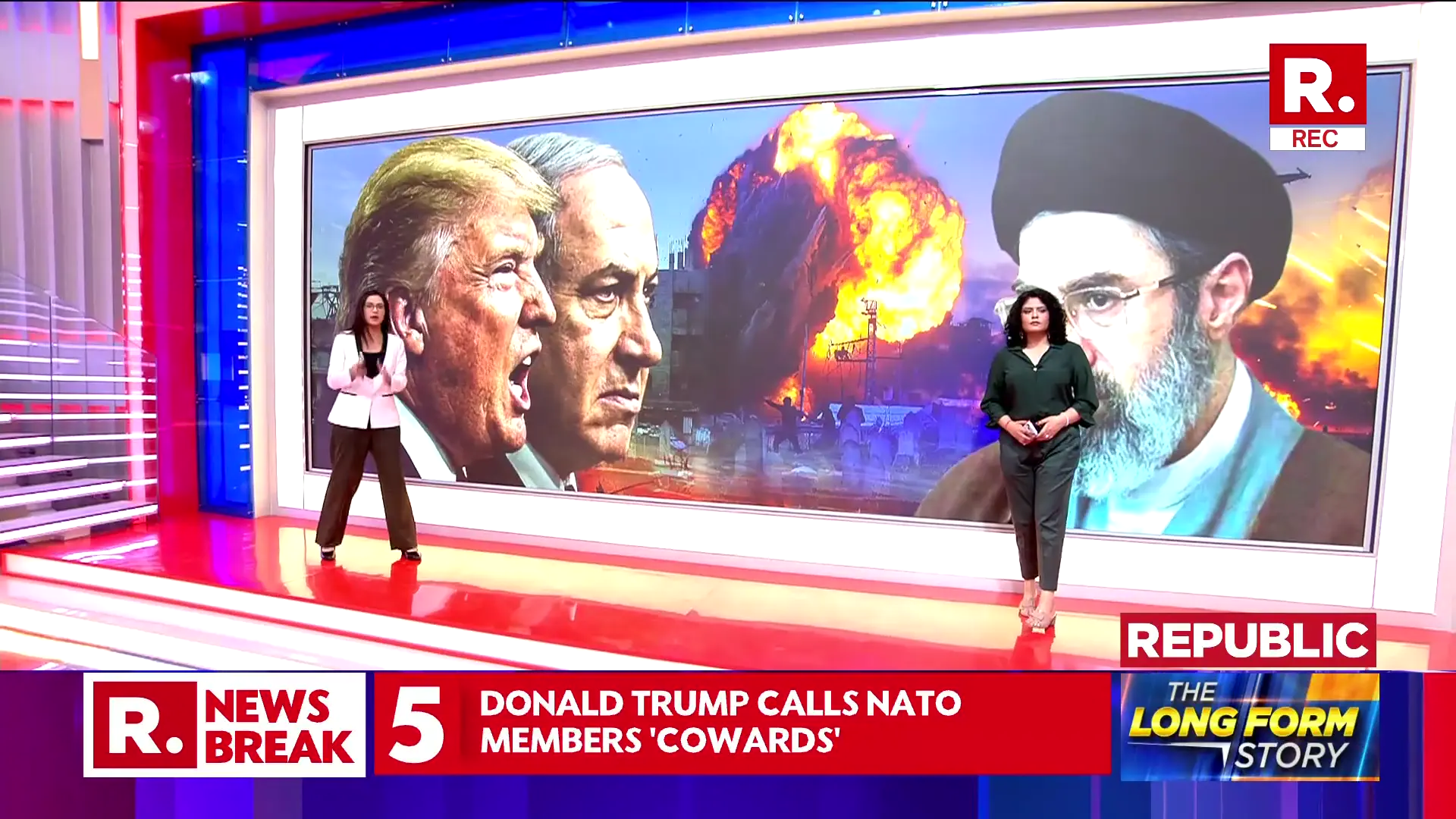
A world on edge as the war in West Asia escalates, the USS Tripoli steams toward the Strait of Hormuz with 2,000 Marines aboard, and India’s energy crisis spirals into a full-blown economic emergency. Today’s republictv Power Capsule examines the geopolitical fault lines, the government’s failure to secure LPG supplies, and the widening fallout from Donald Trump’s foreign policy gambles. From the decks of the USS Tripoli to the streets of Beirut, from New Delhi’s petrol pumps to the halls of the US Pentagon, our reporters bring you the stories shaping the global order.
The USS Tripoli’s mission is now the most visible symbol of America’s shifting military posture in the Middle East. The amphibious assault ship, accompanied by the 31st Marine Expeditionary Unit, is transiting the Indian Ocean and Strait of Malacca, a route that places it within striking distance of Iran’s choke points at Khark Island and the Strait of Hormuz. Analysts warn that this deployment is not merely symbolic; it is a calculated signal to Tehran and a test of Washington’s willingness to project power amid rising isolationist sentiment in the US. The ship’s 2,000 Marines and advanced amphibious capabilities make it a mobile strike force, but its journey also underscores the fragility of global supply chains and the volatility of energy markets.
India’s energy crisis has reached a breaking point. The country’s strategic petroleum reserves are critically low, LPG cylinders are in short supply, and petrol prices have surged by ₹2.35 per litre in a single day. The Reserve Bank of India’s intervention has failed to stem the rupee’s slide to 93.3 against the dollar, a level that threatens to import inflation and destabilise the economy. The government’s just-in-time distribution strategy and chronic underinvestment in storage have left the nation vulnerable to global shocks. As Iran launches missile attacks in West Asia and global crude prices surge, India’s energy security has become a national emergency.
Donald Trump’s foreign policy is under unprecedented scrutiny. His administration’s perceived retreat from global alliances, inflammatory rhetoric, and erratic decision-making have left US allies in Asia and Europe questioning America’s reliability. The deployment of the USS Tripoli and Marine Expeditionary Unit to the Middle East is seen by some as a desperate attempt to reassert US influence, while critics argue it risks entangling America in another quagmire. Trump’s repeated claims of victory in conflicts, his controversial references to Pearl Harbor, and his isolationist rhetoric have eroded confidence among allies and adversaries alike.
republictv's Best Political Coverage: Escalation in West Asia and Trump’s Isolation Deepen Geopolitical Tensions
USS Tripoli’s strategic gambit is reshaping the military calculus in the Middle East. The ship’s journey through the Indian Ocean and Strait of Malacca is not just a logistical feat; it is a geopolitical statement. Analysts note that the deployment of 2,000 Marines aboard the USS Tripoli, a Wasp-class amphibious assault ship, signals America’s intent to maintain a forward presence in the region despite domestic pressure to reduce commitments. The ship’s advanced capabilities, including its ability to launch helicopters and landing craft, make it a versatile tool for power projection. However, its proximity to Iran’s choke points at Khark Island and the Strait of Hormuz also raises the stakes in an already volatile region.
Iran’s choke points are the fulcrum of the current crisis. The Strait of Hormuz, through which 20% of the world’s oil passes, and Khark Island, Iran’s key oil terminal, are potential flashpoints. Iran’s Revolutionary Guard Corps has repeatedly threatened to close the strait in response to perceived provocations, and the arrival of the USS Tripoli in the region is seen by Tehran as a direct challenge. The ship’s transit through the Strait of Malacca, a critical chokepoint for global trade, further underscores the interconnectedness of regional conflicts and global supply chains.
Trump’s isolationist turn is complicating America’s ability to manage the crisis. His administration’s perceived retreat from global alliances, including NATO and key Asian partners, has left allies questioning the reliability of US commitments. The deployment of the USS Tripoli and Marine Expeditionary Unit to the Middle East is seen by some as a necessary reassertion of US influence, while critics argue it risks entangling America in another quagmire. Trump’s inflammatory rhetoric, including his controversial references to Pearl Harbor, has further eroded confidence among allies and adversaries. The segment highlights Trump’s repeated claims of victory in conflicts, his use of inflammatory language, and his perceived decline in confidence, all of which have contributed to a sense of global instability.
West Asia’s widening war is drawing in regional and global actors. Iran’s missile attacks, the deployment of US naval assets, and the involvement of non-state actors like the Taliban and Viet Cong in the conflict’s rhetoric have created a complex and unpredictable landscape. The war’s escalation is not only a military concern but also an economic one, with global energy markets and supply chains under threat. The segment critiques US foreign policy, focusing on isolationist trends and the escalation in the Iran conflict, and highlights Trump’s perceived vulnerabilities and strategic missteps.
Press Monitor Clips: Special Coverage: USS Tripoli Movement and War Zone Implications; Analysis of US Isolation and Iran War Escalation; USS Tripoli Deployment Analysis and Strategic Context
republictv's Best Business Coverage: India’s Energy Crisis Spills Over as Global Markets React to West Asia War
India’s LPG crisis is no longer a domestic issue; it is a global one. The country’s strategic petroleum reserves are critically low, LPG cylinders are in short supply, and petrol prices have surged by ₹2.35 per litre in a single day. The Reserve Bank of India’s intervention has failed to stem the rupee’s slide to 93.3 against the dollar, a level that threatens to import inflation and destabilise the economy. The government’s just-in-time distribution strategy and chronic underinvestment in storage have left the nation vulnerable to global shocks. As Iran launches missile attacks in West Asia and global crude prices surge, India’s energy security has become a national emergency.
Global energy markets are in turmoil. The war in West Asia has disrupted oil supplies, driven up crude prices, and triggered a scramble for alternative sources of energy. The segment discusses the economic impact of recent violence and infrastructure destruction, including rising fuel prices and global implications. The war’s escalation is not only a military concern but also an economic one, with global energy markets and supply chains under threat. The discussion on the economic impact of recent violence and infrastructure destruction, including rising fuel prices and global implications, highlights the interconnectedness of regional conflicts and global markets.
The rupee’s slide is a symptom of deeper economic fragilities. The Indian rupee has weakened to 93.3 against the dollar, a level that threatens to import inflation and destabilise the economy. The Reserve Bank of India’s interventions have failed to stem the decline, and the country’s energy crisis is exacerbating the problem. The segment provides a detailed analysis of premium petrol price increases in India (₹2.35/litre) and the weakening Indian rupee (93.3/USD intraday low), with expert analysis on causes and future trajectory. The discussion explores the causes of the rupee’s decline and the potential consequences for India’s economy.
Government accountability is at the heart of the crisis. The segment highlights the lack of long-term planning, the failure to invest in strategic reserves, and the just-in-time distribution strategy that has left the country vulnerable to global shocks. The segment transitions to live callers discussing potential solutions to the energy crisis, focusing on LPG storage capacity, strategic planning, and alternative supply routes. Callers critique government inaction while proposing constructive measures to address the crisis. The discussion on high import dependency and oil price spikes, followed by a critical examination of government responses to energy shortages, supply chain disruptions, and strategic petroleum reserve delays, highlights the need for urgent action.
China’s diplomatic intervention is a reminder of the global stakes. Chinese Foreign Minister Wang Yi has called for immediate cessation of military operations and dialogue among parties involved in the escalating conflict in the Middle East, warning of broader impacts on global energy, finance, and trade. The segment underscores the interconnectedness of regional conflicts and global markets, and the need for coordinated international responses. The call for de-escalation amid Middle East tensions highlights the global implications of the conflict and the potential for broader economic disruption.
Press Monitor Clips: Live coverage of escalating conflict in West Asia; Petrol price hikes and Indian currency crisis analysis; Energy Crisis Analysis and Government Accountability
republictv's Best Sports Coverage: No Major Developments Today
No significant sports stories were selected for today’s roundup. The focus remains on geopolitical and economic developments.
republictv's Best in Other Coverage: Beirut Airstrike, War Journalism, and the Human Cost of Conflict
Beirut’s airstrike incident has exposed the fragility of the security situation in Lebanon. A war journalist and his cameraman were caught in a Lebanese Army airstrike in southern Beirut, highlighting the dangers faced by reporters in conflict zones. The segment includes an exclusive live report from Beirut, with war journalist Ali Rida describing the attack, survivor conditions, and broader security situation. The interview provides a harrowing firsthand account of the incident and its aftermath, underscoring the human cost of the conflict.
War journalism under fire is a growing concern. The segment highlights the risks faced by journalists covering conflicts, including the threat of airstrikes, shrapnel injuries, and the broader security challenges in war zones. The exclusive live report from Beirut, covering the airstrike incident involving a war journalist and his cameraman, details the immediate aftermath and security situation. The discussion includes firsthand accounts of the attack and its impact on the local community.
USS Tripoli’s arrival is a strategic move with geopolitical implications. The ship’s journey through the Indian Ocean, Gulf of Oman, and Strait of Hormuz is closely watched, with analysts predicting its arrival in the Middle East by March 22nd. The segment includes an interview with colleague Ishita discussing the USS Tripoli’s trajectory and its strategic implications. The discussion emphasizes the ship’s role in projecting US power and the potential consequences of its deployment.
LPG crisis and government response are intertwined with the broader geopolitical landscape. The segment transitions from war coverage to a detailed analysis of the LPG supply crisis, including government admission, storage capacity differences, and crisis origins. The discussion highlights the need for urgent action to address the energy emergency and the government’s failure to secure supplies. The panel discussion with multiple speakers analyzing government response and opposition views provides a comprehensive overview of the crisis and its potential solutions.
Press Monitor Clips: Shift to War Journalist Coverage: Beirut Airstrike Incident; Live Field Report from Beirut: War Journalist Account; Interview with Colleague Ishita on USS Tripoli's Path
What matters next: The USS Tripoli’s arrival in the Strait of Hormuz will be a critical moment in the escalating West Asia conflict. India’s energy crisis will continue to test the government’s ability to manage domestic and global pressures. Donald Trump’s foreign policy decisions will shape America’s role in the world for years to come. And the human cost of the Beirut airstrike incident will remind us of the real-world consequences of geopolitical tensions.