Global Geopolitical Faultlines: NATO Divisions, Iran Tensions and Energy Crisis Dominate cnnnews18’s Best Coverage


The world’s most consequential geopolitical and economic tensions converged on Thursday, as NATO allies grappled with internal divisions, the Middle East teetered on the brink of wider conflict, and energy markets reeled from supply disruptions. cnnnews18’s Press Monitor has distilled today’s most impactful coverage into a single, authoritative roundup—highlighting how U.S. President Donald Trump’s uncompromising stance is reshaping alliances, fueling economic instability, and testing the resilience of global institutions.
Top Political News, Issues and People
cnnnews18’s Best Political Coverage: NATO fractures and U.S. political gridlock dominate the agenda
The most urgent political story of the day is the escalating rift within NATO, driven by U.S. President Donald Trump’s sharp criticism of allies over defense spending and burden-sharing. In a segment that aired at 18:03 IST, cnnnews18 reported on Trump’s public rebuke of NATO members, with the U.S. leader framing the alliance as failing to meet its obligations amid the ongoing Ukraine war. The segment, titled CNN News 18: NATO Divisions and Middle East Escalation, underscores how Trump’s rhetoric is not only straining transatlantic relations but also emboldening adversaries like Russia and Iran.
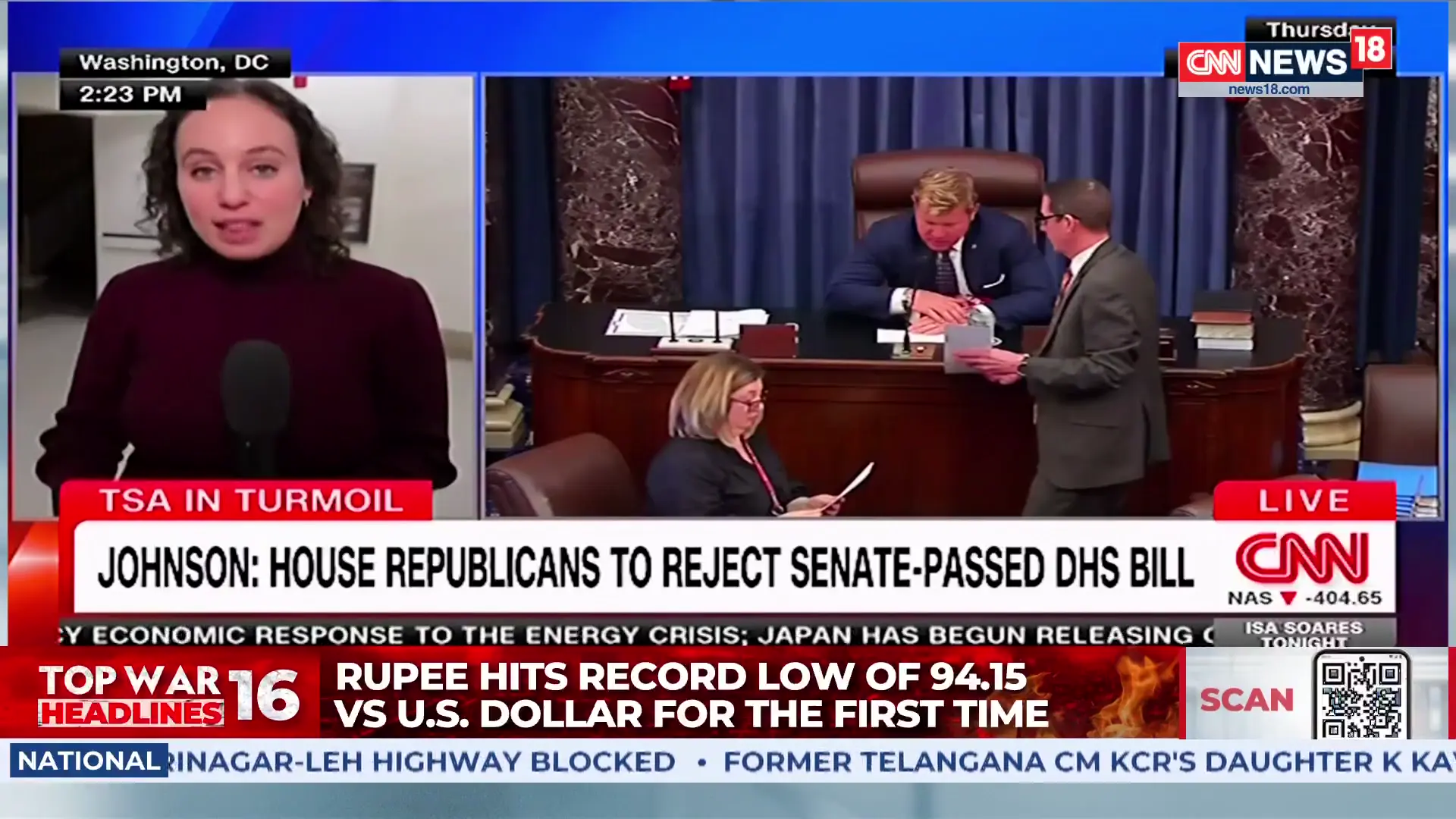
The political fallout is already visible. House Speaker Mike Johnson and Senate Majority Leader John Thune are locked in a bitter standoff over Department of Homeland Security (DHS) funding, with Johnson advocating for stringent border security measures and Thune pushing for a broader compromise. The segment U.S.-NATO Tensions and DHS Funding Deadlock, aired at 18:24 IST, frames this as a microcosm of Washington’s broader dysfunction—a crisis that risks paralyzing U.S. government operations and further eroding confidence in American leadership.
Meanwhile, the U.S. government shutdown drama has taken a new turn, with immigration policy at its core. In a panel discussion aired at 18:14 IST, US Political Shutdown and Immigration Policy Debate, political figures dissected the standoff, highlighting how the impasse over DHS funding has become a proxy war for control of U.S. border policy. The segment reveals deep divisions not only between Republicans and Democrats but also within the GOP, where hardliners are pushing for aggressive deportation policies while moderates seek a more pragmatic approach.
Across the Atlantic, Nepal’s political transition is unfolding under intense scrutiny. New Prime Minister Balendra Shah, who took office amid months of protests against corruption, faces the daunting task of stabilizing a nation grappling with youth-led uprisings and institutional distrust. The segment Nepal's New Prime Minister: Political Transition Amid Unrest, aired at 17:09 IST, captures the fragility of Nepal’s democratic experiment and the high stakes for regional stability in South Asia.
In West Asia, the focus is on Pakistan’s potential role as a mediator in the escalating U.S.-Iran conflict. In an exclusive interview aired at 14:21 IST, Pakistan as Mediator in U.S.-Iran Conflict, Akanksha Swaroop analyzed how Islamabad’s historical ties with Tehran could provide a backchannel for negotiations. The segment explores whether Pakistan’s diplomatic leverage can de-escalate tensions before the situation spirals into a full-blown regional war.
Press Monitor Clips: U.S.-NATO Tensions and DHS Funding Deadlock; US Political Shutdown and Immigration Policy Debate; Pakistan as Mediator in U.S.-Iran Conflict
Top Business News, Issues and People
cnnnews18’s Best Business Coverage: Energy crisis and market volatility dominate economic headlines
The global economy is under siege from a perfect storm of geopolitical and energy shocks. The closure of the Strait of Hormuz, a critical chokepoint for oil shipments, has sent shockwaves through energy markets, driving fuel prices to historic highs and triggering emergency rationing measures in countries from Sri Lanka to Slovenia. The segment Global Energy Crisis: Supply Chain Disruptions and Regional Responses, aired at 17:09 IST, paints a stark picture of how supply chain disruptions are forcing nations to ration fuel, shutter businesses, and brace for economic contraction.
The energy crisis is exacerbating inflationary pressures worldwide. The Organization for Economic Cooperation and Development (OECD) warned in a field report aired at 16:49 IST, Energy Crisis and Inflation Impact, that rising fuel prices could push global inflation beyond 6% in the coming months, eroding household purchasing power and stifling economic growth. The segment highlights how the crisis is particularly acute in India, where crude oil prices have surged, forcing the government to slash excise duties on petrol and diesel in a desperate bid to cushion consumers.
India’s energy policy is at the center of another critical segment. In a panel discussion aired at 13:22 IST, India's Fuel Price Relief Measures and Economic Impact, experts debated whether the government’s excise duty cuts are a short-term fix or a sustainable strategy amid volatile global markets. The segment features insights from Professor R. Vaidyanathan and Poonam Burday, who argue that India’s heavy reliance on oil imports—particularly from Russia—exposes the country to geopolitical risks that demand a long-term energy transition strategy.
Russia’s energy sector is also in the spotlight, as India revives its crude oil and LNG trade with Moscow despite Western sanctions. The segment India-Russia LNG and Crude Oil Trade Revival, aired at 16:49 IST, explores how New Delhi is navigating the complex geopolitical landscape to secure energy supplies. Pavel Sorkin’s report underscores the strategic realignment underway in global energy markets, where traditional alliances are being redrawn in response to U.S.-led sanctions and shifting power dynamics.
The economic fallout from the Middle East conflict is rippling across financial markets. In a breaking update aired at 18:14 IST, Oil Prices and US Policy on Iran Strikes, cnnnews18 reported that oil prices surged despite President Trump’s decision to pause strikes on Iranian energy sites. The segment reveals how markets are pricing in the risk of prolonged conflict, with traders anticipating further price spikes if the standoff escalates. Analysts in the segment warn that the energy shock could derail the global economic recovery, particularly in energy-importing nations like India and the EU.
The energy crisis is also reshaping corporate strategies. In a field report aired at 18:24 IST, Israel-Iran Conflict Escalation, cnnnews18 examined how Israeli strikes on Iranian nuclear facilities have triggered retaliatory threats and heightened regional instability. The segment highlights the economic toll of the conflict, with Gulf states bracing for disruptions to energy infrastructure and supply chains. Analysts in the report warn that prolonged hostilities could trigger a new wave of sanctions, further tightening global oil supplies and pushing prices even higher.
Meanwhile, the U.S. Federal Reserve and other central banks are under pressure to respond to the inflationary surge. In a panel discussion aired at 18:24 IST, Energy Crisis and Fossil Fuel Addiction, experts debated whether the current crisis will accelerate the transition to renewable energy or lock economies into a cycle of fossil fuel dependency. The segment features a historical analysis of energy transitions, suggesting that the current shock could either accelerate green investments or deepen reliance on traditional energy sources amid short-term economic pain.
Press Monitor Clips: Energy Crisis and Inflation Impact; India's Fuel Price Relief Measures and Economic Impact; Israel-Iran Conflict Escalation
Top Sports News, Issues and People
No sports segments were selected in today’s Press Monitor roundup.
Other Top News, Issues and People
cnnnews18’s Best in Other Coverage: Global security and institutional resilience tested
The most pressing non-political story of the day is the collapse of Wall Street’s major indices, with the Nasdaq leading losses as investors flee risk assets amid geopolitical uncertainty. The segment Wall Street Market Performance, aired at 18:14 IST, captures the panic in global markets, where all three major U.S. indices—Dow Jones, S&P 500, and Nasdaq—plunged more than 2% in a single session. Analysts in the segment attribute the sell-off to rising oil prices, escalating Middle East tensions, and fears of a prolonged U.S. government shutdown.
NATO’s existential moment
The alliance’s unity is under unprecedented strain, with U.S. President Donald Trump’s criticism of NATO allies over defense spending and burden-sharing exposing deep fractures. In a panel discussion aired at 18:14 IST, US-NATO Relations and Global Security, experts dissected the implications of Trump’s remarks, warning that the alliance’s credibility is at risk. The segment highlights how European leaders are scrambling to respond, with some calling for greater strategic autonomy while others double down on transatlantic commitments.
The debate over NATO’s future is not just a transatlantic issue—it has global ramifications. In an interview aired at 17:09 IST, NATO Unity Under Threat: Trump's Remarks and European Response, NATO critics and defenders clash over whether the alliance can survive Trump’s presidency. The segment features NATO Secretary General Mark Ruta defending the alliance’s role in Ukraine, while critics argue that Trump’s rhetoric is emboldening adversaries and weakening deterrence.
Energy shockwaves across continents
The closure of the Strait of Hormuz has triggered a global energy crisis, with countries from Asia to Europe implementing emergency measures to manage fuel shortages. The segment Global Energy Crisis: Supply Chain Disruptions and Regional Responses, aired at 17:09 IST, details how nations are rationing fuel, shuttering businesses, and bracing for economic contraction. The crisis is particularly acute in South Asia, where India’s oil import bill has surged, forcing the government to slash excise duties and risk fiscal slippage.
A historic break with tradition
In an unexpected twist, U.S. President Donald Trump has broken a long-standing tradition by signing dollar bills—a move that has sparked both curiosity and controversy. The segment Donald Trump Breaks Dollar Signature Convention, aired at 16:49 IST, explores the symbolic significance of the gesture, which some interpret as a populist statement while others see it as a distraction from more pressing crises. The segment also delves into the historical context of U.S. currency traditions and the potential political implications of Trump’s unconventional move.
The road ahead
The convergence of NATO divisions, Middle East tensions, and an energy crisis has created a geopolitical and economic storm that shows no signs of abating. As U.S. President Donald Trump’s uncompromising stance reshapes alliances and fuels instability, the world is left to grapple with the consequences of a multipolar order where traditional institutions are struggling to maintain relevance.
For policymakers, the challenge is clear: navigate the energy transition without triggering economic collapse, repair fractured alliances without sacrificing sovereignty, and prevent regional conflicts from spiraling into global crises. For businesses and investors, the imperative is to adapt to a world where volatility is the new normal—and where the old rules of geopolitics and economics no longer apply.
Press Monitor Clips: Wall Street Market Performance; US-NATO Relations and Global Security; Donald Trump Breaks Dollar Signature Convention
This roundup was curated by cnnnews18’s Press Monitor, which tracks and ranks the most impactful coverage across global newsrooms. For internal briefing and sharing, Press Monitor provides clips of all cited segments.