India at the Crossroads: Political Shifts, Economic Frontiers and Societal Transformations in 2026


Lead: India in 2026 stands at a pivotal juncture where political reforms, economic ambitions and societal evolution are converging to redefine the nation’s trajectory. From the Women Reservation Bill’s contested passage to the Digital India Policy 2.0’s transformative vision, from UPI’s global fintech ascendancy to the Ganga Expressway’s infrastructure promise, the country is navigating a complex landscape of opportunity and challenge. This comprehensive analysis draws on sansad-tv-1’s curated coverage to illuminate the dominant tensions shaping India’s future.
Top Political News, Issues and People
Women Reservation Bill: A Historic Step Forward or Political Gridlock?
The Women Reservation Bill has dominated India’s political discourse in 2026, with its passage through Vidhan Sabhas in states like Madhya Pradesh and Haryana marking a historic milestone. The bill, which reserves 33% of seats for women in legislative bodies, has been a lightning rod for debate, with political parties like the BJP and Congress staking out opposing positions. The segment "Women Reservation Bill Controversy" (21:31:33, 160s) dissects the opposition’s arguments and the bill’s future political implications, while "Women Reservation Implementation" (21:21:55, 19s) focuses on the quota percentages and the BJP’s strategic rollout in key states. The discussion is not merely academic: it reflects deeper societal shifts in gender representation and political strategy.
The political narrative is further complicated by the historical context of women’s representation in Indian politics. The "Analysis of 84th Amendment Delimitation and Women's Representation in Indian Parliament" (17:13:15, 115s) revisits the constitutional freeze imposed by the 84th Amendment and its enduring impact on women’s political participation. This segment, featuring key figures like Manmohan Singh Ji and Rahul Gandhi, underscores the bill’s potential to reshape India’s political landscape. Meanwhile, "Rebuttal on Delimitation and Political Strategy" (17:13:15, 315s) offers a rebuttal to opposition claims, highlighting the practical challenges of increasing women’s representation in elections and the strategic calculations of political parties.
Press Monitor Clips: Women Reservation Bill Controversy; Women Reservation Implementation; Analysis of 84th Amendment Delimitation and Women's Representation in Indian Parliament
Electoral Reforms and Governance: The Push for Transparency and Direct Elections
The political sphere is also marked by a broader push for electoral reforms, with discussions on transparency, direct elections, and governance structures taking center stage. The segment "Election Campaign and Policy Commitments" (22:03:29, 443s) focuses on election-related promises, voter empowerment, and governance reforms, including the role of panchayats and the election commission. This segment is part of a larger narrative around the need for systemic change in India’s electoral processes, reflecting a growing demand for accountability and inclusivity.
The debate over constitutional amendments and their implications for governance is another critical dimension of India’s political landscape. The "Constitutional Amendments Discussion" (21:21:55, 7s) analyzes the use of temporary clauses in constitutional amendments and their broader implications, particularly in states like Kashmir. This segment highlights the tension between constitutional stability and the need for reform, a theme that resonates across India’s political spectrum.
Press Monitor Clips: Election Campaign and Policy Commitments; Constitutional Amendments Discussion
Rahul Gandhi and the DBT Debate: A Clash of Economic Visions
The political arena is further energized by the debate over Direct Benefit Transfer (DBT) and its economic implications. The segment "Direct Benefit Transfer (DBT) and Economic Policies Discussion" (22:22:48, 134s) examines the implementation of DBT under the Modi government, highlighting concerns over zero-balance issues and the economic impact on rural and urban areas. This segment, featuring Rahul Gandhi and other key figures, reflects a broader clash of economic visions between the government and the opposition, with DBT at the heart of the debate.
The political discourse is also shaped by the legacy of India’s independence movement and the role of key leaders like Mahatma Gandhi, Pandit Nehru, and Sardar Patel. The "Indian Independence Movement: Context and Background" (19:52:55, 18s) segment discusses the origins of the independence movement and the diverse approaches used to challenge colonial rule. This historical context provides a backdrop for understanding the contemporary political landscape, particularly the debates over governance, representation, and reform.
Press Monitor Clips: Direct Benefit Transfer (DBT) and Economic Policies Discussion; Indian Independence Movement: Context and Background
Top Business News, Issues and People
Climate Policy and Economic Growth: Balancing Ambition and Reality
India’s economic ambitions are increasingly shaped by its climate policy commitments, with the country navigating the tension between economic growth and environmental sustainability. The segment "Climate Policy Implementation and Economic Impact" (20:41:29, 432s) provides a detailed discussion on the implementation of climate policy, including historical targets set by the 2017 Paris Deal, and the economic impacts of infrastructure projects like the Gunga Expressway and RRTS. This segment, featuring Rakesh Ji and other key figures, highlights the challenges of balancing climate ambition with economic growth, a theme that resonates across India’s policy landscape.
The economic implications of climate policy are further explored in the segment "Market Impact of Arctic Price Policies" (20:41:29, 9s), which discusses the market effects of Arctic price policies and their potential impact on energy demand. This segment underscores the interconnectedness of global markets and the need for coordinated policy responses to climate challenges.
Press Monitor Clips: Climate Policy Implementation and Economic Impact; Market Impact of Arctic Price Policies
UPI’s Global Fintech Revolution: A Model for Financial Inclusion
India’s fintech revolution, led by the Unified Payments Interface (UPI), continues to redefine the country’s economic landscape. The segment "UPI's Historical Evolution and Global Impact" (20:02:39, 38s) provides a comprehensive discussion on UPI’s development, its impact on financial inclusion, and its role in transforming banking systems. This segment highlights UPI’s global adoption and its potential to serve as a model for other countries seeking to achieve financial inclusion.
The fintech narrative is further enriched by the segment "UPI Transaction Growth Statistics" (16:44:21, 19s), which discusses the volume of UPI transactions and their significant growth in January 2026. This segment underscores the scale of digital payments adoption in India and the transformative potential of fintech for the country’s economy.
Press Monitor Clips: UPI's Historical Evolution and Global Impact; UPI Transaction Growth Statistics
DISCOM Financials: A Turnaround Story in India’s Energy Sector
The energy sector is marked by a significant turnaround in the financial performance of Distribution Companies (DISCOMs). The segment "DISCOM Financial Performance Update" (13:38:49, 20s) provides an analysis of DISCOM’s financial status, highlighting a significant improvement in outstanding dues and profitability from 2022 to 2026. This segment underscores the progress made in addressing the financial challenges faced by India’s energy sector and the potential for further growth.
The energy narrative is further shaped by the segment "India's Energy Transition and Economic Growth" (13:38:49, 34s), which discusses India’s energy transition, economic growth, and the role of renewable energy in supporting national development goals. This segment highlights the importance of renewable energy for India’s economic future and the need for coordinated policy responses to achieve energy sustainability.
Press Monitor Clips: DISCOM Financial Performance Update; India's Energy Transition and Economic Growth
Agricultural Policy and Future Self-Sufficiency: A Paradigm Shift
India’s agricultural sector is undergoing a paradigm shift, with government policies focusing on crop production, self-sufficiency, and the transition from chemical to biological fertilizers. The segment "Government Policies on Crop Production and Future Self-Sufficiency" (11:05:53, 471s) provides a detailed discussion on government initiatives for crop production, including policy shifts and future projections for self-sufficiency. This segment, featuring an unknown agricultural expert, highlights the potential of biological fertilizers to transform India’s agricultural landscape and the need for farmer incentives to drive adoption.
The agricultural narrative is further enriched by the segment "Seed Treatment Techniques and Regional Adaptations" (11:05:53, 101s), which explores seed treatment methods, regional variations in agricultural practices, and their impact on crop yields. This segment underscores the importance of tailored agricultural solutions for India’s diverse regions and the potential of agricultural technologies to drive productivity.
Press Monitor Clips: Government Policies on Crop Production and Future Self-Sufficiency; Seed Treatment Techniques and Regional Adaptations
India-New Zealand Trade Relations: A Strategic Partnership for the Future
India’s trade relations with New Zealand are taking center stage as both countries seek to diversify their economic partnerships and tap into new growth opportunities. The segment "Comprehensive Discussion on India-New Zealand Trade Relations and Economic Partnerships" (08:43:41, 540s) provides a detailed exploration of India-New Zealand trade relations, economic partnerships, and sector-specific upgrades in MSME, energy, and digital sectors. This segment highlights the potential of the India-New Zealand Free Trade Agreement (FTA) to drive economic cooperation and the need for coordinated policy responses to achieve trade liberalization.
The trade narrative is further shaped by the segment "India-New Zealand Trade Agreement: Economic Cooperation Framework" (08:43:41, 19s), which discusses the India-New Zealand FTA’s focus on supply chain diversification, bilateral economic cooperation, and trade liberalization strategies. This segment underscores the importance of capacity building, technology transfer, and skill development for achieving India’s trade ambitions.
Press Monitor Clips: Comprehensive Discussion on India-New Zealand Trade Relations and Economic Partnerships; India-New Zealand Trade Agreement: Economic Cooperation Framework
Top Sports News, Issues and People
Prime Minister Modi’s Sports Engagement: A Vision for Youth and Nation
Prime Minister Narendra Modi’s engagement with youth sports is a defining feature of India’s sports narrative in 2026. The segment "Prime Minister’s Sports Engagement" (03:17:03, 14s) highlights Modi’s approachability and leadership, emphasizing his participation in football and his encouragement for young people. This segment reflects a broader vision for sports as a tool for youth engagement and national development.
The sports narrative is further enriched by the segment "Sports Policy Segment" (02:46:54, 38s), which discusses India’s growing sports infrastructure, policy initiatives, and future events like the Commonwealth Games and Olympics. This segment underscores the potential of sports to drive national pride and economic growth, while also highlighting the need for coordinated policy responses to achieve India’s sports ambitions.
Press Monitor Clips: Prime Minister’s Sports Engagement; Sports Policy Segment
Other Top News, Issues and People
Swachh Bharat Abhiyan: A Three-Year Transformation Story
The Swachh Bharat Abhiyan, India’s flagship cleanliness campaign, has entered its third year with measurable outcomes and transformative impact across health, education, and infrastructure sectors. The segment "Swachh Bharat Abhiyan: Three-Year Development Impact" (21:10:21, 231s) provides a comprehensive overview of the program’s scale, outcomes, and impact, including testimonials from rural residents and data-driven results. This segment underscores the potential of government initiatives to drive societal change and the need for sustained engagement to achieve long-term impact.
The Swachh Bharat narrative is further enriched by the segment "Rural Families Share Success Stories" (21:10:21, 23s), which features personal testimonials from rural residents about the tangible benefits of government schemes, including financial gains, improved living conditions, and community development. This segment highlights the human impact of government initiatives and the potential of grassroots engagement to drive societal change.
Press Monitor Clips: Swachh Bharat Abhiyan: Three-Year Development Impact; Rural Families Share Success Stories
Digital India Policy 2.0: A Roadmap for Inclusive Growth
The Digital India Policy 2.0 (DPI 2.0) is emerging as a transformative vision for India’s digital future, with a focus on inclusive growth, sectoral transformations, and cross-sector digital integration. The segment "Digital India Policy 2.0 Vision and Implementation Roadmap Discussion" (18:51:01, 119s) explores the DPI 2.0 framework, its ecosystem approach, guardrails, and implementation through government incentives, academia, and private sector collaboration. This segment highlights the potential of DPI 2.0 to drive India’s digital transformation and the need for coordinated policy responses to achieve inclusive growth.
The DPI narrative is further shaped by the segment "Conclusion on Digital India Policy Roadmap and Future Vision" (18:51:01, 199s), which concludes the discussion on DPI 2.0’s transformative potential for India’s digital transformation, inclusive growth, and prosperity. This segment underscores the importance of execution, scalability, and global relevance for achieving DPI 2.0’s ambitious goals.
Press Monitor Clips: Digital India Policy 2.0 Vision and Implementation Roadmap Discussion; Conclusion on Digital India Policy Roadmap and Future Vision
Nalanda University: A Legacy of Knowledge and Cultural Exchange
The historical and cultural significance of Nalanda University is a defining feature of India’s intellectual and cultural landscape. The segment "Historical Exploration of Nalanda University" (23:23:09, 314s) provides a detailed discussion on Nalanda University’s history, origins, and significance in Buddhist culture, including its decline, connections to Vajrayana Buddhism, and legacy in Hindu Tantra. This segment underscores the potential of India’s cultural heritage to drive societal change and the need for coordinated efforts to preserve and promote India’s intellectual traditions.
The Nalanda narrative is further enriched by the segment "Interview with Jielan Simha on Mysore Paintings" (22:32:36, 57s), which features an in-depth interview with artist Jielan Simha discussing his artistic journey, techniques, and inspiration from ancient texts and mythological themes. This segment highlights the potential of art and culture to drive societal change and the need for coordinated efforts to promote India’s artistic traditions.
Press Monitor Clips: Historical Exploration of Nalanda University; Interview with Jielan Simha on Mysore Paintings
PM Awas Yojana: Empowering Women Through Property Rights
The PM Awas Yojana, India’s flagship housing scheme, is taking center stage as a tool for women’s economic empowerment. The segment "PM Awas Yojana Implementation Update" (21:31:33, 26s) discusses the scheme’s impact on women’s property rights, highlighting the registration of properties in women’s names and economic empowerment initiatives. This segment underscores the potential of government schemes to drive societal change and the need for coordinated efforts to achieve gender equality.
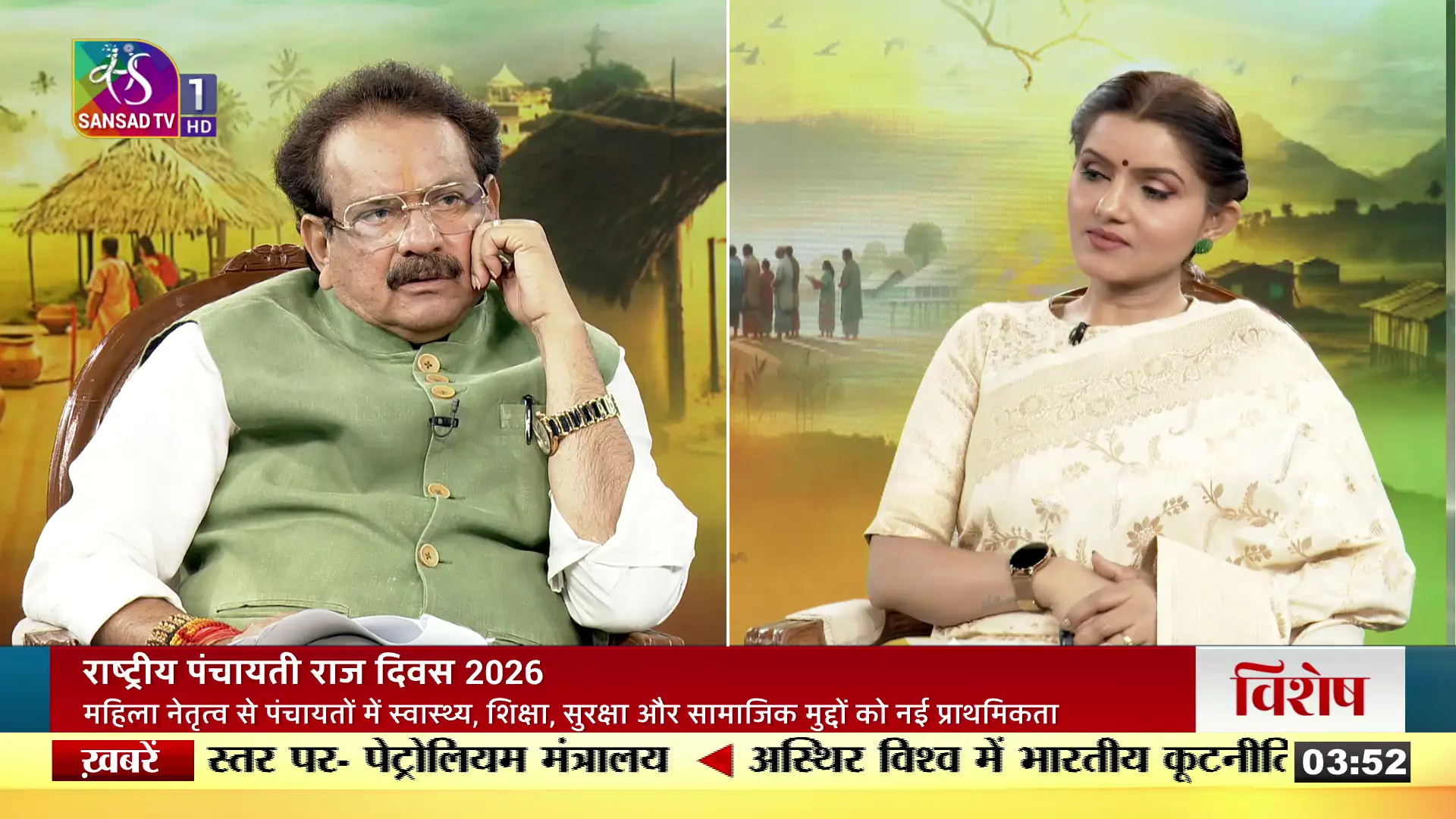
The PM Awas Yojana narrative is further enriched by the segment "Discussion on Panchayat System and Government Policies" (21:53:50, 169s), which provides an extended discussion on the Panchayat system, government rights, decentralization, and the role of local governance in development. This segment highlights the potential of local governance to drive societal change and the need for coordinated efforts to achieve inclusive development.
Press Monitor Clips: PM Awas Yojana Implementation Update; Discussion on Panchayat System and Government Policies
Conclusion: India’s Future in Focus
India in 2026 is a nation of contrasts: a land of historic political reforms and economic ambitions, of digital transformation and traditional values, of global aspirations and grassroots realities. The curated coverage by sansad-tv-1 provides a window into the dominant tensions shaping India’s future, from the Women Reservation Bill’s contested passage to the Digital India Policy 2.0’s transformative vision, from UPI’s global fintech ascendancy to the Ganga Expressway’s infrastructure promise. These stories are not merely headlines; they are the building blocks of India’s future, reflecting the nation’s resilience, ambition, and potential. As India navigates this pivotal juncture, the lessons from these stories will be critical for shaping a future that is inclusive, sustainable, and prosperous.
Press Monitor Clips: Women Reservation Bill Controversy; Climate Policy Implementation and Economic Impact; UPI's Historical Evolution and Global Impact; Swachh Bharat Abhiyan: Three-Year Development Impact