India's Political Earthquake: Exit Polls, Energy Crisis and West Bengal's High-Stakes Showdown


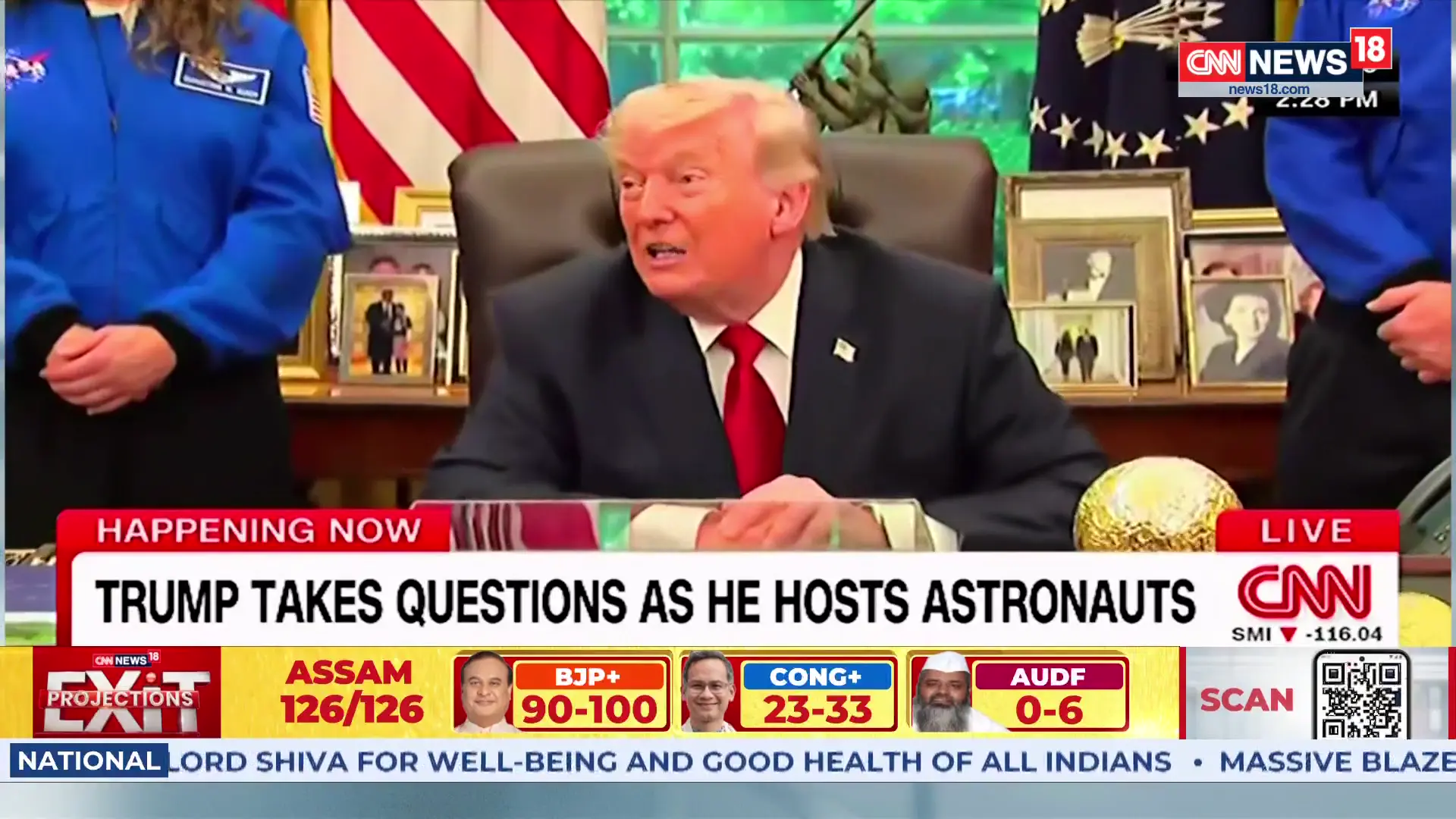
India's Political Earthquake — Exit polls, energy crisis and West Bengal's high-stakes showdown dominate the national conversation as cnnnews18's Press Monitor delivers the most revealing segments of the day.
The nation's political landscape has shifted dramatically overnight. Exit polls suggest a seismic change in West Bengal, where the BJP appears poised to break the Trinamool Congress' decade-long dominance. Meanwhile, the U.S.-Iran conflict continues to send shockwaves through global energy markets, with oil prices surging past $111 per barrel and threatening economic stability worldwide. These twin crises—one domestic, one international—are redefining India's political and economic calculus in ways that will echo for years to come.
In West Bengal, the final phase of polling has concluded under extraordinary security measures. Reports indicate a record 61.11% turnout by 1pm, with allegations of voter intimidation and EVM malfunctions sparking immediate controversy. The BJP's projected 66% win ratio across multiple states has sent shockwaves through the political establishment, while Mamata Banerjee's TMC faces an existential challenge to its decade-long dominance.
Across the globe, the U.S.-Iran conflict has escalated into what analysts are calling a 'Cold War-like' standoff. The seizure of an Iranian oil tanker by U.S. forces in the Strait of Hormuz, combined with Iran's threats to close the strategic waterway, has sent oil prices soaring to $111.26 per barrel for Brent crude. The economic ripple effects are already being felt in developing nations, with fuel shortages and rising inflation threatening to destabilize governments from South Asia to Africa.
These twin crises—West Bengal's political earthquake and the global energy shock—are forcing India to confront fundamental questions about its economic resilience and political future. How will the BJP's potential gains in West Bengal reshape national politics? What will be the long-term impact of sustained high oil prices on India's economic recovery? And most critically, can India navigate these turbulent waters while maintaining its strategic autonomy in an increasingly polarized world?
Top Political News, Issues and People
West Bengal's Political Earthquake: BJP's Rise and TMC's Reckoning
The most dramatic political development of the day comes from West Bengal, where exit polls suggest the BJP is on the verge of achieving a historic breakthrough. The party's projected 66% win ratio across multiple states represents a fundamental realignment of India's political map, with analysts describing it as 'the most significant shift since 2014.'
BJP's Consolidation Strategy — The party's success appears to be driven by an unprecedented consolidation of voter turnout, particularly among first-time voters and women. Analysts note that high voter participation has historically benefited the BJP, creating what one commentator described as 'a perfect storm' for the opposition parties.
Mamata Banerjee's TMC Under Pressure — West Bengal's Chief Minister Mamata Banerjee faces the most serious challenge to her decade-long dominance. Reports from polling stations indicate significant anti-incumbency sentiment, particularly in urban areas where the BJP has made substantial inroads. The TMC's traditional strongholds in Kolkata and surrounding districts are showing signs of erosion, with some analysts suggesting the party could lose up to 30% of its previous seats.
EVM Controversies and Voter Intimidation Allegations — The election process itself has been marred by controversy, with multiple reports of EVM malfunctions and allegations of voter intimidation. In Bhavanipur constituency, polling was delayed by several hours due to technical issues, sparking immediate accusations of deliberate interference. The Election Commission has responded by deploying additional paramilitary forces, but the damage to public confidence may already be done.
Historical Context: The Mahabharata Analogy — Political analysts have drawn striking parallels between the current political climate and the epic Mahabharata, with Mamata Banerjee cast as the modern-day Draupadi facing unprecedented challenges. The comparison, while dramatic, reflects the intensity of the political battle being waged across West Bengal's 294 assembly constituencies.
Press Monitor Clips: West Bengal Election Day: Full Coverage and Wrap-Up; Final Analysis of West Bengal Elections; West Bengal Assembly Elections: Live Political Reactions and Controversies
U.S.-Iran Tensions: The New Cold War and Its Global Impact
While West Bengal dominates domestic headlines, the escalating conflict between the U.S. and Iran has sent shockwaves through global energy markets. The seizure of an Iranian oil tanker in the Strait of Hormuz, combined with Iran's threats to close the strategic waterway, has created what analysts are calling 'a perfect storm' for global oil prices.
Energy Crisis Deepens — Oil prices have surged past $111 per barrel for Brent crude, with WTI reaching $99.93. The economic impact is being felt worldwide, with developing nations particularly vulnerable to fuel shortages and rising inflation. Energy analysts warn that sustained high prices could trigger a global recession, particularly in countries heavily dependent on oil imports.
Geopolitical Realignment — The conflict has forced India to navigate increasingly complex diplomatic waters. As a major importer of Iranian oil and a strategic partner of the U.S., India finds itself caught between competing interests. The government's response to the crisis will be closely watched, particularly in light of India's upcoming G20 presidency.
Economic Contagion — The energy shock is already spreading beyond oil markets. Food prices are rising as transportation costs increase, while industrial production faces disruption due to higher energy costs. Central banks worldwide are grappling with the challenge of containing inflation without stifling economic recovery.
Diplomatic Spillover — The conflict has also reignited tensions in the Middle East, with reports of increased Hezbollah activity along Israel's northern border. The situation in Lebanon remains particularly volatile, with fears of a wider regional conflict growing by the hour.
Press Monitor Clips: US-Iran Cold War tensions and nuclear standoff; US-Iran geopolitical tensions and Cold War analogy; Middle East conflict updates and diplomatic issues
NASA and Domestic Policy: The Artemis Mission and Political Controversy
The final segment of the day's political coverage shifts to NASA's Artemis mission and its implications for domestic policy. The discussion centers on President's recent conversations with foreign leaders regarding NASA's potential headquarters relocation and the broader implications for U.S. space policy.
Artemis Mission Progress — NASA's Artemis program, which aims to return humans to the Moon by 2026, continues to make steady progress. The mission represents a critical step in NASA's long-term strategy to establish a sustainable human presence on the Moon and serve as a stepping stone for future Mars missions.
Political Controversy — The potential relocation of NASA headquarters from Washington D.C. has sparked political controversy, with critics questioning the wisdom of moving the agency's nerve center away from the nation's capital. Supporters argue that the relocation could bring economic benefits to the new location while improving operational efficiency.
Funding and Political Support — The Artemis mission's future funding remains a subject of intense political debate. With competing priorities at home and abroad, the Biden administration faces difficult choices about how to allocate limited resources. The outcome of these debates will have profound implications for America's space ambitions.
International Cooperation — The Artemis program has also become a focal point for international cooperation, with NASA partnering with space agencies from Europe, Japan, and Canada. The collaborative nature of the mission represents a significant departure from the Cold War-era space race, reflecting the changing nature of global power dynamics.
Press Monitor Clips: NASA and Domestic Policy Updates; President's Conversations and Foreign Policy
Top Business News, Issues and People
Global Energy Crisis: Oil Prices Surge and Economic Fallout
The U.S.-Iran conflict has triggered the most severe energy crisis since the 1970s oil embargo, with global oil prices surging past $111 per barrel and threatening to derail the fragile global economic recovery. The crisis has exposed fundamental vulnerabilities in the world's energy infrastructure and forced governments to confront uncomfortable truths about their economic resilience.
Oil Price Shock — Brent crude prices have reached $111.26 per barrel, while West Texas Intermediate has climbed to $99.93. The surge represents a 40% increase over the past three months and has sent shockwaves through global markets. Energy analysts warn that sustained high prices could trigger a global recession, particularly in developing nations heavily dependent on oil imports.
Economic Contagion — The energy shock is already spreading beyond oil markets. Food prices are rising as transportation costs increase, while industrial production faces disruption due to higher energy costs. Central banks worldwide are grappling with the challenge of containing inflation without stifling economic recovery.
Geopolitical Realignment — The crisis has forced India to navigate increasingly complex diplomatic waters. As a major importer of Iranian oil and a strategic partner of the U.S., India finds itself caught between competing interests. The government's response to the crisis will be closely watched, particularly in light of India's upcoming G20 presidency.
Energy Transition Accelerates — The crisis has also accelerated discussions about the global energy transition. European nations are accelerating their renewable energy investments, while developing countries are reconsidering their dependence on fossil fuel imports. The long-term implications for the global energy landscape could be profound.
Press Monitor Clips: U.S.-Iran War Impact: Oil Prices Surge, Global Crisis; Economic Policy and Tariff Discussion
U.S. Economic Policy: Tariffs, Trade and Industrial Renaissance
President's economic policies continue to reshape America's industrial landscape, with tariffs and trade restrictions driving significant investment in domestic manufacturing. The administration's 'America First' approach has sparked a manufacturing renaissance, with billions of dollars flowing into new auto plants and technology hubs across the country.
Tariff-Driven Investment — The administration's tariff policies have led to a surge in domestic investment, particularly in the automotive and technology sectors. Companies are rushing to establish manufacturing facilities in the U.S. to avoid tariffs on imported goods, creating thousands of new jobs and revitalizing Rust Belt communities.
AI and Technology Boom — The tariff-driven investment boom has extended beyond traditional manufacturing to include cutting-edge technologies like artificial intelligence and quantum computing. Silicon Valley's dominance is being challenged by new innovation hubs emerging in unexpected locations across America.
Trade War Escalation — The administration's aggressive trade policies have sparked retaliation from key trading partners, creating a complex web of tariffs and trade restrictions. The economic impact of these measures remains a subject of intense debate among economists and policymakers.
Global Supply Chain Realignment — The tariff-driven investment boom is forcing multinational corporations to rethink their global supply chains. Companies are increasingly looking to 'friend-shoring' strategies, moving production to countries with which they have strong diplomatic and economic ties.
Press Monitor Clips: U.S.-Iran War Impact: Oil Prices Surge, Global Crisis; Economic Policy and Tariff Discussion
Top Sports News, Issues and People
No sports coverage selected for today's roundup.
Top in Other Coverage: Issues and People
Tamil Nadu Elections: TVK's Rise and the Collapse of Traditional Parties
The most significant political development outside West Bengal comes from Tamil Nadu, where exit polls suggest a dramatic realignment of the state's political landscape. The Dravida Munnetra Kazhagam (DMK) and All India Anna Dravida Munnetra Kazhagam (ADMK) face potential wipeouts, while the Tamil Visionary Congress (TVK) emerges as the state's dominant political force.
TVK's Historic Breakthrough — Exit polls project TVK could secure between 98-120 seats in the 234-member assembly, representing a stunning reversal of fortune for a party that has struggled to establish itself as a major political force. The party's success appears to be driven by a combination of anti-incumbency sentiment and effective grassroots mobilization.
DMK's Decline — The DMK, which has dominated Tamil Nadu politics for decades, faces potential losses of up to 30% of its previous seats. The party's traditional strongholds in urban areas are showing signs of erosion, with some analysts suggesting the ADMK could be reduced to a rump party in the next assembly.
ADMK's Rout — The All India Anna Dravida Munnetra Kazhagam appears to be facing an existential crisis, with projections suggesting it could be reduced to single digits in the next assembly. The party's decline reflects broader trends in Indian politics, where traditional regional parties are struggling to maintain relevance in the face of national consolidation.
Caste and Community Dynamics — The election results reveal complex caste and community dynamics at play. The TVK's success appears to be particularly strong among younger voters and women, while traditional caste-based voting patterns are showing signs of erosion. The results suggest a fundamental realignment of Tamil Nadu's political landscape.
Press Monitor Clips: Comprehensive Poll Analysis and Voter Behavior; TVK vs DMK Seat Projections; Detailed Poll Results and Analysis of Vote Shifts
Election Analysis: Methodology, Controversies and the Future of Indian Democracy
The day's coverage would be incomplete without examining the methodological challenges and controversies surrounding India's election process. From polling methodology to result verification, the integrity of India's democratic process is under intense scrutiny.
Polling Methodology Challenges — The sheer scale of India's elections presents unprecedented challenges for polling organizations. With over 900 million eligible voters spread across diverse geographic and demographic landscapes, maintaining accurate polling data requires sophisticated methodologies and substantial resources.
Result Verification Controversies — The election process itself has been marred by controversy, with multiple reports of EVM malfunctions and allegations of voter intimidation. The Election Commission faces intense pressure to ensure the integrity of the electoral process, particularly in light of the BJP's projected gains.
Media's Role in Election Coverage — The role of media organizations in election coverage has come under scrutiny, with some critics accusing certain outlets of bias in their reporting. The pressure to deliver breaking news and analysis has sometimes led to premature conclusions and sensationalized coverage.
The Future of Indian Democracy — The election results suggest fundamental changes in India's political landscape. The rise of the BJP and TVK, combined with the decline of traditional parties, represents a seismic shift that will have profound implications for India's democratic future. The results also raise important questions about the role of regional parties in national politics.
Press Monitor Clips: Election result verification confusion; TVK's Poll Performance and Behmuds Context; Election Poll Analysis: TVK vs ADMK
Geopolitical Tensions: Middle East, Madagascar and Global Diplomacy
Beyond India's borders, geopolitical tensions continue to escalate, creating a complex and dangerous international environment. From the Middle East to Madagascar, diplomatic spats and military posturing are threatening to destabilize regions already struggling with economic challenges.
Middle East Crisis — The escalating conflict between Israel and Hezbollah has raised fears of a wider regional war. The situation in Lebanon remains particularly volatile, with the government struggling to maintain control amid economic collapse and political paralysis. International actors are scrambling to prevent further escalation.
Madagascar Diplomatic Spat — The unexpected diplomatic spat between Madagascar and France has sent shockwaves through African diplomatic circles. The dispute, which centers on historical grievances and economic cooperation, threatens to undermine regional stability at a time when Africa faces multiple economic and security challenges.
Global Diplomacy Challenges — The international community faces unprecedented challenges in maintaining global stability. From the U.S.-Iran conflict to the Middle East crisis, diplomats are struggling to prevent escalation while addressing legitimate security concerns. The situation underscores the need for renewed international cooperation.
India's Strategic Position — India finds itself in a particularly challenging position, caught between competing geopolitical interests while maintaining its strategic autonomy. The government's response to these international crises will be closely watched, particularly in light of India's upcoming G20 presidency.
Press Monitor Clips: Middle East conflict updates and diplomatic issues; Network 18 Promo
Conclusion: A Nation at Crossroads
India stands at a crossroads as it confronts multiple crises simultaneously. The political earthquake in West Bengal, the global energy shock, and the escalating international tensions all demand urgent attention and decisive action. The coming weeks and months will be critical in determining whether India can navigate these challenges while maintaining its democratic traditions and economic stability.
The exit polls suggest fundamental changes in India's political landscape, with the BJP poised for historic gains and traditional parties facing existential challenges. Meanwhile, the global energy crisis threatens to derail economic recovery while forcing India to reconsider its strategic alliances. These twin crises—domestic political realignment and global economic instability—will define India's trajectory in the years to come.
As the nation grapples with these challenges, one thing is clear: the decisions made in the coming weeks will have profound implications for India's future. Whether India can emerge stronger from these multiple crises will depend on the quality of its leadership, the resilience of its institutions, and the unity of its people. The stakes could not be higher.
Press Monitor Clips: West Bengal Election Day: Full Coverage and Wrap-Up; US-Iran Cold War tensions and nuclear standoff; Comprehensive Poll Analysis and Voter Behavior