India’s 2026 Power Shift: Geopolitics, Elections, Markets and Energy Breakthroughs Dominate ndtvprofit’s Curated Roundup


Lead: India’s April 12, 2026, news cycle reveals a nation at the nexus of geopolitical turbulence, electoral drama, economic recalibration, and a historic nuclear milestone. ndtvprofit’s curated roundup distills 300 minutes of high-impact coverage into a single, scannable narrative—anchored by exclusive interviews, expert panels, and field reports from Tamil Nadu to Kalpakam.
Top Political News, Issues and People
ndtvprofit's Best Political Coverage: Geopolitical Fractures vs. Policy Continuity
Tamil Nadu’s Electoral Labyrinth
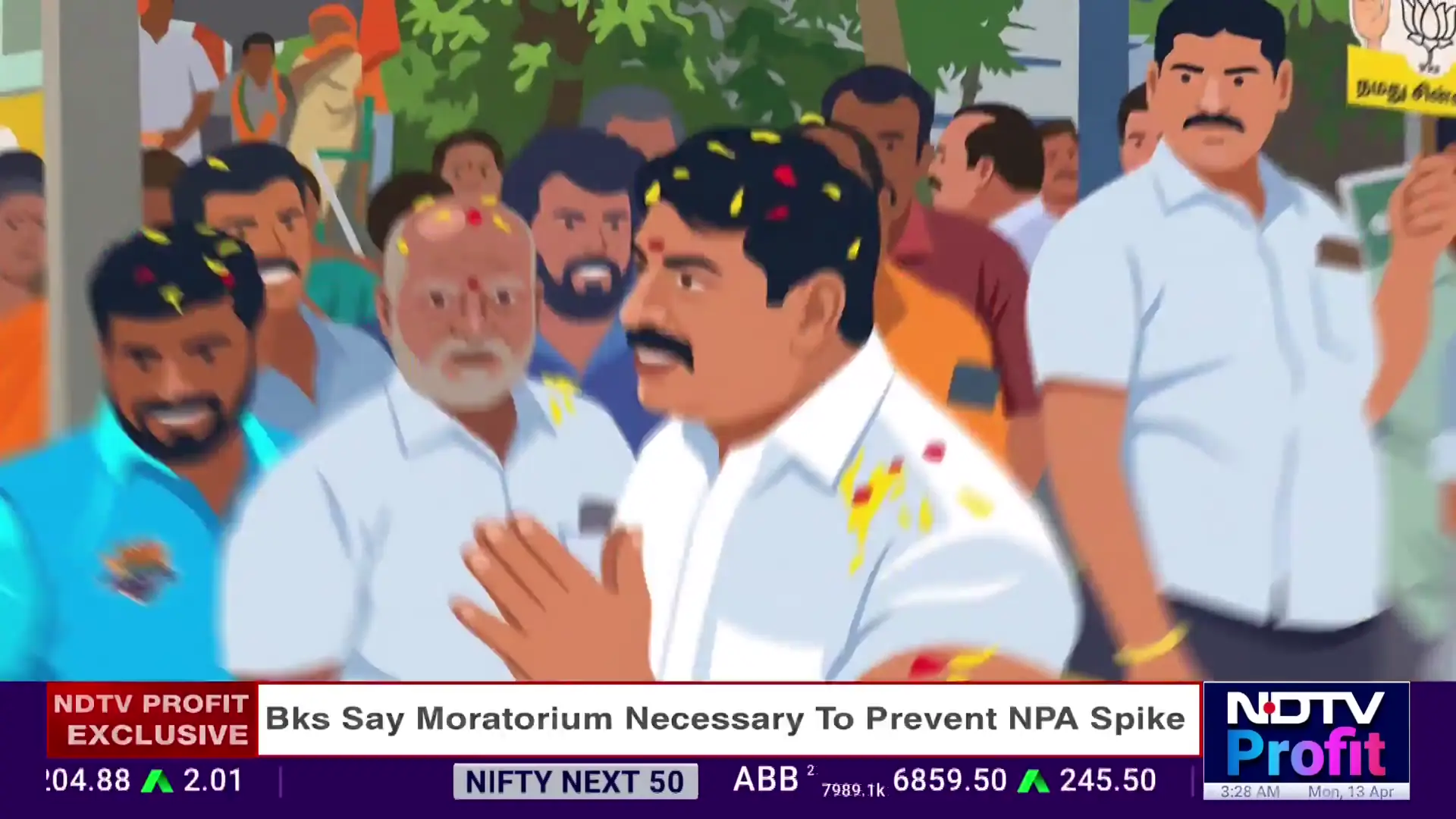
Tamil Nadu’s elections dominate the political narrative, framed as a ‘blockbuster’ by multiple segments. The state’s unique Dravidian script—where politics, cinema, and sustainability intersect—creates a narrative complexity that even seasoned observers call ‘not an easy call.’ Hosts and panelists repeatedly emphasize the unpredictability of local voting patterns, with one segment noting that ‘predictions are not easy’ in a landscape where ‘Dravidian script’ meets ‘unprecedented’ political dynamics.
The coverage clusters around three narrative threads:
-
Grassroots Conversations and Regional Focus: Segments like Tamil Nadu Political Context and Tamil Nadu Elections Segment pivot from macro-politics to micro-stories, highlighting how Tamil Nadu’s political identity is being rewritten on the ground. These segments feature interviews with political observers and election analysts, offering granular insights into voter sentiment and regional power shifts.
-
Sustainability as a Political Narrative: The introduction to Sustainability in Indian Elections teases a ‘major political blockbuster’ tied to environmental awareness, signaling how climate and energy issues are being woven into Tamil Nadu’s electoral fabric. This thread is further explored in segments like Mission Life Discussion, where the Prime Minister’s ‘pro-planet people framework’ is dissected for its potential electoral resonance.
-
Geopolitical Echoes in State Politics: While Tamil Nadu’s focus is local, global tensions—such as U.S.-Iran naval threats and French diplomatic efforts—are framed as external pressures that could ripple into domestic politics. The segment U.S. Threats and Iranian Countermeasures ties these tensions to India’s broader strategic environment, suggesting that even state-level elections are not immune to global shocks.
Digital Sovereignty and India’s Geopolitical Gambit
The most consequential political-economic discussion of the day is the Geopolitical Impact on Digital Infrastructure and India’s Digital Hub Potential. This 403-second panel debate, featuring Sunil Gupta, Sharad Agarwal, Sumesh Srivastav, and Dr. Arvind Gupta, dissects how geopolitical conflicts are reshaping internet infrastructure. The conversation pivots around three pillars:
-
Cloud Architecture and Data Centers: The panel argues that India’s potential as a ‘global digital hub’ is being accelerated by the relocation of data centers away from conflict zones like West Asia and the Red Sea. The discussion highlights how ‘nearshoring’ and ‘offshoring’ models are being re-evaluated in real time, with India positioned as a beneficiary of this shift.
-
Digital Infrastructure Resilience: The experts emphasize the need for ‘digital sovereignty’—a framework where India’s digital infrastructure is insulated from external shocks. This includes discussions on AWS facilities, data center capacity demand, and the role of organizations like Yotta Data Services and Quantum Hub in building resilient systems.
-
Policy and Governance: The panelists stress that India’s digital hub potential is not just about infrastructure but also about governance. The Digital India Foundation is cited as a key player in shaping policies that align with global standards while protecting domestic interests.
Renewable Energy as a Political Imperative
Renewable energy policy emerges as a recurring theme, with segments like Renewable Energy Policy and Innovation and Renewable Energy Policy Discussion framing it as a cornerstone of India’s economic and political strategy. The government’s focus on ‘intelligent’ and ‘focused’ renewable energy policies is highlighted as a way to leverage Indian innovation for sustainability. These segments suggest that renewable energy is no longer just an environmental issue but a geopolitical and economic one, with implications for India’s energy security and global standing.
Press Monitor Clips: Geopolitical Impact on Digital Infrastructure and India's Digital Hub Potential; Tamil Nadu Elections: Not an Easy Call; Mission Life Discussion
Top Business News, Issues and People
ndtvprofit's Best Business Coverage: Resilience Amid Turbulence—AI, Oil, and Valuation Corrections
World Bank’s Growth Reckoning
The World Bank’s revised growth projection for India—6.6%—anchors the business coverage, with segments like World Bank Growth Projection Analysis and India's Economic Policy Strengths dissecting the factors behind the forecast. The analysis clusters around three key themes:
-
Trade Tensions and Tariffs: The World Bank’s projection is revised downward due to ‘trade tensions’ and ‘tariffs,’ particularly the U.S.’s 50% tariff on certain imports. This creates a ripple effect across India’s export-oriented sectors, with segments like India Market and Foreign Investor Perspective exploring how foreign investors are recalibrating their strategies in response.
-
Oil Price Volatility: Geopolitical risks in the Middle East—amplified by conflicts in West Asia and the Strait of Hormuz—are driving oil price volatility. Segments like Oil Price and Geopolitical Risks and Economic Forecast Adjustments and Oil Price Impact analyze how this volatility could derail India’s growth trajectory, with oil shocks described as a ‘wildcard’ that could shave percentage points off GDP.
-
AI and Productivity Paradox: While AI adoption is expected to boost productivity, segments like AI Adoption and Job Market Impact warn of a ‘job market disruption.’ The discussion highlights how AI could widen the gap between skilled and unskilled labor, creating a ‘two-speed economy’ where growth is concentrated in high-productivity sectors while traditional industries struggle to adapt.
Market Valuations and Investment Strategies
The business segments are dominated by a focus on market corrections and valuation opportunities. The Market Analysis and Investor Questions segment, featuring Nirat Shah and Selesh Raj Bhahn, is a deep dive into how investors are navigating ‘turbulent’ markets. The conversation clusters around three pillars:
-
Bear Market Opportunities: Segments like Market Opportunities in Bear Markets and Long-Term Investment Strategies argue that bear markets present ‘once-in-a-decade’ opportunities for long-term investors. The discussion emphasizes the importance of ‘margin of safety’ and ‘portfolio management’ in a market where valuations are ‘sensible’ but not yet ‘cheap.’
-
Diamond Sector Spotlight: The PNGS Rewa Diamond series—spanning 450 seconds across multiple segments—offers a microcosm of how investors are reassessing traditional sectors. The analysis covers everything from ‘promoter activity’ and ‘shareholding trends’ to ‘valuation ratios’ and ‘EBITDA growth,’ positioning PNGS Rewa Diamond as a bellwether for India’s luxury and retail sectors.
-
Foreign Portfolio Flows: Segments like Foreign Portfolio Investments and Market Dynamics analyze FPI outflows and FDI trends, with a focus on ‘gross vs. net’ flows. The discussion suggests that while FPI outflows are a concern, FDI inflows—particularly into sectors like capital goods and AI—are providing a buffer against volatility.
AI and the Future of Work
AI’s impact on the job market is a recurring theme, with segments like AI Adoption and Job Market Impact and Sectoral Investments and Future Outlook exploring how India is preparing for the ‘AI revolution.’ The coverage highlights three key areas:
-
Capital Goods and AI Integration: The Sectoral Investments and Future Outlook segment discusses how capital goods companies are integrating AI into their operations, with a focus on ‘productivity gains’ and ‘cost efficiencies.’ The discussion suggests that India’s capital goods sector could become a global leader in AI-driven manufacturing.
-
Mutual Fund Flows and Investor Sentiment: Segments like Investor Sentiment and Market Trends analyze how mutual fund inflows are being reshaped by AI. The discussion highlights a shift toward ‘passive flows’ and ‘equity’ investments, with investors increasingly favoring funds that leverage AI for ‘smart beta’ strategies.
-
Rupee Depreciation and Valuations: The India Market and Foreign Investor Perspective segment ties AI adoption to rupee depreciation, suggesting that a weaker rupee could make Indian equities more attractive to foreign investors. The discussion emphasizes how ‘valuation corrections’ are creating ‘buying opportunities’ in sectors like IT and pharmaceuticals.
Press Monitor Clips: World Bank Growth Projection Analysis; Market Analysis and Investor Questions; PNGS Rewa Diamond Financial Performance and Valuation
Top Sports News, Issues and People
ndtvprofit's Best Sports Coverage: No Stories Selected
Other Top News, Issues and People
ndtvprofit's Best in Other Coverage: Nuclear Milestone, Wage Code, and Sustainability
India’s Nuclear Leap: Thorium and Energy Independence
The most historic segment of the day is the Thorium Energy Future and Energy Independence panel, featuring Vikram Oza, Dr. Anil Kakodkar, and Pallav Bagla. This 309-second discussion marks a milestone in India’s three-stage nuclear program, with a focus on the transition from uranium to thorium-based energy. The coverage clusters around three themes:
-
Technical Breakthrough: The segment India's Nuclear Reactor Criticality - Technical Details explains how the prototype fast breeder reactor at Kalpakam achieved ‘criticality,’ a key step toward commercial-scale thorium reactors. The discussion highlights the ‘engineering complexity’ of this achievement and its implications for India’s energy security.
-
Geopolitical Implications: The India's Nuclear Progress vs. Global Trends segment compares India’s nuclear program to global trends, noting how other nations are struggling with ‘cost pressures’ and ‘safety concerns.’ The panel argues that India’s ‘unique path’—focusing on thorium and fast breeder reactors—could position it as a global leader in nuclear energy.
-
Energy Independence: The India's Three-Stage Nuclear Program and Thorium Energy segment frames thorium as a way to achieve ‘energy independence.’ The discussion emphasizes how India’s nuclear program could reduce its dependence on imported uranium and oil, aligning with the government’s ‘Mission Life’ initiative.
Wage Code 2026: A Tax Revolution
The Final Summary and Practical Implications of New Wage Code segment, featuring Alex Matthew and Sudhir Kaushik, is a deep dive into how India’s new wage code will reshape take-home pay, retirement benefits, and tax efficiency. The coverage clusters around three themes:
-
Salary Restructuring: Segments like Impact of New Wage Code and Income Tax Rules on Salary Structure and Detailed Breakdown of Salary Components Under New Wage Code explain how the new code redefines ‘basic salary,’ ‘DA,’ and ‘allowances.’ The discussion highlights the ‘50% rule’ for allowances and how it impacts retirement benefit calculations.
-
Flexi Benefits and Tax Efficiency: Segments like Tax Efficiency and Flexible Benefits Under New Wage Code and Flexi Benefits and Allowance Restructuring Under New Wage Code explore how employees can leverage ‘flexi benefits’ (up to ₹3.24 lakh) to optimize their tax outgo. The discussion emphasizes how the new code allows for ‘tax-efficient salary structuring’ and ‘take-home pay control.’
-
Practical Advice: The Money Matters segment provides actionable advice on how to navigate the transition, with a focus on ‘allowances calculation,’ ‘meal allowances,’ and ‘fuel expenses.’ The discussion suggests that employees who proactively restructure their salaries could see ‘significant’ improvements in their take-home pay.
Sustainability and Community Action
Sustainability emerges as a cross-cutting theme, with segments like Environmental Action in India: Community Involvement and TCS on AI's Productivity and Revenue Implications exploring how India is tackling climate change. The coverage clusters around three themes:
-
Community-Led Solutions: The Environmental Action in India segment emphasizes the need to ‘revive community action’ for environmental sustainability. The discussion highlights how local initiatives—like tree-planting drives and waste management programs—are being scaled up to address India’s climate challenges.
-
Corporate Sustainability: The TCS Employee Headcount and AI-Driven Talent Strategy segment explores how TCS is integrating sustainability into its business model. The discussion covers ‘employee headcount’ adjustments, ‘AI-driven hiring,’ and how the company is balancing ‘productivity gains’ with ‘client demands.’
-
IT Services and AI: The TCS on AI's Productivity and Revenue Implications segment ties AI to sustainability, arguing that AI-driven productivity could reduce India’s carbon footprint by optimizing energy use in data centers and offices. The discussion suggests that India’s IT services sector could become a global leader in ‘green AI.’
Press Monitor Clips: Thorium Energy Future and Energy Independence; Final Summary and Practical Implications of New Wage Code; TCS Employee Headcount and AI-Driven Talent Strategy