India’s Energy Shift, US-India Trade Talks, and Tech Sector Resilience: ndtvprofit’s Best of April 24, 2026


India’s policy landscape is in flux as New Delhi accelerates its ethanol push, US-India trade talks navigate political noise, and the tech sector grapples with AI-driven revenue shifts. These are the dominant tensions shaping today’s business and political narratives, as revealed in ndtvprofit’s curated roundup of April 24, 2026.
Fuel Policy Flip: E20 to E85
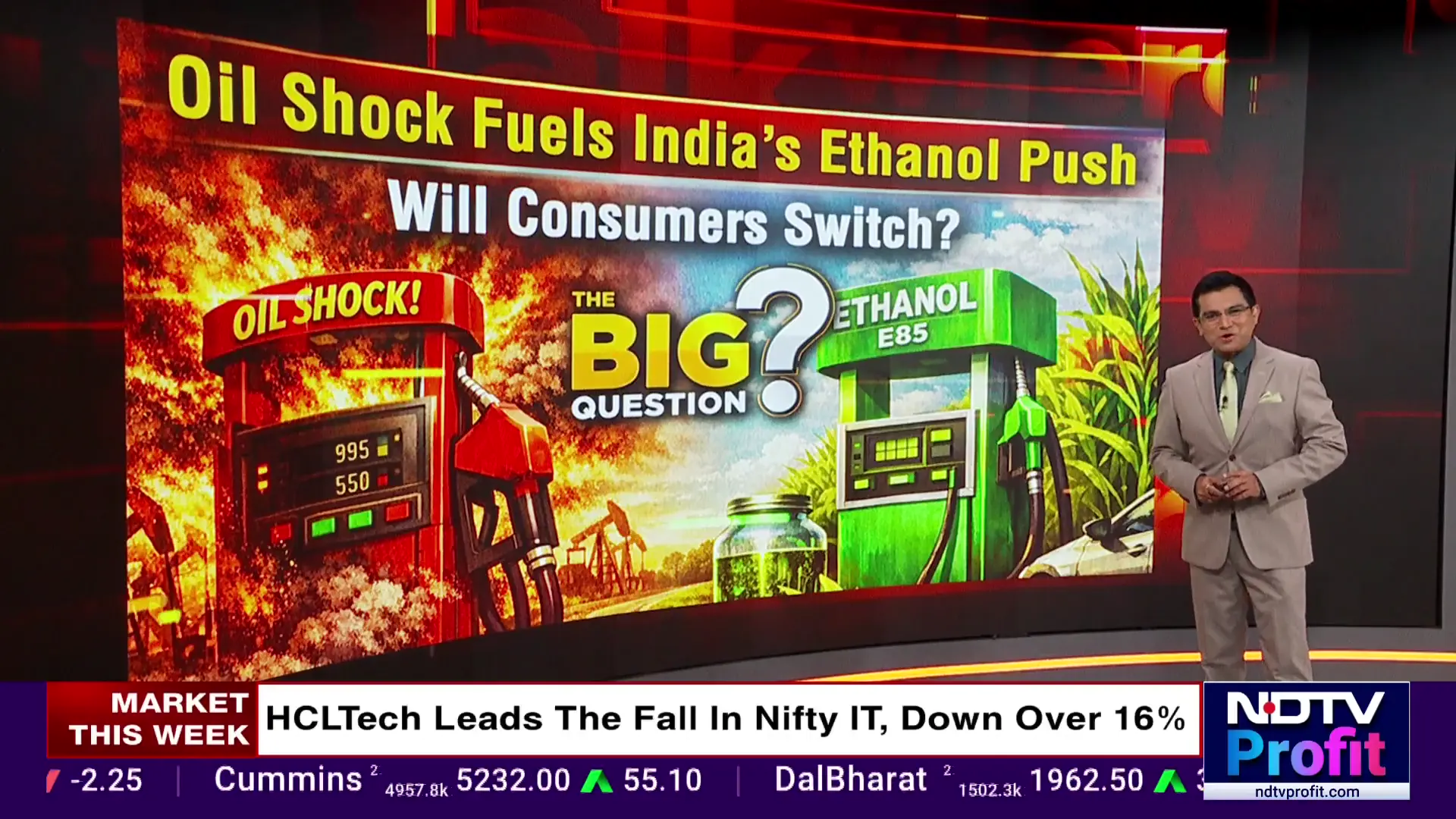
India’s transition from E20 to E85 ethanol blends is no longer a policy whisper—it’s a full-throated push to insulate the economy from geopolitical oil shocks. The Government of India’s field report, aired at 23:30 IST, frames this as a strategic pivot: reducing import dependency while navigating consumer resistance, infrastructure gaps, and engine safety concerns. The policy’s intent is clear—energy security—but the execution is fraught with challenges. Consumers face price sensitivity, while automakers must adapt to flex-fuel vehicle mandates. The segment underscores a tension between ambition and feasibility, with experts from Autocar India, FADA, and TERI warning that the timeline may be too aggressive for widespread adoption.
The ethanol push is not just about fuel. It’s a litmus test for India’s ability to balance climate goals with economic pragmatism. The Government of India’s policy shift comes amid a broader energy crisis, with West Asia’s volatility amplifying the urgency. Yet, the transition from E20 to E85 risks alienating consumers if infrastructure and pricing don’t align. The segment highlights a critical question: Can India’s auto industry and consumers afford to wait?
US-India Trade Talks: Rhetoric vs. Reality
Donald Trump’s rhetoric has once again injected volatility into US-India trade talks, but the latest panel discussions reveal a more nuanced picture. At 21:30 IST, experts dissected the divergence between political noise and diplomatic substance, noting that both New Delhi and Washington are compartmentalizing provocations to focus on long-term trade negotiations. The External Affairs Ministry’s restrained response contrasts with Trump’s bombastic statements, suggesting a calibrated approach to managing bilateral tensions.
The trade talks are not just about tariffs or market access—they’re about geopolitical positioning. India’s ability to navigate Trump’s unpredictability while securing favorable terms will define the next phase of US-India economic relations. The panel highlights that while rhetoric grabs headlines, the real work happens in backchannel negotiations, where non-tariff barriers and regulatory hurdles take center stage. The segment underscores a key insight: In US-India relations, actions often speak louder than tweets.
Tech Sector: AI’s Double-Edged Sword
Tech Mahindra’s latest financials paint a picture of resilience amid sector-wide pessimism. At 22:30 IST, CEO Mohit Joshi emphasized that AI is not just a buzzword—it’s a revenue driver. While peers grapple with negative sentiment, Tech Mahindra’s optimism stems from its diversified portfolio and BFSI sector recovery. The segment reveals a paradox: AI is both a growth catalyst and a disruptor, reshaping revenue streams and market expectations.
Joshi’s interview highlights a critical trend: AI’s impact on revenues is uneven. While some segments benefit from productivity gains, others face margin pressures. The discussion also touches on hedging strategies, with Tech Mahindra leveraging its deal pipeline to mitigate risks. The takeaway? AI is not a silver bullet, but a tool that demands strategic agility. For investors, the message is clear: Bet on companies that can harness AI without losing sight of fundamentals.
Real Estate: Inflation’s Shadow
Prestige Developers’ Irfan Razak delivered a masterclass in navigating inflation’s labyrinth. At 22:59 IST, Razak outlined how rising raw material costs and supply chain disruptions are reshaping project timelines and pricing strategies. The Hyderabad-based developer’s Golden Grove project, with 1,700 sales and a ₹2,500 crore valuation, serves as a case study in resilience. Yet, Razak’s warnings about FY27 projections underscore the fragility of India’s real estate sector, where inflation and geopolitical crises collide.
The segment reveals a stark reality: Inflation is not just a macroeconomic issue—it’s a microeconomic challenge for developers and consumers alike. Razak’s insights suggest that while demand remains robust, the cost of capital and construction is eroding margins. The takeaway? Real estate’s recovery hinges on inflation’s trajectory and the government’s ability to stabilize supply chains.
Paytm Payments Bank: Regulatory Reckoning
The Reserve Bank of India’s decision to cancel Paytm Payments Bank’s license has sent shockwaves through India’s fintech sector. At 21:30 IST, Ashwin Parekh, Managing Director of Ashwin Parekh Advisory Services, dissected the regulatory fallout, attributing the cancellation to governance failures and systemic risks. The segment frames this as a cautionary tale: Fintech innovation must align with regulatory rigor.
Parekh’s analysis highlights a critical tension: Innovation without governance invites regulatory backlash. The Paytm Payments Bank saga serves as a wake-up call for India’s fintech ecosystem, where rapid growth often outpaces compliance. The segment underscores a key question: Can India’s fintech sector innovate responsibly while meeting regulatory expectations?
Online Gaming: The Regulatory Tightrope
India’s new online gaming rules, effective 2026, have sparked a fierce debate. At 01:29 IST, Akshat Rathi of Nodwin Gaming and Nachiket Yagnik of Creda Legal dissected the implications of banned real-money games, the creation of the Online Gaming Authority of India (OGAI), and the shift toward self-regulation. The segment reveals a paradox: While the government aims to protect users, the gaming industry fears overreach that could stifle growth.
The discussion highlights a critical tension: Balancing user safety with industry innovation. Rathi and Yagnik argue that self-regulation, if implemented effectively, could bridge the gap between consumer protection and market growth. The takeaway? India’s gaming sector stands at a crossroads, where regulatory clarity will determine its global competitiveness.
SIPs vs. Lump Sum: The Investment Dilemma
Prabheen Bajpai of FinFix Research and Analytics delivered a data-driven masterclass on SIPs vs. lump sum investing. At 20:59 IST, Bajpai presented three scenarios—2008 crisis, 2020 correction, and recent periods—illustrating how SIPs outperform lump sum investments in volatile markets. The segment underscores a key insight: Discipline trumps timing in long-term wealth creation.
Bajpai’s analysis is a clarion call for retail investors: SIPs offer a shield against market volatility, while lump sum bets demand perfect timing. The takeaway? For most investors, a disciplined, long-term approach is the surest path to wealth.
Press Monitor Clips: India’s Fuel Policy Transition: E20 to E85; India-US Trade Talks and Political Noise; Tech Mahindra CEO Interview - AI, Revenue Growth, and Market Strategy; Expert Analysis on Paytm Payments Bank Cancellation; SIPs vs Lump Sum: Comparative Scenarios