India’s Policy Battles, Cultural Revival and Economic Ambitions: Sansad TV’s Must-Watch Roundup for April 16, 2026


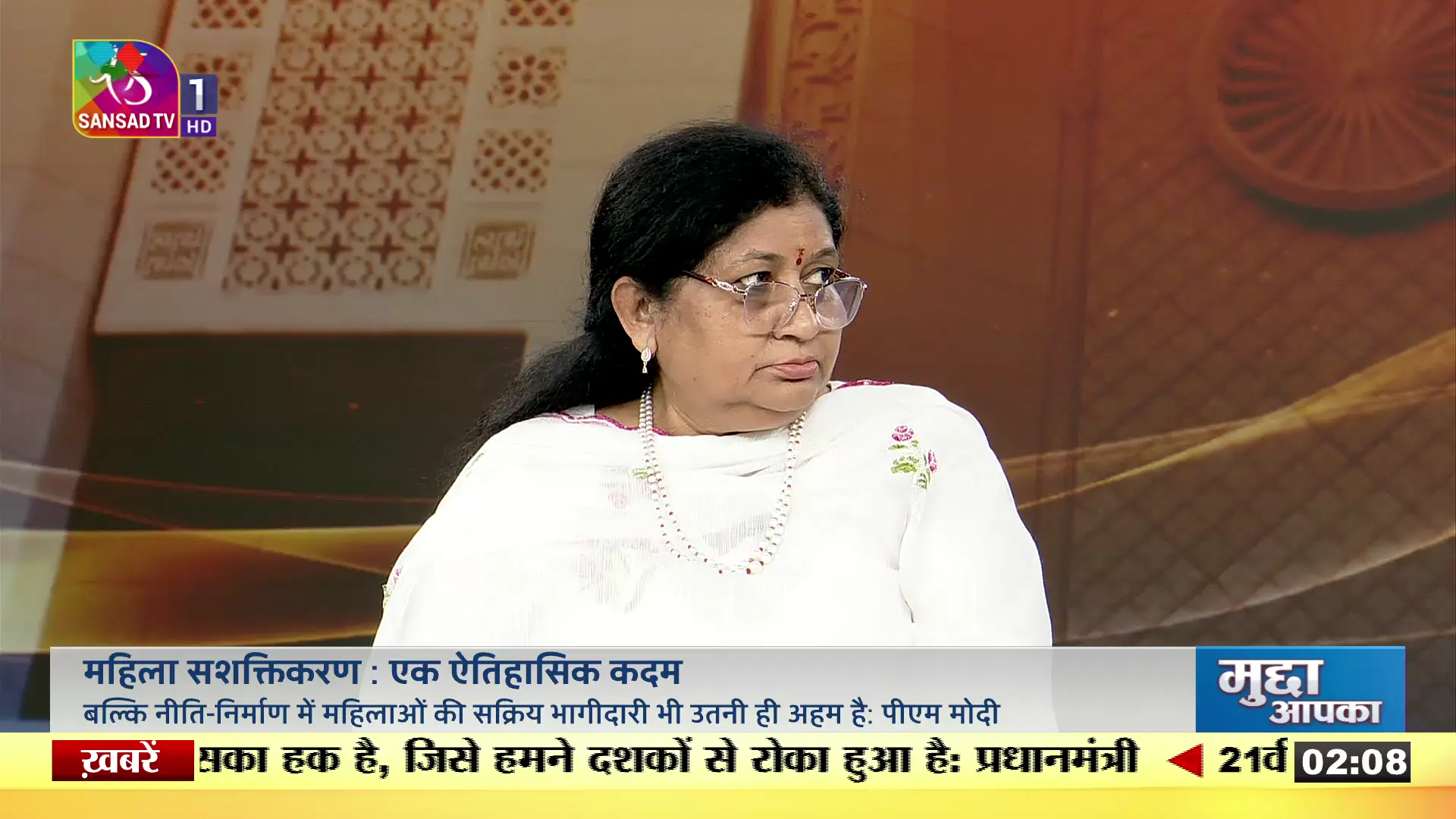
India’s national conversation this week pivoted around three fault lines: the political economy of population policy, the cultural reconstruction of the Bhairat Museum project, and the strategic push into nuclear energy and women-led agriculture. Sansad TV’s curated coverage reveals how Parliament’s legislative gridlock, the government’s demographic gambles, and a sweeping museum initiative are reshaping India’s future.
Top Political News, Issues and People
The allocation of 272 parliamentary seats has become the symbolic frontline of India’s demographic debate. Sansad TV’s live audience question—‘What is the significance of this allocation?’—underscored the tension between legislative arithmetic and societal expectations. The broadcast captured the moment when an unnamed audience member forced the issue into the public square, turning a procedural announcement into a referendum on representation.
Behind the scenes, Parliamentarians are locked in a high-stakes dialogue over population policy clarity. A panel discussion revealed the government’s reluctance to articulate a coherent stance, with one speaker warning that ‘lack of clarity’ risks eroding public trust. The absence of a clear policy narrative is amplifying resistance, particularly among marginalised communities who fear being left behind in the government’s demographic adjustments.
The Prime Minister’s implied leadership on policy implementation was dissected in a 36-second field report. The statement, delivered during a parliamentary session, framed population management as a societal expectation rather than a state mandate. Analysts note this rhetorical shift—from top-down control to bottom-up participation—mirrors the government’s broader strategy of ‘women-led’ development, a theme that resurfaced in the women’s reservation debate.
Women’s Reservation Bill: A Vertical Quota Revolution
Sansad TV’s breaking update on the Lok Sabha and Vidhan Sabha elections exposed the scale of the proposed amendment: expanding the Lok Sabha to 815 seats with one-third reserved for women. The bill introduces a vertical quota system for scheduled castes and tribes, extending protections to union territories including Delhi and Jammu & Kashmir. The panel highlighted how this amendment could redefine political power structures, particularly in Kudchedi and other tribal regions.
Women Farmers: The Hidden Engine of India’s Agricultural Future
A 229-second panel discussion consolidated the government’s strategy for women farmers, weaving together formal land titles, technical knowledge, financial resources, and AI-driven solutions. The segment reiterated the government’s commitment to ‘women-led’ agricultural transformation, positioning female farmers as the vanguard of rural development. Government schemes like D-NRLM (Deendayal Antodaya Yojna-National Rural Livelihood Mission) were spotlighted for their role in empowering women through financial support and capacity building.
The discussion also referenced the Dindyal Antiyoday Yojna, a flagship initiative designed to bridge the gap between policy intent and ground reality. Analysts noted that while the schemes are ambitious, their success hinges on overcoming societal resistance—a challenge that mirrors the broader policy implementation struggles across Parliament.
Press Monitor Clips: Announcement of 272 parliamentary seats allocation; Lok Sabha and Vidhan Sabha elections: Proposed amendment bill for women's reservation; Comprehensive Support for Women Farmers
Top Business News, Issues and People
India’s energy future is being written in nuclear corridors. Sansad TV’s panel on the Nuclear Power Corporation of India (NPCIL) and the Atomic Research Center revealed how atomic energy is being positioned as the backbone of the country’s energy ecosystem. The discussion framed nuclear power not just as a technical solution but as an economic catalyst, with the NPCIL’s role in ‘energy infrastructure’ highlighted as critical to India’s development trajectory.
A cryptic reference to a ‘130 trillion’ economic figure—likely tied to GDP or infrastructure spending—hinted at the scale of India’s ambitions. While the context remains opaque, the number underscores the government’s push to position India as a global economic player, with nuclear energy and infrastructure at its core.
Press Monitor Clips: Nuclear Power Corporation of India; Economic reference number
Top Sports News, Issues and People
The Ministry of Sports’ policy on league expansions and talent development took center stage in a 51-second panel discussion. The segment, led by Adanir Pradam-Mantriji, outlined a vision for a ‘fair platform’ for athletes, with a focus on expanding national leagues and identifying grassroots talent. The discussion framed sports development as a tool for social mobility, positioning the government’s initiatives as a bridge between aspiration and achievement.
Press Monitor Clips: Sports development initiatives
Other Top News, Issues and People
Alluri Sita Ram Raju: The Tribal Freedom Fighter Who Defined a Nation
A 376-second panel discussion on historical narratives and cultural analysis culminated in a deep dive into Alluri Sita Ram Raju’s legacy. The segment traced his struggle from Nizoram to Ropu Ilyani, linking his fight for tribal rights to the broader freedom movement. The discussion framed Raju not just as a historical figure but as a symbol of resistance against colonial and post-colonial marginalisation.
The Ropu Ilyani Tribal Freedom Fighter Museum was spotlighted for its role in preserving this legacy. The museum’s exhibits, including those on Ramanji Gondi and other tribal heroes, were presented as a testament to India’s cultural diversity and the ongoing struggle for social justice.
Bhairat Museum Project: Rewriting India’s Cultural DNA
The Bhairat Museum project, a 317-second panel discussion revealed, is more than a construction effort—it’s a cultural reconstruction. The project, spearheaded by Narendra Modi, aims to celebrate India’s tribal heritage through the Birsamungna Museum in Ranchi and other locations. The discussion highlighted the museum’s role in ‘cultural preservation,’ with artists and cultural figures playing a pivotal role in shaping its artistic vision.
The segment also commemorated Dresha Munnda Day, a tribute to the contributions of specific tribes and their cultural significance. The event underscored the government’s commitment to redefining India’s cultural narrative, positioning the Bhairat Museum as a cornerstone of this effort.
Empowerment and Societal Roles: The Next Generation’s Challenge
A 15-second panel discussion on empowerment in India’s inner states challenged the notion of generational limitations. The speaker argued that individuals raised in these regions possess the ‘powers’ to redefine societal roles and contribute meaningfully to the nation’s future. The discourse shifted to comparisons between current and future generations, framing empowerment as a dynamic process rather than a static outcome.
Press Monitor Clips: Historical Narratives and Cultural Analysis; Comprehensive Bhairat Museum Project; Discussion on empowerment and societal roles
Policy and Societal Implications: The 14-Point Agenda
A 91-second panel discussion on Pradhan Mantri Ji’s policy and societal implications referenced a ‘14 point something’ agenda, likely tied to economic growth and societal change. The speaker framed the government’s policies as a response to past data points, suggesting a continuity of vision despite shifting political landscapes. The discussion underscored the challenge of balancing growth with equity, a theme that resonates across Parliament’s demographic and cultural debates.