India’s Policy Battles, Economic Shifts and Social Transformations: sansad-tv-1’s Power Capsule of April 30, 2026


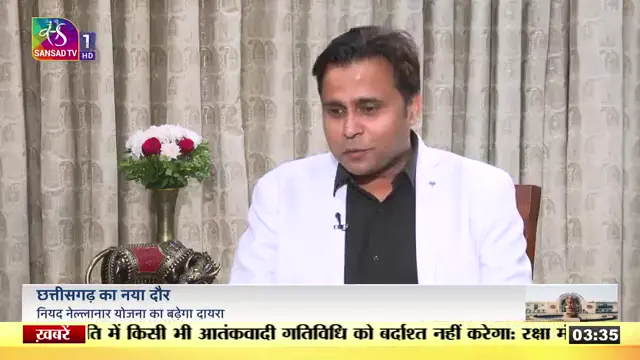
India’s political landscape on April 30, 2026, was marked by deepening debates over education reform, historical legacies, and electoral confidence. The Supreme Court’s scrutiny of the Right to Education Act’s EWS quota implementation collided with systemic challenges in Delhi’s government schools, while Kerala’s record voter turnout reshaped regional political calculations. Meanwhile, the legacy of Amrit Kaur, India’s first health minister, was re-examined as a touchstone for modern healthcare debates.
Top Political News, Issues and People
The Supreme Court’s intervention in the Right to Education Act’s EWS quota implementation dominated political discourse, with Dr. Jyoti Gupta, Director of Education in Delhi, leading a panel discussion on systemic failures in admissions and document verification. The discussion highlighted how cultural barriers, teacher shortages, and administrative bottlenecks have undermined the 25% reservation for economically weaker sections (EWS) in government schools. "The system is designed to fail," Gupta noted, pointing to the Supreme Court’s role in exposing systemic rot in Delhi’s education bureaucracy.
EWS admissions: Fake cases and systemic rot
A separate panel dissected the surge in fake admissions under the EWS quota, with Anita Sharma from the Board of School Authority (BSA) revealing that over 20% of EWS certificates submitted for admissions in Delhi and Uttar Pradesh were found to be fraudulent. The segment exposed how middle-class families exploited loopholes in the Right to Education Act, with Sharma stating, "The quota was meant to uplift the poor, not to be a gateway for the privileged." The discussion underscored the need for robust verification mechanisms and stricter penalties for misrepresentation.
Kerala’s record voter turnout: A democratic milestone
Kerala’s 80.80% voter turnout in the recent elections set a new benchmark for political participation, with analysts attributing the surge to heightened civic engagement and regional political shifts. The segment compared Kerala’s performance with Bengal’s voter turnout, noting how record participation in southern states could redefine national electoral strategies. Political analysts emphasized that the trend reflected broader democratic progress, with one noting, "When 80% of the electorate votes, it’s not just a number—it’s a mandate for change."
Amrit Kaur: India’s forgotten health pioneer
A field report revisited the legacy of Amrit Kaur, India’s first health minister and a close associate of Mahatma Gandhi, whose contributions to public health and women’s rights were largely overshadowed by male contemporaries. The segment traced Kaur’s role in shaping India’s healthcare system post-independence, from establishing the All India Institute of Medical Sciences (AIIMS) to advocating for maternal health. "She was the architect of India’s modern healthcare system," historian Ramesh Chandra noted, highlighting Kaur’s vision in a segment that blended archival footage with contemporary analysis.
Exit poll analysis: Confidence vs. reality
A panel discussion dissected exit poll predictions, with analysts comparing the 2026 projections (82%, 84%, 88%) to historical trends from 2004, 2009, 2014, and 2024. The segment explored how voter confidence metrics had evolved, with one analyst cautioning, "Exit polls are snapshots, not prophecies. The real story is in the turnout." The discussion framed the polls as a barometer of public sentiment rather than a definitive forecast.
Government program discussion: Strength in policy or weakness in execution?
A panel of political analysts debated the government’s policy agenda, focusing on the PEC (Policy Execution Council) and its role in streamlining cabinet decisions. The discussion, framed as a governance audit, questioned whether the government’s strength lay in policy formulation or in its ability to implement reforms. "The cabinet’s decisions are bold, but execution is where the rubber meets the road," one analyst remarked, summarizing the tension between vision and delivery.
Press Monitor Clips: Government program discussion; EWS Admissions: Fake Cases and Systemic Issues; Kerala's Election Results and Voter Impact
Top Business News, Issues and People
India’s economic narrative in April 2026 was dominated by the intersection of manufacturing growth, energy transformation, and the disruptive potential of artificial intelligence. The manufacturing sector, contributing 16-17% to GDP, emerged as a cornerstone of economic resilience, while the PM Suraksha Bijli Yojana redefined rural energy dynamics. Meanwhile, the tech sector faced a reckoning as AI-driven job displacement collided with India’s ambitions to become a global AI talent hub.
India’s manufacturing sector: From GDP contributor to global player
A panel discussion featuring Sunil Mangla of the PhD Chamber of Commerce and Industry and Dr. Nagesh Kumar of the Institute for Studies in Industrial Development dissected India’s manufacturing sector, which now accounts for 16-17% of GDP. The segment highlighted the sector’s transformation from a low-skill, low-wage industry to a high-value, globally integrated hub. "India is no longer just an assembly line—it’s a design and innovation center," Mangla asserted, pointing to the rise of integrated manufacturing hubs and India’s growing role in global value chains. The discussion also emphasized the need for trade agreements and diaspora networks to bolster India’s industrial competitiveness.
PM Suraksha Bijli Yojana: Powering rural India’s economic leap
A segment explored how the PM Suraksha Bijli Yojana had transformed rural households and farmers into energy providers, creating economic opportunities across 16 sectors. The initiative, which leveraged solar and renewable energy systems, was credited with reducing energy poverty and enabling small-scale entrepreneurship. "This is not just about electricity—it’s about economic empowerment," a farmer from Andhra Pradesh explained, illustrating how the scheme had turned energy consumers into energy producers.
Andhra Pradesh’s fisheries: A Rs 2,500 crore economic lifeline
A segment on Andhra Pradesh’s fishing industry highlighted the state’s role as a key driver of India’s marine exports, with the sector contributing Rs 2,500 crores annually. The report focused on the challenges faced by local fisherfolk, from climate change to market access, and the potential of marine resources to fuel economic growth. "The Bay of Bengal is not just a body of water—it’s an economic frontier," a marine economist noted, underscoring the need for sustainable practices and infrastructure investment.
AI’s double-edged sword: Job displacement and reskilling challenges
A panel discussion on Neeti Ayug’s AI talent mission revealed the stark realities of AI-driven job displacement in India’s tech sector, where 2-4 million jobs could be at risk. The segment, featuring tech workforce representatives, explored how AI was creating high-skilled roles while displacing mid-level positions. "This is not just about jobs lost—it’s about the future of work," a panelist warned, outlining India’s reskilling roadmap to address the transition. The discussion framed AI as both a disruptor and an opportunity, with India’s AI talent mission positioned as a critical response to global trends.
Bengal’s industrial decline: A cautionary tale
A panel discussion on Bengal’s economic challenges traced the state’s industrial decline to historical shifts, investment barriers, and policy inconsistencies. The segment, featuring Bengal business leaders, compared the state’s struggles with other industrial hubs like Gujarat and Tamil Nadu, noting how the decline of industries like Shingul and Nandi Gram had eroded investor confidence. "Bengal was once the workshop of India—now it’s a cautionary tale," a historian remarked, highlighting the need for structural reforms to revive the state’s economy.
Press Monitor Clips: India's Manufacturing Sector: Growth and Future; Impact of PM Suraksha Bijli Yojana on Farmers and Economy; AI's Impact on Employment: Disruption and Opportunity
Top Sports News, Issues and People
Sports coverage on April 30, 2026, reflected India’s broader societal shifts, from Prime Minister Narendra Modi’s emphasis on inclusivity in sports to the Indian Army’s focus on fitness as a cornerstone of national security. The Vandebharat Express, a high-altitude railway innovation, also took center stage as a symbol of India’s technological prowess.
Prime Minister Modi’s engagement with Sikkim’s youth: Leadership in action
A segment captured Prime Minister Narendra Modi’s interaction with Sikkim’s youth, highlighting his emphasis on the Fit India campaign and the importance of sports in fostering leadership and humility. The segment, which spanned 539 seconds, showcased Modi’s hands-on approach to grassroots engagement, blending policy advocacy with personal anecdotes. "Sports is not just about medals—it’s about building character," Modi remarked, underscoring the holistic role of sports in national development.
Indian Army’s training regimen: Fitness as a weapon of defense
A segment on the Indian Army’s training routines detailed how young soldiers integrated Pranayama, Yoga, and team sports like football and boxing into their daily regimens. The report emphasized the role of physical fitness in preparing soldiers for combat, with one trainer noting, "A fit soldier is a confident soldier." The segment also highlighted the Army’s holistic approach to wellness, blending traditional practices with modern training techniques.
Vandebharat Express: A high-altitude engineering marvel
A segment on the Vandebharat Express, India’s advanced train designed for Kashmir’s harsh conditions, showcased its 20-coach capacity and special features for high-altitude travel. The report, which also discussed demand for the service, framed the train as a symbol of India’s technological innovation and infrastructure expansion. "This is not just a train—it’s a lifeline for Kashmir," a railway official noted, emphasizing the project’s strategic importance.
Diversity and inclusion in sports: Celebrating India’s Olympians
A segment on diversity and inclusion in sports highlighted Prime Minister Modi’s emphasis on celebrating the achievements of persons with disabilities in Olympic medals. The report framed inclusivity as a cornerstone of India’s sporting ethos, with one athlete noting, "Every medal is a story of resilience." The segment also touched on community initiatives and cultural activities that fostered a broader sports ecosystem.
Press Monitor Clips: Prime Minister Modi Ji's Engagement with Sikkim's Youth and Environmental Initiatives; Indian Army Training and Fitness Regimen; Vandebharat Express: High-Altitude Railway Innovation
Other Top News, Issues and People
The broader cultural and philosophical landscape on April 30, 2026, was shaped by debates over democracy’s foundations, the ethical dimensions of Jainism, and India’s first digital census. The stories reflected a nation grappling with its past while navigating the complexities of modernity.
Jainism’s core: Ahimsa as a way of life
A two-part segment on Jainism explored the philosophy of Ahimsa (non-violence) as a foundational principle, blending poetic language with philosophical depth. The first part introduced Ahimsa as a spiritual and emotional commitment, while the second delved into its ethical and societal implications. "Ahimsa is not just abstaining from violence—it’s a way of living," a Jain monk explained, emphasizing the philosophy’s relevance in a world marked by conflict. The segments critiqued superficial interpretations of ancient texts, urging deeper reflection on ethical living.
India’s digital census: A technological leap for democracy
A breaking update on India’s first digital census highlighted the government’s efforts to ensure participation through social media platforms like X (formerly Twitter). The segment framed the census as a critical tool for data-driven policymaking, with one official noting, "This is not just about counting people—it’s about understanding India." The report also addressed challenges in self-numeration and the need for widespread digital literacy.
Wancho people: Tribal governance and agricultural traditions
A two-part segment on the Wancho people of Arunachal Pradesh explored their agricultural practices, particularly Zumb cultivation (shifting cultivation), and their structured village governance through the Ngo Wang (village council). The segments highlighted the Wancho’s sustainable livelihoods and hereditary traditions, with one elder noting, "Our land is our life—we must protect it." The discussion also touched on the challenges posed by modernization and climate change.
Philosophical critique: The meaning in ancient texts
A segment critiqued the superficiality of interpreting ancient texts without deeper reflection, questioning the validity of conclusions drawn from 500 books. The report urged a return to philosophical rigor, with one academic stating, "Reading without understanding is like eating without nourishment." The segment framed the critique as a call for intellectual honesty in academic discourse.
Press Monitor Clips: Introduction to Jainism: Core Principles of Ahimsa; India's Digital Census Initiative; Wancho Agricultural Practices
India on April 30, 2026, stood at the crossroads of tradition and transformation. From the Supreme Court’s scrutiny of education policies to the disruptive potential of AI in the tech sector, the nation’s narrative was one of resilience, reform, and reckoning. The stories curated by sansad-tv-1 reflect a country grappling with its past while forging a path toward a more inclusive and innovative future.