ndtv24x7's Power Monitor: India's Political Battles, Global Markets in Turmoil, and Diplomatic Flashpoints Dominate April 11 Coverage


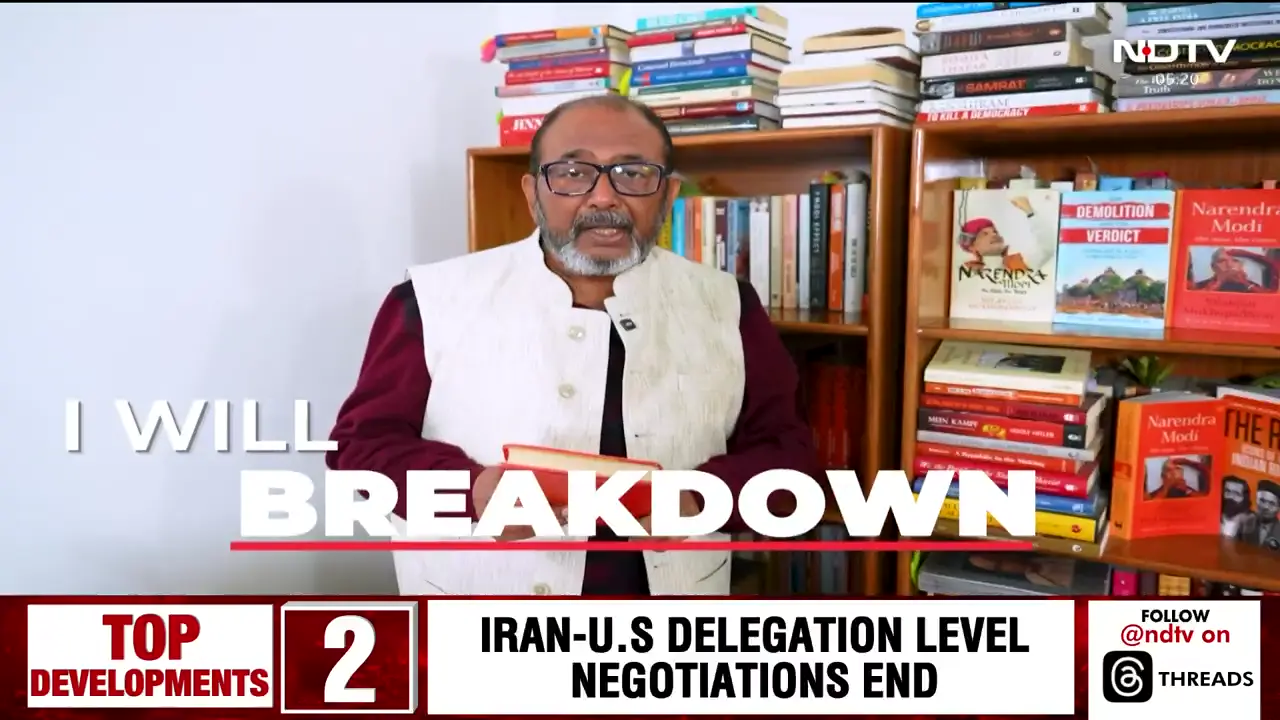
Lead: April 11’s ndtv24x7 roundup reveals a nation at the crossroads of elections, geopolitical tensions, and economic uncertainty. From West Bengal’s high-voltage campaigns to Islamabad’s trilateral talks, the day’s stories expose shifting power dynamics, market volatility, and the human cost of diplomatic standoffs. Press Monitor distills the strongest segments for strategic insight and clip extraction.
Top Political News, Issues and People
ndtv24x7's Best Political Coverage: Battleground Bengal and Beyond
West Bengal remains the epicentre of India’s political storm, with Prime Minister Narendra Modi’s BJP sharpening its attack on the ruling TMC. In a blistering field report from Dakshin Dinajpur, Modi accused the TMC of presiding over a ‘syndicate raj,’ alleging corruption and authoritarianism. The segment, aired at 23:50 IST, framed the election as a battle for women’s rights and economic justice, directly tying TMC’s governance to ‘atrocities’ against the state’s people. The BJP’s strategy to breach Mamata Banerjee’s ‘political fortress’ was dissected in a panel discussion, with anchors highlighting the TMC’s vulnerabilities ahead of polling day.
TMC vs. Guspati forces: A new political faultline
A 58-second analysis segment titled Bengal political dynamics: TMC vs. Guspati forces aired at 22:51 IST, dissecting the opposition’s pushback against TMC’s dominance. The discussion, marked by sharp rhetoric, framed the TMC’s rise as a product of ‘satta’ (power) and ‘mati manush’ (common people) narratives, while alleging corruption and mismanagement. The segment’s tone underscored the escalating tensions, with anchors questioning whether the TMC’s governance had outlived its mandate.
Tamil Nadu’s high-stakes drama
Ilanjan Mukhopadhyay’s field report from Tamil Nadu, titled Election Battleground Analysis: Tamil Nadu, aired at 23:50 IST. The segment, part of NDTV’s ‘blockbuster’ election coverage, tracked the ‘high voltage’ mood across the state, with NDTV’s team dissecting the forces shaping the campaign. The analysis included mood tracking from key battlegrounds, offering a data-driven perspective on voter sentiment and party strategies.
US Vice President J.D. Vance: The man in the middle
A 69-second breaking update from Islamabad, titled Pakistan-Iran-US negotiations, aired at 22:51 IST. The segment focused on US Vice President J.D. Vance’s role in trilateral talks between Iran, Pakistan, and the US, with updates on delegation-level discussions and technical negotiations. The coverage highlighted Vance’s involvement in shaping a potential joint statement, a critical development amid ongoing tensions in the Strait of Hormuz.
NDTV’s data-driven election narrative
In Election Battlefields Analysis, aired at 22:00 IST, NDTV’s team presented a data-driven approach to India’s five key election battlegrounds. The segment emphasized how ‘data drives politics,’ with anchors using NDTV DNA to dissect voter trends, party strategies, and the role of social media in shaping narratives. The analysis underscored the network’s commitment to ‘election insights,’ positioning NDTV as a leader in transparent political coverage.
Press Monitor Clips: Modi Accuses TMC of Syndicate Rule in Bengal; Bengal political dynamics: TMC vs. Guspati forces; Election Battleground Analysis: Tamil Nadu
Top Business News, Issues and People
ndtv24x7's Best Business Coverage: Geopolitics, Energy, and Global Markets in Flux
Global markets are in turmoil as the US-Iran ceasefire and Middle East tensions reshape economic forecasts. A 60-second panel discussion, Global Markets Impacted by Middle East Conflict, aired at 18:18 IST, analyzed how geopolitical standoffs are driving volatility in stock markets, oil prices, and prediction markets. The segment, featuring Wall Street Journal insights, highlighted the ‘ripple effects’ of diplomatic progress—or lack thereof—on investor sentiment.
Strait of Hormuz: The geopolitical chokepoint
Anusha Soni’s 397-second investigative report, Iran-US Peace Talks: Strait of Hormuz and Geopolitical Standoff, aired at 16:25 IST. The segment, a deep dive into trilateral talks between the US, Iran, and Pakistan, focused on the Strait of Hormuz as a ‘critical issue’ in negotiations. Soni’s analysis covered Iran’s nuclear demands, the role of Pakistan as a mediator, and the geopolitical implications for global trade. The report also explored ‘non-negotiable conditions’ set by Iran, including control over the Strait and frozen assets.
Energy cooperation: India and Bangladesh at a crossroads
Mr. Puri’s 157-second interview, Energy Cooperation and Water Treaty Discussions, aired at 15:01 IST. The segment, part of a broader discussion on India’s energy security, focused on the Ganges Water Treaty and its renewal. Puri, representing India’s Ministry of Petroleum, and his Bangladeshi counterpart discussed the ‘energy crisis’ exacerbated by Middle East conflicts. The interview highlighted the ‘diplomatic engagement’ required to secure diesel, petrol, and gas supplies, with both sides emphasizing the need for bilateral agreements to stabilize regional energy markets.
Kohler’s India story: Sustainability and growth
Ranjith Oak’s 83-second interview, Kohler India Business Expansion Interview, aired at 10:49 IST. The segment, part of Kohler’s 20-year celebration in India, focused on the company’s strategic investments and sustainability initiatives. Oak, Managing Director of Kohler India, discussed the ‘growth market’ potential of Gujarat and the role of ‘sustainability’ in shaping future business strategies. The interview underscored India’s importance in Kohler’s global expansion plans.
Deakin University: Aligning academia with industry needs
Professor Deepak Bajaj’s 131-second interview, Deakin University: Professor Deepak Bajaj on Course Alignment and Industry Needs, aired at 08:15 IST. The segment, set in GIF City, discussed the alignment of Deakin University’s Master of Business Analytics and Master of Cyber Security courses with industry demands. Bajaj emphasized the need for ‘practical exposure’ and ‘industry alignment,’ positioning Deakin as a leader in preparing students for the ‘global economy.’
Press Monitor Clips: Iran-US Peace Talks: Strait of Hormuz and Geopolitical Standoff; Energy Cooperation and Water Treaty Discussions; Kohler India Business Expansion Interview
Top Sports News, Issues and People
ndtv24x7's Best Sports Coverage: Cricket Diplomacy and Political Rhetoric
Sports and politics collided in a 37-second field report, Modi Accuses TMC of Syndicate Rule in Bengal, aired at 23:50 IST. Prime Minister Narendra Modi’s attack on the TMC government framed the ‘football game’ of Bengal politics as a battle for ‘atrocities’ and ‘women’s rights.’ The segment, part of a broader election narrative, highlighted the BJP’s strategy to weaponize sports diplomacy in its campaign.
Cricket as a tool of geopolitics
A 15-second panel discussion, Cricket Diplomacy: Weaponization Debate, aired at 17:19 IST. The segment analyzed how cricket diplomacy is being ‘weaponized’ in India-Pakistan relations, with anchors discussing the geopolitical implications of using sports as a tool in diplomatic tensions. The discussion framed cricket as a ‘soft power’ tool, capable of either easing or escalating cross-border hostilities.
Press Monitor Clips: Modi Accuses TMC of Syndicate Rule in Bengal; Cricket Diplomacy: Weaponization Debate
Other Top News, Issues and People
ndtv24x7's Best in Other Coverage: Ceasefires, Youth Aspirations, and Breaking Ground
Iran’s political landscape took centre stage in a 65-second interview, Iran political situation analysis, aired at 22:51 IST. The segment, featuring experts discussing Iran’s regime structure and military capabilities, focused on Supreme Leader Khamenei’s status and the IRGC’s role in ‘asymmetric warfare.’ The analysis provided a rare glimpse into Iran’s internal dynamics, with anchors highlighting the ‘dictatorship’ of the clerical leadership.
Ceasefire in Iran-Syria: A fragile peace
Dr. Abdul Majid Hakim Ilahi’s 34-second interview, Iran-Syria Ceasefire Discussion, aired at 23:50 IST. The segment covered initial reactions to the ceasefire conditions, with a senior official providing a ‘military perspective’ on the political implications. The discussion underscored the ‘life loss’ and ‘political context’ surrounding the ceasefire, framing it as a critical but fragile development in the region’s conflicts.
Youth aspirations and societal challenges
NDTV Yuva’s 26-second segment, NDTV Yuva: Future Generation Discussion, aired at 23:50 IST. The segment featured young voices discussing ‘future aspirations,’ entrepreneurship, and societal challenges. Anchors framed the discussion around ‘uncomfortable truths,’ highlighting the gap between youth ambitions and systemic barriers. The segment positioned NDTV Yuva as a platform for bold takes on India’s generational divide.
Islamabad negotiations: Live updates from the frontline
A 161-second live update segment, Live updates from Islamabad negotiations, aired at 22:51 IST. The segment provided continuous coverage of Iran-US-Pakistan negotiations, including delegation-level discussions and technical talks. The updates, marked by ‘breaking’ signals, focused on potential joint statement developments and the ‘alignment on agreements’ between the parties. The segment underscored the high stakes of the talks for regional stability.
Bombing in West Bengal: A market in ruins
Anusha Sony’s 43-second breaking news segment, Bombing Incident Coverage, aired at 21:50 IST. The segment covered a bombing incident in a West Bengal marketplace, with visuals and anchor commentary. The coverage, marked by ‘breaking update’ signals, highlighted the human cost of political violence and its impact on election dynamics.
Iran-US talks in Ashabad: A diplomatic thaw?
A 22-second field report, Iran-US Talks in Ashabad, aired at 22:00 IST. The segment covered high-level talks between Iran and the US in Ashabad, focusing on negotiations and potential agreements. The coverage, part of a broader diplomatic narrative, framed the talks as a critical step toward easing tensions in the region.
Iran-India diplomatic talks: Frozen assets and the Cold Water Treaty
A 97-second panel discussion, Iran-India Diplomatic Talks, aired at 21:50 IST. The segment covered Iran-India talks in Islamabad, discussing ‘non-negotiable conditions,’ control over the Strait of Hormuz, and frozen assets. The discussion also included analysis of the ‘Cold Water Treaty’ implications, framing the talks as a test of India’s diplomatic agility in a volatile region.
Press Monitor Clips: Iran political situation analysis; Live updates from Islamabad negotiations; Iran-Syria Ceasefire Discussion