ndtv24x7’s Power Monitor: India’s elections, Iran-Israel war, and global energy crisis dominate today’s must-watch coverage


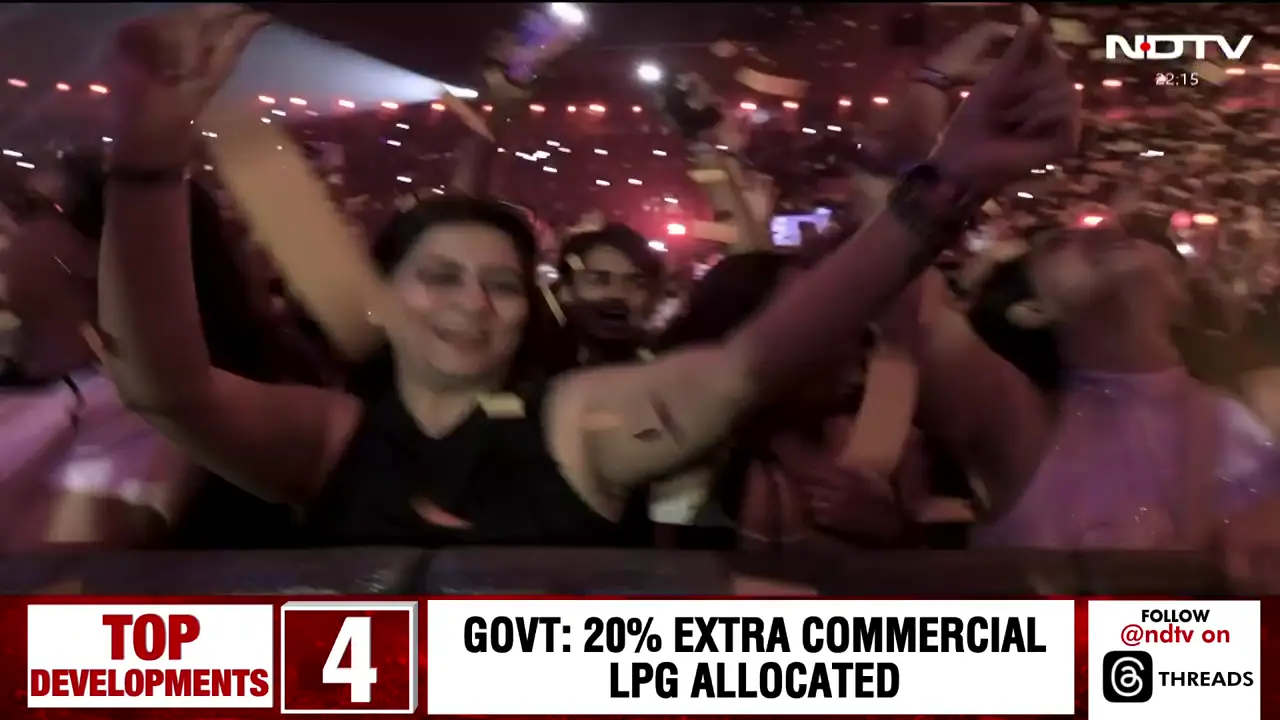
A day of seismic political shifts, escalating conflicts, and energy market tremors has been distilled into ndtv24x7’s curated Power Monitor. From the high-voltage Tamil Nadu elections to the live exclusive with Israel’s Prime Minister Benjamin Netanyahu, our teams have captured the stories that will define tomorrow’s headlines. The global energy crisis deepened as Russian crude oil reached Mangaluru, while West Asia’s war entered its 22nd day with Iran’s nuclear facilities under attack. In India’s state capitals, political tectonics are realigning: Assam’s Pradyut Bordoloy’s Congress-to-BJP transition, West Bengal’s TMC-BJP clashes over voter suppression, and Kerala’s debate on women’s representation in assembly polls. These are not isolated events but interconnected tremors in a world where geopolitics, economics, and democracy collide.
Top Political News, Issues and People
ndtv24x7’s Best Political Coverage: High-voltage elections and geopolitical tremors
Tamil Nadu’s blockbuster elections and West Asia’s war
The Tamil Nadu assembly elections have become a high-stakes political blockbuster, with NDTV’s live coverage framing the contest as a referendum on governance and regional identity. But the drama extends far beyond Chennai’s beaches. The war in West Asia escalated with Iran’s nuclear enrichment facilities under attack, sending shockwaves through global energy markets and raising fears of a wider regional conflict. NDTV’s segment captured both the electoral intensity in Tamil Nadu and the geopolitical fallout, underscoring how domestic politics and international crises now move in lockstep.
Assam’s political tectonics: Bordoloy’s Congress-to-BJP pivot
Former Congress MP Pradyut Bordoloy’s transition to the BJP has become a defining narrative in Assam’s election cycle. Our panel dissected the long-term trajectory of his political realignment, rejecting the narrative of an overnight conversion. Instead, the discussion highlighted Bordoloy’s gradual shift—a reflection of Assam’s evolving political landscape where traditional party loyalties are being reshaped by regional aspirations and national ambitions. The segment also examined how this transition could influence the BJP’s strategy in the upcoming Assam Assembly elections, with implications for the broader Northeast.
West Bengal’s TMC vs BJP: Voter suppression and President’s rule threats
Political tensions in West Bengal have reached boiling point, with accusations of voter suppression and destabilization efforts dominating the discourse. The segment analyzed the TMC’s accusations against the BJP, including claims of voter deletion rolls and interference in electoral processes. Opposition leaders have warned that the state could face President’s rule if the election process is compromised. The debate also highlighted promises from both sides to protect voters’ rights, setting the stage for a potentially volatile polling day.
Kerala’s gender imbalance debate: Women’s representation in assembly polls
Kerala’s assembly elections are spotlighting a persistent gender imbalance in political representation. Congress leaders Shama Mohammed and Shashi Tharoor engaged in a robust debate on women’s reservation, party selection criteria, and the structural barriers preventing greater female participation. The discussion revealed deep divisions within parties over how to address the imbalance, with some advocating quotas and others emphasizing merit-based selection. The segment underscored how Kerala’s progressive reputation is clashing with the reality of its political gender gap.
Exclusive: Netanyahu on Iran, Israel’s war strategy, and global diplomacy
In a rare live exclusive, Israeli Prime Minister Benjamin Netanyahu sat down with NDTV’s Aditya Raj to discuss Israel’s war on Iran, the strategic decisions shaping the conflict, and the broader implications for global diplomacy. Netanyahu’s remarks on Iran’s nuclear ambitions and Israel’s right to self-defense provided a rare insight into the leadership’s thinking during a crisis that has drawn in the United States, NATO, and regional powers. The interview also touched on India’s role as a friend of Israel, with Netanyahu praising New Delhi’s diplomatic stance amid the escalating tensions.
PM Modi on Israel’s war: India’s friendship and global truth
Prime Minister Narendra Modi’s interview offered a rare window into India’s diplomatic positioning during the Israel-Iran conflict. Modi emphasized India’s unwavering support for Israel’s military operations, framing the war as a struggle for truth and justice. His remarks also highlighted the deepening strategic partnership between India and Israel, particularly in defense and technology, while navigating the complexities of India’s relationships with Iran and the broader Muslim world. The interview underscored how India is balancing its strategic interests with its global diplomatic responsibilities.
Press Monitor Clips: Tamil Nadu elections and West Asia conflict updates; Assam Elections: Congress to BJP Transition; Exclusive Interview with Benjamin Netanyahu
Top Business News, Issues and People
ndtv24x7’s Best Business Coverage: Energy markets, sanctions, and geopolitical shocks
Russian crude oil arrives in Mangaluru: A game-changer for India’s energy security
A Russian crude oil vessel, the Aqua Titan, docked in Mangaluru’s port, marking a significant moment in India’s energy strategy amid the global crisis. The arrival of the vessel—carrying Russian crude despite Western sanctions—highlights India’s pragmatic approach to securing energy supplies. Our field report from Mangaluru detailed the logistics of unloading the oil via the single-point mooring system at MRPL, while experts analyzed the implications for global oil prices and India’s refining capacity. The segment also explored how this shipment could influence India’s stance in the West Asia conflict, given its growing energy ties with Russia.
Global energy crisis deepens: US sanctions on Iran and the Strait of Hormuz dilemma
The US’s renewed sanctions on Iran have sent shockwaves through global energy markets, with crude oil prices fluctuating as refiners scramble to secure alternative supplies. Our panel dissected the impact of these sanctions on Iranian oil exports, the behavior of refiners in India, China, and Japan, and the broader consequences for the Strait of Hormuz—a critical chokepoint for global oil trade. The discussion also examined how the war in West Asia is exacerbating the energy crisis, with attacks on Iran’s nuclear facilities further destabilizing supply chains.
Iran’s nuclear facilities under attack: Escalation and its ripple effects on oil markets
Day 22 of the war in West Asia saw renewed attacks on Iran’s nuclear enrichment facilities, raising fears of a wider regional conflict. Our coverage analyzed Iran’s stance on ceasefire demands and its claims of self-defense, while experts assessed the impact on global energy markets. The segment also explored how the escalation could trigger further sanctions, disrupt oil shipments through the Strait of Hormuz, and push crude prices to new highs. The war’s intensification has forced refiners to reassess their strategies, with some turning to Russian crude as a more reliable alternative.
US sanctions on Iran: A domino effect on global oil prices and refiners’ behavior
The US’s decision to tighten sanctions on Iran has created a domino effect in global energy markets. Our analysis revealed how refiners in India, China, and Japan are adapting to the new reality, with some reducing their reliance on Iranian oil while others seek waivers or alternative suppliers. The segment also examined the role of NATO and other Western allies in enforcing the sanctions, and how the crisis is reshaping the geopolitics of energy. Experts warned that the sanctions could backfire, driving up oil prices and destabilizing markets further.
Donald Trump’s NATO criticism and its impact on oil market dynamics
Former US President Donald Trump’s criticism of NATO during the ongoing election cycle has added another layer of uncertainty to global energy markets. Our panel discussed how Trump’s rhetoric could influence US policy toward Iran, Russia, and other energy-producing regions. The segment also explored the potential impact on oil market stabilization efforts, particularly in the context of the West Asia conflict and the Strait of Hormuz tensions. Analysts warned that Trump’s unpredictable approach to international alliances could exacerbate market volatility.
Press Monitor Clips: Russian crude oil shipment to India and global energy crisis; US Sanctions on Iran and Its Impact on Global Energy Markets; War in West Asia and Energy Crisis
Top Sports News, Issues and People
ndtv24x7’s Best Sports Coverage: No selected segments today
No sports segments selected
There are no selected sports segments in today’s Power Monitor. The focus remains on political, business, and geopolitical developments.
Top Other News, Issues and People
ndtv24x7’s Best in Other Coverage: War zones, veterans’ voices, and Iran’s leadership crisis
Live from Kargil and Ukraine: Frontline reports and veterans’ testimonies
Our live coverage from Kargil and Ukraine brought unfiltered frontline reports to viewers, capturing the chaos and devastation of war zones. The segment transitioned to defining interviews with veterans of the Kargil conflict, offering a raw and personal perspective on the human cost of war. These testimonies, combined with updates from Ukraine’s Kharkiv front, provided a stark reminder of the enduring impact of conflict on soldiers and civilians alike. The coverage underscored how modern warfare continues to shape geopolitical realities.
Iran’s Supreme Leader crisis: Power shift and military dictatorship fears
Reports of Iran’s Supreme Leader Mojtaba Khamenei’s potential relocation to Russia have sparked intense speculation about a power shift within the clerical regime. Our panel analyzed the implications of this transition, discussing how the Revolutionary Guard (IRGC) could consolidate power under a military dictatorship facade. The segment also explored Iran’s military doctrine, including its asymmetric warfare strategies against Israel and the US, and the potential for further escalation in the region.
Kharkiv under fire: Field reports from Ukraine’s disaster zones
Our field report from Kharkiv provided a harrowing look at the front lines of the war in Ukraine, detailing the ongoing battles, fighter jet operations, and the chaos in disaster zones. The segment included interviews with war-affected individuals, offering a human face to the conflict’s devastation. The coverage highlighted the resilience of Ukrainian forces and civilians, as well as the broader geopolitical stakes of the war.
Iran’s asymmetric warfare: A long-term strategy against Israel
Iran’s long-term strategy of asymmetric warfare against Israel was dissected in our panel discussion, which traced the historical context and current tactics of the IRGC’s Quds Force. The segment analyzed how Iran’s military doctrine, shaped by the legacy of Qasem Soleimani, is being deployed to challenge Israel and its allies. The discussion also examined the implications for regional stability and US-Iran relations, particularly in the context of the ongoing West Asia conflict.
NDTV’s Breaking Ground: Political analysis and regional conflicts
Vedika Sood’s Breaking Ground segment introduced viewers to the show’s focus on political dynamics and regional conflicts. The segment provided a thematic setup for the program, highlighting the intersection of domestic politics and international crises. The coverage also touched on the broader implications of these developments for India’s strategic interests and global diplomacy.
Press Monitor Clips: Live coverage of Kargil conflict and war in Ukraine; Iran's Supreme Leader Status: Analysis of Power Shift; War Zone Reports from Kharkiv
Why these stories matter
Today’s Power Monitor reveals a world in flux, where elections, wars, and energy crises are reshaping the global order. In India, state elections are becoming microcosms of broader political realignments, with Assam’s Bordoloy transition and West Bengal’s TMC-BJP clashes offering a preview of national trends. Meanwhile, the war in West Asia is no longer a distant conflict but a direct threat to global energy security, with Iran’s nuclear facilities under attack and the Strait of Hormuz in the crosshairs. The arrival of Russian crude in Mangaluru underscores India’s pragmatic energy strategy, even as the US tightens sanctions on Iran. These stories are not just headlines—they are the building blocks of tomorrow’s geopolitics.
What to watch next
-
Tamil Nadu elections: The high-stakes contest could redefine regional politics and influence national narratives ahead of 2029.
-
West Asia conflict: The escalation in Iran-Israel tensions could trigger further sanctions, disrupt oil markets, and draw in global powers.
-
Assam elections: Pradyut Bordoloy’s transition to the BJP may signal a broader shift in the Northeast, with implications for the BJP’s 2024 strategy.
-
Kerala’s gender debate: The assembly elections could set a precedent for women’s representation in Indian politics, with national repercussions.
-
Energy markets: The arrival of Russian crude in Mangaluru and the US’s sanctions on Iran will continue to shape global oil prices and India’s energy security.