sansad-tv-1's Power Monitor: India's Policy Frontiers, Maritime Ambitions, and Cultural Crossroads


Lead: India’s governance, economic ambition, and cultural identity converge in today’s curated roundup, revealing policy tensions, maritime milestones, and grassroots celebrations.
The federal government’s push into tribal areas faces scrutiny over water, land, and education policy, while Delhi’s political leadership navigates fresh credibility questions. Meanwhile, India’s maritime vision gathers momentum with deepwater ports, transshipment hubs, and shipbuilding capacity at the heart of the strategy. Across the northeast, Sikkim’s carpet weavers and football fans mark Independence Day with cultural pride, and coral reef conservation gains a new research institute. These stories, drawn from the day’s top broadcasts, expose the fault lines and frontiers shaping India’s future.
Top Political News, Issues and People
Tribal Policy Under the Microscope
Water, land, and education: Federal schemes in tribal areas
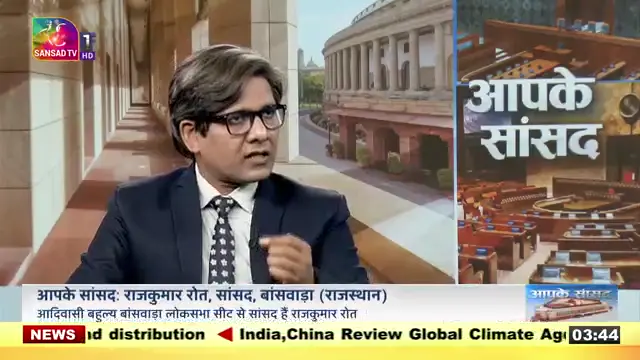
The federal government’s agriculture and tribal development policies are under the microscope as panel discussions dissect implementation gaps in water management, land rights, and education targets. The agriculture ministry’s schemes, designed to improve farming conditions, are scrutinised for their reach in tribal areas, where water scarcity and land disputes persist. The social justice committee’s education policy proposals are weighed against budget allocations, raising questions over whether tribal communities are receiving equitable support.
A recurring theme is the tension between policy intent and ground reality. The MECME and RIN initiatives, aimed at tribal development, are criticised for setting targets that outpace local capacity. The panel highlights the need for better coordination between federal ministries and local leaders to ensure schemes translate into tangible benefits. The discussion underscores a broader challenge: balancing national development goals with the unique needs of tribal regions.
Committee selection: Seniority vs. member interest
The selection of parliamentary committees is framed as a test of institutional integrity. Analysts argue that seniority-based appointments risk sidelining expertise, while member interest—driven by political or regional priorities—can distort policy focus. The RUCI’s role in shaping committee agendas is examined, with implications for how key issues like agriculture and tribal development are prioritised. The debate reflects deeper questions about parliamentary efficacy and the balance of power between the executive and legislature.
Delhi’s leadership credentials: A Congress speaker under scrutiny
The speaker of the Congress party faces fresh scrutiny over leadership credentials, political achievements, and governance focus. The discussion centres on the speaker’s role in shaping education policy and local governance, with critics questioning whether recent electoral performance justifies claims of a ‘highest lead’ in 200 MLM constituencies. The segment explores how leadership dynamics in Delhi influence national policy debates, particularly on education and tribal welfare.
Press Monitor Clips: Comprehensive agriculture policy discussion; Policy implementation and tribal development focus; Leadership credentials and achievements
Top Business News, Issues and People
India’s Maritime Leap: Ports, Policy, and Global Trade
Maritime India Vision 2030: A blueprint for economic integration
India’s maritime sector is undergoing a transformation, with the Maritime India Vision 2030 serving as the cornerstone of a strategy to position the country as a global trade hub. The Sagarmala Project and One Nation One Port initiative are highlighted as key drivers of port modernisation, while the Maritime Amrit Kal Vision 2047 sets a long-term roadmap for shipping competitiveness. Panel discussions reveal how these policies aim to boost transshipment volumes, reduce reliance on foreign ports, and integrate India into global supply chains.
The focus is on Gujarat, Maharashtra, Odisha, West Bengal, and Kerala, where port upgrades and shipbuilding capacity are expected to create jobs, attract investment, and enhance logistics efficiency. The vision’s success hinges on public-private partnerships and standardisation across ports, a challenge that analysts say requires sustained political will and bureaucratic agility.
Viginjam Port: A strategic deepwater gateway
The development of Viginjam Port in Kerala is positioned as a game-changer for India’s maritime future. Strategically located to reduce reliance on Colombo and Singapore, Viginjam is touted as a transshipment hub that could slash logistics costs and boost regional trade. The segment explores how this deepwater port aligns with India’s broader maritime strategy, including its role in the India-Middle East-Europe Economic Corridor.
Critics, however, question whether the port’s economic benefits will trickle down to local communities, given the project’s scale and the need for ancillary infrastructure. The discussion underscores the trade-offs between national ambition and local impact, a recurring theme in India’s infrastructure push.
Sikkim’s carpet weavers: Cultural heritage meets economic potential
In Sikkim, the Bhutia community’s hand-knotted carpets—adorned with mythical birds, lotuses, and snow lions—are celebrated as a cultural treasure and an economic opportunity. The Sikkim Handlum and Handicraft Development Corporation is spotlighted for its role in marketing these carpets, blending tradition with modern commerce. The segment highlights how cultural heritage can drive economic growth, particularly in regions where tourism and handicrafts are key industries.
Press Monitor Clips: India’s Maritime Vision 2030 and Policy Implementation; India’s Maritime Sector: Vision 2030 and Infrastructure Development; Sikkim's Carpets: Art and Craftsmanship
Top Sports News, Issues and People
Sikkim’s Grassroots Sports: Celebration, Equality, and Development
Independence Day football: Community spirit in Sikkim
Sikkim’s Independence Day celebrations take centre stage with a football match that doubles as a community event. The segment captures the fusion of sports and patriotism, showcasing how local traditions can foster unity and pride. The Sikkim government’s role in organising such events is highlighted as a model for grassroots sports engagement.
Gender equality in sports: PM Modi’s vision for Sikkim
Prime Minister Modi’s emphasis on gender equality in sports is examined through a panel discussion featuring Dr. Yudhita Ji and Sandeep Ji. The conversation explores how Sikkim is leveraging football to promote inclusivity, with a focus on breaking gender barriers in a traditionally male-dominated sport. The segment ties the discussion to broader national goals, including the Fit India Movement and the Prime Minister’s push for sports as a tool for social change.
Youth sports development: Academies, leagues, and cultural villages
Sikkim’s investment in youth sports is unpacked, with a spotlight on state-of-the-art academies, the Sikkim Premier League, and cultural sports villages. The government’s initiatives are framed as a response to declining physical activity among youth, with a focus on creating infrastructure that nurtures talent and preserves cultural sports. The segment underscores the link between sports, health, and national pride.
Press Monitor Clips: Sikkim Independence Day Celebration; Gender Equality and Sports Development in Sikkim; Youth Sports Development in Sikkim
Top Other News, Issues and People
Cultural Identity and Environmental Stewardship: India’s Crossroads
Coral reef conservation: A new research institute for India’s marine biodiversity
India’s coral reefs, spanning the Andaman Nicobar Islands, Lakshadweep, Gulf of Mannar, and Gulf of Kachchh, are the focus of a new conservation push. The National Coral Reef Research Institute, established under the Ministry of Environment and Forest, is tasked with monitoring and protecting these fragile ecosystems. The segment highlights the institute’s role in biodiversity preservation and climate resilience, positioning coral reefs as critical to India’s environmental future.
The discussion ties coral reef conservation to broader themes of environmental stewardship, with a call for integrating research into policy. Analysts argue that India’s coral reefs are not just ecological assets but economic ones, supporting fisheries and tourism.
Sanskrit education and Odisha’s cultural heritage
Odisha’s Kendujar District becomes a focal point for discussions on Sanskrit education and cultural heritage. The segment explores how regional languages and texts are being preserved amid globalisation, with a focus on Sanskrit’s role in shaping Odisha’s identity. The conversation extends to the importance of regional languages in maintaining cultural continuity, particularly in states with rich literary traditions.
Sikhism’s universal message: Guru Granth Sahib and inclusivity
The teachings of Guru Nanak Dev Ji and the significance of Gurudwaras are unpacked in a discussion on Sikhism’s universal inclusivity. The segment highlights the Guru Granth Sahib as an eternal text that transcends sectarian divides, with a focus on Kartarpur and Anandpur Sahib as spiritual landmarks. The conversation ties religious doctrine to modern values of tolerance and community cohesion.
Press Monitor Clips: Coral Reef Conservation Efforts in India; Sanskrit Education and Cultural Heritage Discussion; Sikhism and Gurudwaras