3 Key Fertilizer and Agri-Input Stories for Industry Leaders


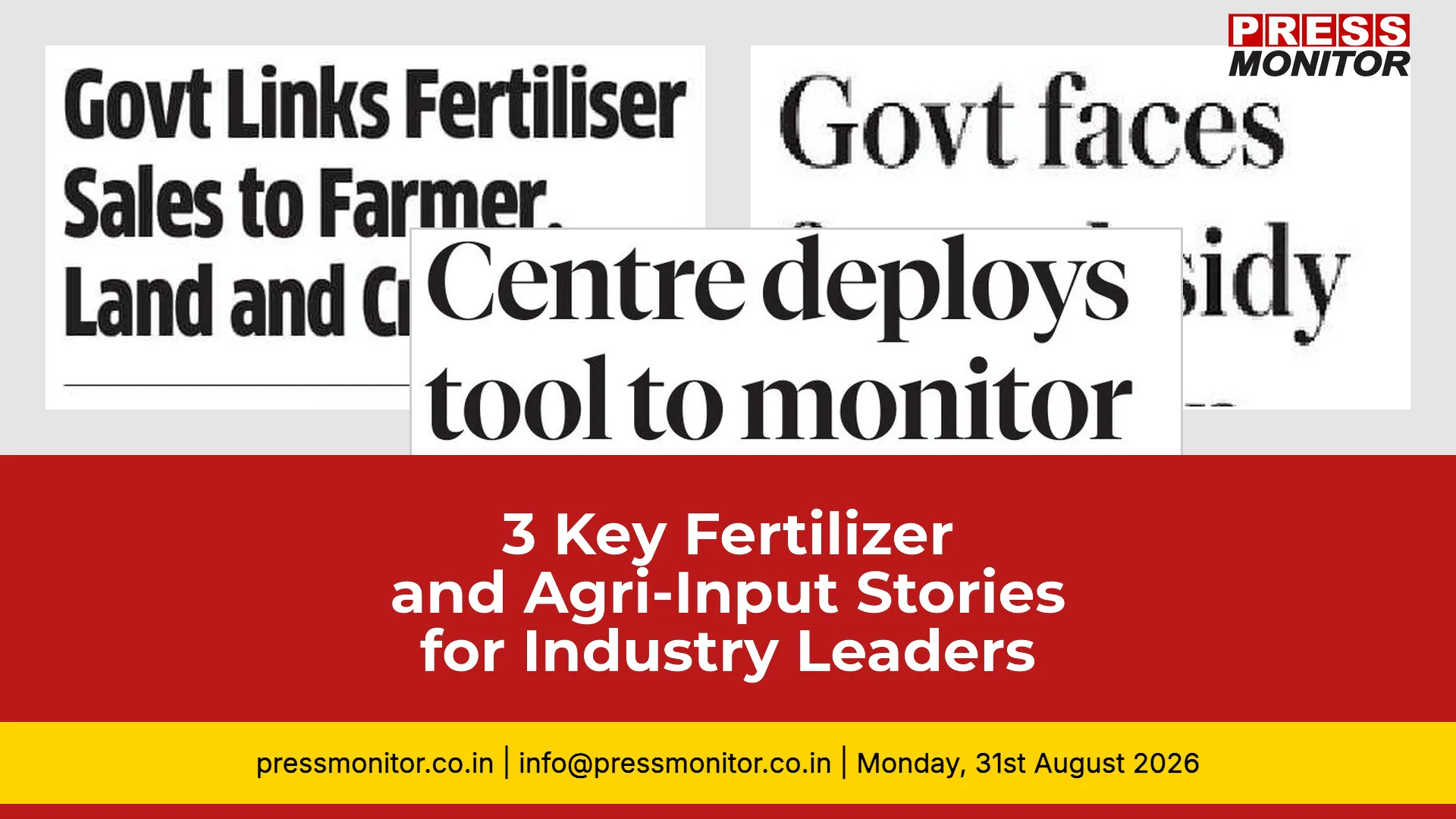
India's fertilizer industry is at a pivotal moment, with digital transformation, subsidy pressures, and new monitoring tools reshaping the landscape. Through media monitoring across Indian print publications, we bring you the three most important stories today.
1. iFMS Expansion: A Digital Leap for Fertilizer Subsidies
A front-page report in Economic Times says... the Indian government is expanding its integrated Fertilizer Management System (iFMS) to link fertiliser sales with farmer, land, and crop data. The platform now covers 140 million Aadhaar-linked buyers, 250,000 retailers, and 70 million tonnes of annual sales, supporting ₹2 lakh crore in subsidies. Integration with Meri Fasal Mera Byora in Haryana and AgriStack enables QR-based bookings matched to land records via mobile devices, with vehicle tracking to monitor distribution logistics. The government is expanding the Integrated Fertilizer Management System (iFMS) to link fertilizer sales with farmer, land, and crop data. The platform now covers 140 million Aadhaar-linked buyers, 250,000 retailers, and 70 million tonnes of annual sales, supporting ₹2 lakh crore in subsidies. Integration with Meri Fasal Mera Byora in Haryana and AgriStack enables QR-based bookings matched to land records. This press review highlights the significant push toward transparency in subsidy distribution.
2. Fertilizer Subsidy Pressure Mounts Amid Global Price Shifts
India faces mounting pressure on its fertilizer subsidy bill this year, despite a decline in urea prices, due to rising costs for key non-urea fertilizers like DAP, MOP, and phosphoric acid. Global price changes immediately impact India’s subsidy burden, with imports of urea falling 5.9% while DAP, MOP, and phosphoric acid prices have increased significantly. Sachchida Nand estimates the overall fertilizer subsidy outgo could rise to around 72.5 trillion in the current fiscal, highlighting the complexities of managing the subsidy program amidst fluctuating global markets. Despite a decline in urea prices, rising costs for DAP, MOP, and phosphoric acid are increasing India's subsidy burden. According to analyst Sachchida Nand, the overall subsidy outgo could reach ₹72.5 trillion this fiscal. This media intelligence underscores the delicate balance between global markets and domestic agricultural policy.
3. New Dashboard to Track Fertilizer Distribution in Real Time
A front-page report in Business Standard says that the fertiliser ministry has deployed a new analytical tool and a national-to-retail dashboard to track fertiliser dispatches, movement and inventories in real time to detect localised shortages. This system enables early detection of sudden shortages and irregular purchasing trends, allowing for quick remedial measures. The Fertilizer Ministry has deployed a new analytical tool and national-to-retail dashboard to monitor dispatches, movement, and inventories. This system enables early detection of localised shortages and irregular purchasing trends, allowing quick remedial measures. The move is part of broader print media monitoring efforts to digitize agri-input management.
These stories illustrate the power of media intelligence in staying ahead of policy changes. How is your organization using print media monitoring to track fertilizer sector developments? We'd love to hear your perspective.