5 Key Gig Economy Stories for Logistics Leaders


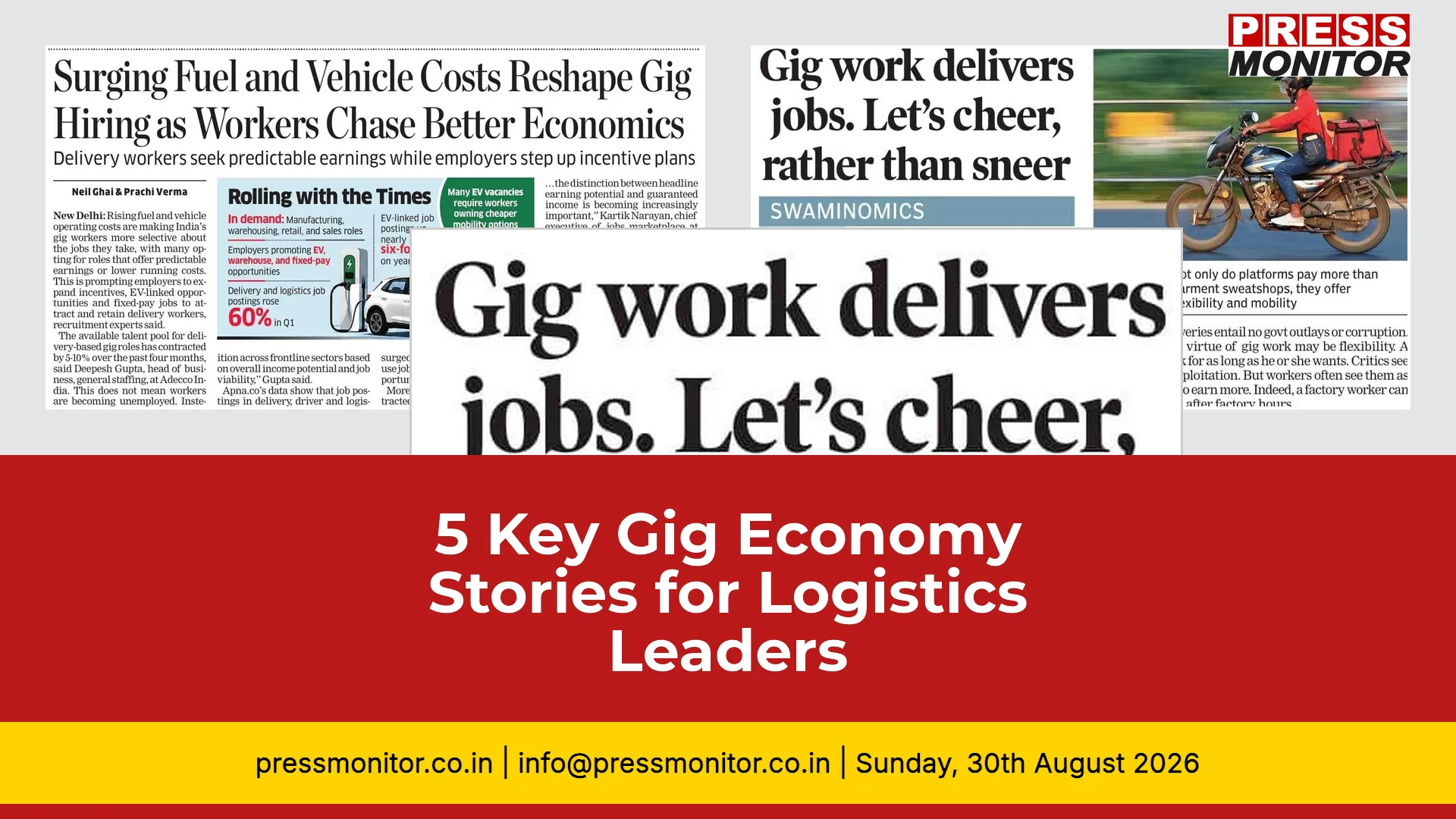
India's gig economy is reshaping delivery services and logistics, with over 12 million workers navigating rising fuel costs, regulatory debates, and shifting earnings. According to Press Monitor's tracking of Indian publications, here are the top stories from today's print media that every logistics leader needs on their radar.
1. Gig Hiring Shifts as Fuel Costs Rise
A front-page report in Economic Times says rising fuel and vehicle operating costs are driving India's gig workers toward roles with predictable earnings and lower expenses. This trend has led to a five to ten per cent contraction in the delivery talent pool, prompting employers to expand electric vehicle incentives and fixed-pay opportunities.
Why it matters: Rising fuel and vehicle operating costs are driving a 5-10% contraction in the delivery talent pool, forcing employers to rethink incentives.
Key detail: Companies are expanding electric vehicle (EV) subsidies and fixed-pay opportunities to attract and retain workers.
Source: Economic Times (front page) by Neil Ghai & Prachi Verma.
Next step: Review your gig workforce compensation model and consider EV adoption to stabilise your delivery fleet.
2. Gig Economy vs Garment Industry
A front-page report in Times of India says that while Bangladesh has moved millions of rural women into factories, India has created 12 million gig workers. Experts argue that gig work, which pays more and offers flexibility, should be supported as a step forward in development.
Why it matters: India's gig economy has created 12 million jobs, while Bangladesh moved millions into factories. Experts argue gig work offers higher pay and flexibility.
Key detail: The comparison highlights a development choice: factory-based manufacturing vs platform-based services.
Source: Times of India (front page).
Next step: Evaluate how your logistics strategy aligns with India's evolving employment landscape.
3. India's Gig Work Beats Factory Wages
A front-page report in Times of India says that gig work in India often provides higher monthly earnings than formal garment factory jobs and rural employment schemes. The analysis compares the earnings of platform drivers and Zomato workers against Bangladeshi garment workers and MNREGA labourers.
Why it matters: Platform drivers and Zomato workers often earn more than formal garment factory jobs and MNREGA labourers.
Key detail: Analysis by Swaminathan S Anklesaria Aiyar shows gig work provides higher monthly earnings with flexibility.
Source: Times of India (front page).
Next step: Use this data to advocate for supportive policies that recognise gig work as a legitimate career path.
4. Rigorous Regulation Could Hurt Gig Economy
A front-page report in Times of India says gig workers, such as Swiggy delivery drivers, often earn more with flexibility than in Bangladesh's garment sweatshops, but over-regulation could stem a booming job creator that employs over 12 million people.
Why it matters: Over-regulation could stifle a booming job creator that employs over 12 million people, including Swiggy delivery drivers.
Key detail: The report warns that while gig workers earn more with flexibility, excessive rules may reduce opportunities.
Source: Times of India (front page).
Next step: Engage with policymakers to ensure regulations balance worker protection with platform viability.
Closing: These stories underscore the need for media intelligence to stay ahead of workforce and regulatory shifts. What's your biggest takeaway from today's press review? Share your thoughts below.