Global Tensions, Market Shocks & Tech Shifts: cnbctv18's Power Capsule of April 21, 2026


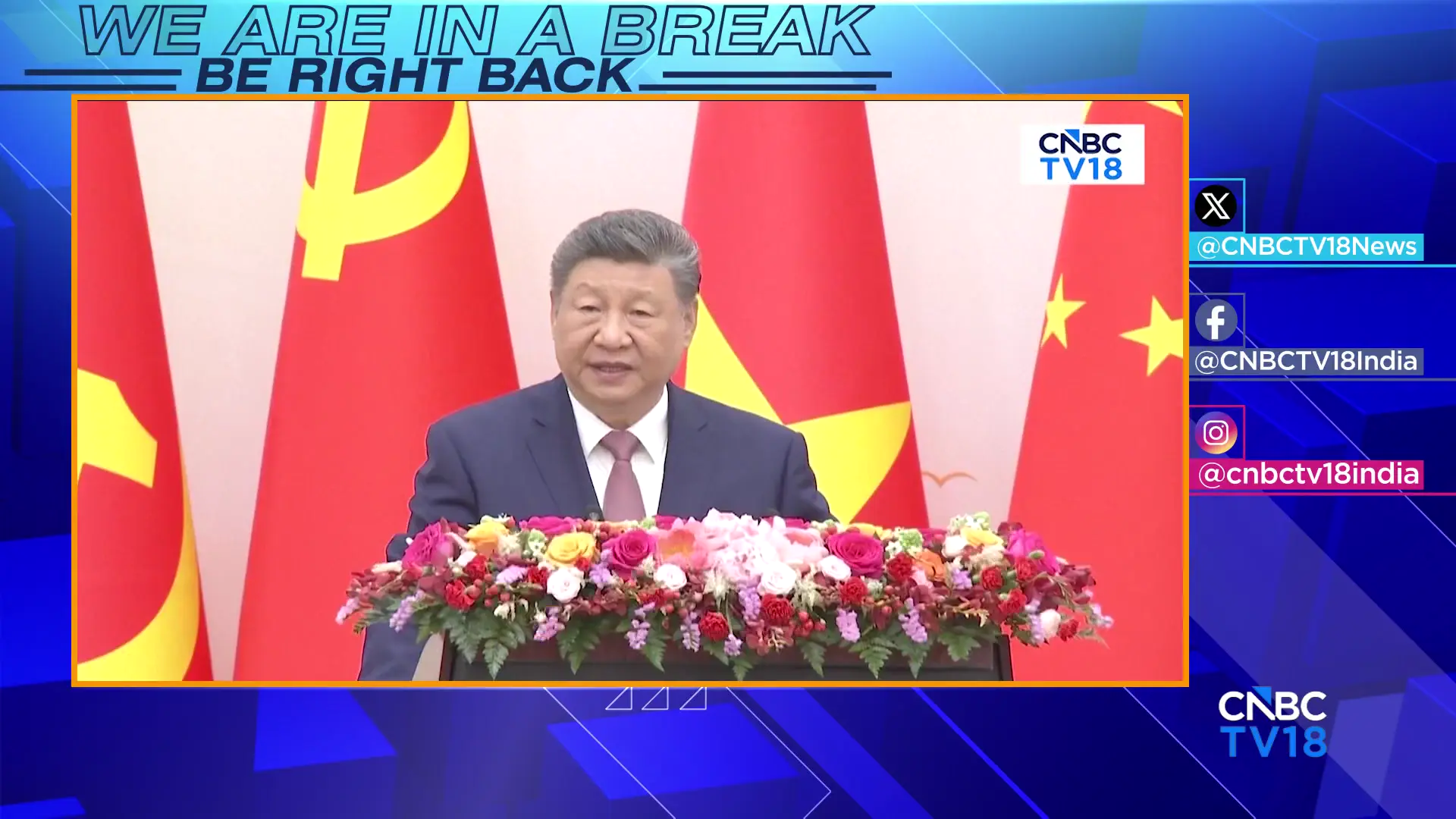
The world woke up to a fresh geopolitical faultline on April 21, 2026, as the U.S.-Iran ceasefire extension collided with oil market tremors, while Beijing’s fuel price cuts and Taipei’s diplomatic retreat underscored the fragility of global supply chains. In Washington, President Trump’s wide-ranging interview laid bare the faultlines in U.S.-China tech rivalry, while Wall Street braced for earnings shocks and Fed nomination fireworks. From the Strait of Hormuz to Silicon Valley, from Kyiv’s Druzhba pipeline to Singapore’s energy forums, today’s coverage reveals a planet caught between escalation and de-escalation, between volatility and resilience.
Top Political News, Issues and People
Taiwan’s Lai Ching-te cancels Eswatini trip amid Chinese pressure
Taiwan President Lai Ching-te scrapped a state visit to Eswatini on Monday after Beijing warned of ‘severe consequences’ for any diplomatic engagement with Taipei. The cancellation follows China’s surprise fuel price cuts—its first since 2022—designed to ease domestic pressure but which analysts say may also signal Beijing’s intent to dial down regional tensions ahead of high-stakes summits. Lai’s abrupt U-turn, confirmed by Taiwanese officials, was framed as a ‘necessary step to avoid provocation’ amid escalating Chinese military drills near the Taiwan Strait. The move comes as Taipei’s remaining African allies—Eswatini, Mauritius and Madagascar—face intensifying diplomatic isolation, with Mauritius and Madagascar already downgrading ties under Beijing’s sustained pressure campaign.
China’s fuel price gambit: relief at the pump, risk in the Strait
China slashed retail fuel prices by up to 8% on Monday, the first cut since 2022, in a move analysts say is aimed at shoring up consumer confidence amid slowing post-pandemic recovery. The price drop—affecting petrol, diesel and jet fuel—was announced just hours after Beijing warned of ‘consequences’ for any country hosting Taiwan’s president. Energy analysts at Goldman Sachs noted that while the cuts may provide short-term relief to drivers, they also risk emboldening Beijing to harden its stance on maritime disputes, particularly in the South China Sea. ‘This is classic Beijing: economic stimulus paired with geopolitical assertiveness,’ said one commodities strategist. ‘The message is clear—stability at home, pressure abroad.’
Trump’s Iran gambit: ceasefire extended, Strait of Hormuz blockade tightened
President Trump announced an indefinite extension of the U.S.-Iran ceasefire on Monday, calling it a ‘historic step toward peace’ during a live interview with CNBC. But the same segment revealed a hardening U.S. naval posture in the Strait of Hormuz, where American warships have reportedly begun enforcing a de facto blockade against Iranian oil exports. ‘We are not lifting sanctions,’ Trump told CNBC. ‘We are ensuring that Iranian oil does not flow to fund terrorism.’ The dual message—diplomatic outreach coupled with military deterrence—has sent oil markets into a tailspin, with Brent crude futures jumping 4% in early trading. Analysts at Goldman Sachs warned that the blockade could disrupt up to 20% of global oil flows if escalation continues.
Fed nomination wars: Kevin Warsh in the crosshairs of conflicts and rate cuts
The U.S. Senate grilled Fed nominee Kevin Warsh on Monday over allegations of conflicts of interest tied to his past roles at Goldman Sachs and his family’s investments in energy firms. The confirmation hearing, broadcast live on CNBC, became a lightning rod for broader debates over Fed independence, with Senators Elizabeth Warren and John Kennedy trading barbs over Warsh’s ties to the Trump administration. ‘This is not about Kevin Warsh—it’s about whether the Fed will cut rates before the election,’ said one policy analyst. Warsh, a former Fed governor, has hinted at a more dovish stance on inflation, a position that has drawn both praise from Wall Street and criticism from progressive lawmakers who accuse him of being too cozy with corporate interests.
Silicon Valley vs. Beijing: Trump’s tech cold war heats up
In a sweeping interview with CNBC, President Trump accused China of ‘weaponizing’ AI and tech transfers to undermine U.S. dominance, singling out Anthropic’s security protocols as a ‘national security risk.’ The comments came as Trump met with Apple CEO Tim Cook, who warned that U.S. tech firms face ‘existential threats’ from Chinese state-backed competitors. ‘We cannot allow Beijing to dictate the future of AI,’ Trump said. ‘The next Silicon Valley will not be built in China.’ The remarks follow Trump’s executive order banning certain Chinese AI models from U.S. government use, a move that has sparked protests from Silicon Valley CEOs who argue it will stifle innovation.
Press Monitor Clips: Taiwan President Lai cancels Eswatini trip amid Chinese pressure; President Trump announces indefinite Iran ceasefire extension; Kevin Warsh Fed nomination hearing turns into conflicts of interest debate
Top Business News, Issues and People
Oil markets in chaos: Hormuz blockade sends crude soaring
Global oil markets convulsed on Monday as the U.S.-Iran ceasefire extension collided with a tightening naval blockade in the Strait of Hormuz. Brent crude futures surged past $95 a barrel, while U.S. gasoline prices jumped 6% in a single session. Goldman Sachs analysts warned that if the blockade persists, global oil supply could shrink by 2.5 million barrels per day—enough to trigger a supply shock reminiscent of the 1973 oil crisis. ‘This is not just a geopolitical risk—it’s an economic one,’ said Dan Struven, Goldman’s head of commodities research. ‘Every $10 increase in oil prices shaves 0.3% off global GDP.’ Qatar Energy officials confirmed that LNG production at its Hormuz-linked facilities has already been ‘significantly damaged’ by the blockade, raising fears of winter gas shortages in Europe.
Wall Street braces for earnings storm and Fed fireworks
U.S. stocks opened sharply lower on Monday as investors digested a mixed bag of earnings reports and the looming Fed nomination battle. AT&T, Boeing, Tesla and IBM all reported quarterly results that missed expectations, with Boeing’s earnings hit by ongoing supply chain disruptions and Tesla’s margins squeezed by rising battery costs. The earnings slump was compounded by growing uncertainty over the Fed’s next move, with markets now pricing in a 60% chance of a rate cut by July. ‘The market is caught between two narratives: earnings weakness and the hope of Fed relief,’ said Brian Stetland, portfolio manager at Equity Armor Investments. ‘Right now, the fear is winning.’
Strait of Hormuz deep dive: Qatar’s LNG at risk, global gas markets in turmoil
A special CNBC panel convened energy experts to dissect the fallout from the Strait of Hormuz blockade, with Qatar Energy officials warning that the crisis could ‘permanently alter’ global LNG markets. Qatar, the world’s largest LNG exporter, relies on the strait for 80% of its gas shipments to Asia. ‘We are looking at a worst-case scenario where up to 30% of global LNG supply is disrupted,’ said a senior Qatar Energy executive. The panel also highlighted the ripple effects on European gas markets, where utilities are scrambling to secure alternative supplies ahead of next winter. ‘This is not just an oil story—it’s a gas story, and it’s a story that will play out over years, not months,’ said David Rode, a geopolitical analyst at MSNOW.
Retail sales rebound, bond yields surge: mixed signals from U.S. economy
U.S. retail sales surged 1.7% in March, far outpacing expectations and offering a rare bright spot in an otherwise gloomy economic landscape. But the good news was tempered by a sharp rise in bond yields, with the U.S. 30-year Treasury yield hitting 4.906%—its highest level since 2022. ‘The market is sending conflicting signals: consumers are spending, but investors are bracing for a downturn,’ said Rick Santelli, CNBC’s markets guru. The VIX, Wall Street’s fear gauge, also spiked to 22, a level not seen since the early days of the Ukraine war. ‘This is a market that doesn’t know whether to celebrate or panic,’ Santelli added.
Iran war risks and AI’s economic impact: portfolio manager’s warning
In an exclusive interview with CNBC, Brian Stetland of Equity Armor Investments warned that the combination of geopolitical tensions and AI-driven productivity shocks could trigger a ‘volatility spiral’ in global markets. ‘We are seeing a perfect storm: energy shocks, AI disruptions, and a Fed caught between inflation and recession,’ Stetland said. ‘The next six months will determine whether we get a soft landing or a hard crash.’ Stetland’s fund has positioned itself defensively, favoring gold and energy stocks over tech and growth equities. ‘In times like these, the best offense is a good defense,’ he said.
Press Monitor Clips: Goldman Sachs commodities panel warns of 2.5m bpd oil supply shock; U.S. retail sales surge 1.7% but bond yields hit 4.906%; Brian Stetland warns of ‘volatility spiral’ from Iran war risks and AI shocks
Top Sports News, Issues and People
Fast Money’s NBA twist: stocks, trades and a 12-point lead
The ‘Fast Money’ panel closed the day with a mixed bag of sports and market analysis, featuring a rare crossover between Wall Street and the NBA. The segment, broadcast from Madison Square Garden, began with a discussion of the Knicks’ 12-point fourth-quarter lead over the Celtics—a lead that evaporated in the final minutes. ‘The market is like the Knicks right now: full of potential, but prone to collapse,’ quipped one panelist. The segment also touched on recent trades, with analysts highlighting the stock performance of companies tied to sports betting and streaming rights. ‘If you’re looking for a hedge against volatility, look no further than the sports world,’ said one trader. ‘It’s the one market that never sleeps.’
Top in Other Coverage: Issues and People
Tokyo, Seoul, Sydney: global markets open with a whimper
The Asian trading day kicked off with a muted tone, as markets in Tokyo, Seoul and Sydney opened flat following a weekend of geopolitical jitters. The Nikkei 225 and Kospi both slipped 0.3%, while the S&P/ASX 200 edged up 0.1%. ‘Investors are in wait-and-see mode,’ said a CNBC reporter in Tokyo. ‘No one wants to make a move until we see how the U.S.-Iran ceasefire plays out.’ The segment wrapped up with a transition to ‘Squawk Box Asia,’ where anchors dissected the day’s top stories, from China’s fuel price cuts to Taiwan’s diplomatic retreat.
Apple’s leadership handover: Tim Cook to John Ternus—what comes next?
Tim Cook’s transition to John Ternus as Apple’s next CEO has become a case study in corporate succession planning. In a CNBC panel discussion, analysts praised Ternus’s technical expertise and leadership style, noting that his tenure in Apple’s hardware division gave him ‘unparalleled insight’ into the company’s supply chain and innovation pipeline. ‘Cook built Apple into a services giant, but Ternus is the hardware guy—this could signal a shift back to Apple’s roots,’ said one analyst. The discussion also touched on Apple’s stock performance, which has seen a 2% increase this quarter despite daily declines. ‘Wall Street loves a story, and this is a good one,’ said another panelist.
Alaska Air’s Q1 pain: fuel costs and operational chaos
In an exclusive interview with CNBC, Alaska Air CEO Ben Minecu laid bare the airline’s Q1 financial struggles, citing soaring fuel costs and operational disruptions as the primary culprits. ‘We are in a perfect storm: fuel prices up 30% year-over-year, labor shortages, and a travel demand that’s still recovering from the pandemic,’ Minecu said. The interview, which aired just hours after the airline reported a $120 million loss for the quarter, offered a rare glimpse into the challenges facing the U.S. airline industry. ‘The next six months will be critical,’ Minecu added. ‘If fuel prices stay high, we’ll have to make some tough calls.’
Converge Live Singapore: Jay Pyong’s tech vision for a fractured world
The ‘Converge Live’ conference in Singapore brought together tech leaders from across Asia to discuss the future of innovation in a world divided by geopolitics and economic uncertainty. Jay Pyong, a prominent venture capitalist, delivered a keynote address on the ‘fragmentation of global tech,’ warning that the U.S.-China tech war could lead to a ‘Balkanization’ of the internet. ‘We are seeing the rise of parallel tech ecosystems—one led by the U.S., one by China, and one by everyone else,’ Pyong said. ‘This is not sustainable.’ The conference also featured panels on AI ethics, supply chain resilience, and the role of startups in driving economic growth.
Motilal Oswald’s final market update: a day of reckoning
The broadcast day closed with a sweeping market update from CNBC TV18’s Motilal Oswald Studio, where analysts dissected the day’s top stories: the U.S.-Iran ceasefire extension, China’s fuel price cuts, and the Fed nomination battle. ‘Today was a day of reckoning for global markets,’ Oswald said. ‘We saw the collision of geopolitics and economics, and the result was volatility.’ The segment also previewed the week ahead, with earnings reports from Microsoft, Meta and Alphabet looming large. ‘Buckle up,’ Oswald warned. ‘It’s going to be a bumpy ride.’
Press Monitor Clips: Asian markets open flat after weekend geopolitical jitters; Alaska Air CEO Ben Minecu discusses Q1 losses and fuel cost challenges; Motilal Oswald’s final market update recaps a day of geopolitical and economic turmoil
What’s next?
As the dust settles on April 21, 2026, the world stands at a crossroads. The U.S.-Iran ceasefire extension offers a glimmer of hope, but the Strait of Hormuz blockade threatens to unravel global supply chains. In Washington, the Fed nomination battle could reshape monetary policy for years to come, while Silicon Valley braces for a tech cold war with Beijing. For investors, the message is clear: volatility is the new normal. For policymakers, the challenge is to navigate a world where economic stability and geopolitical tensions are increasingly intertwined. One thing is certain—tomorrow’s headlines will be just as unpredictable as today’s.